
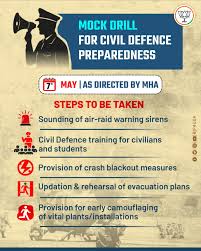
This guide helps citizens understand their roles and responsibilities during the mock drills. Following these steps will ensure personal safety and contribute to community preparedness.
1. Air Raid Warning Sirens
Preparation Steps for Citizens:
Familiarise yourself with the air raid siren sounds (e.g., long wails for alerts, short bursts for all-clear).
Identify the nearest shelter locations, such as basements, underground car parks, or designated safe zones.
Keep a basic emergency kit ready, including:
Torch with extra batteries
Water bottles
Non-perishable food items
First aid kit
What to Do During the Drill:
Immediately stop outdoor activities and proceed to the nearest shelter.
Avoid using phones unless necessary to keep communication lines free for emergencies.
Follow instructions from authorities or wardens present in the area.
What Not to Do:
Do not ignore the sirens or assume it is unimportant.
Avoid panicking or creating unnecessary commotion.
2. Civilian & Student Training
Preparation Steps for Citizens:
Attend community training sessions conducted before the drill.
Teach children the basics of emergency response, such as:
Dropping low and covering their heads.
Identifying safe spaces at home, school, or neighbourhood.
Practise first aid techniques like treating minor injuries or CPR.
What to Do During the Drill:
Actively participate and follow the instructions given by trainers.
Ensure children and elderly family members are included in all steps of the exercise.
What Not to Do:
Avoid dismissing the importance of these drills for children or yourself.
Do not assume that others will take responsibility for your safety.
3. Crash Blackout Measures
Preparation Steps for Citizens:
Install thick blackout curtains or blinds on all windows.
Prepare your home to operate without lights during the blackout.
Use light-blocking materials like dark cloth or cardboard.
Ensure outdoor lights are switched off during drills.
Test your preparedness by simulating a blackout with family members.
What to Do During the Drill:
Turn off or cover all light sources, including electronic devices like TVs, phones, or tablets.
Keep torches and candles ready but avoid placing them near windows.
What Not to Do:
Do not use any light that could be visible from outside.
Avoid stepping outdoors unnecessarily during the blackout.
4. Camouflaging Vital Installations
While this task is primarily for authorities, citizens can play a role by being vigilant and supportive.
Preparation Steps for Citizens:
Report any unfamiliar activity near critical installations to authorities.
Avoid sharing sensitive information about local facilities on social media.
What to Do During the Drill:
Observe and learn how authorities camouflage vital installations to understand its importance.
Support by ensuring smooth access for authorities conducting the exercise.
What Not to Do:
Do not interfere with camouflaging activities or enter restricted areas.
Avoid photographing or posting about the drill online.
5. Evacuation Plan Updates & Rehearsals
Preparation Steps for Citizens:
Study evacuation routes and identify the nearest shelter or safe zone.
Prepare a “go-bag” with essentials, including:
Identification documents
Emergency contact numbers
Medicines
Snacks and water
Practise the evacuation plan with family members, ensuring everyone knows their role.
What to Do During the Drill:
Follow designated evacuation routes in an orderly manner.
Assist elderly or disabled individuals if needed.
Keep calm and listen to instructions from officials or marshals.
What Not to Do:
Do not block pathways or stop to collect unnecessary belongings during the drill.
Avoid taking private vehicles unless instructed, as it may cause congestion.
General Preparedness Tips for Citizens
Before the Drill:
Stay informed about the drill timings and activities through local announcements or social media.
Share information with neighbours, especially those who may not have access to official updates.
During the Drill:
Treat the drill seriously, as it prepares you for real emergencies.
Encourage family and friends to participate actively.
After the Drill:
Provide constructive feedback to organisers about any challenges faced.
Revisit your emergency plans and make necessary updates based on the experience.
Dos:
Keep a calm and cooperative attitude during the drill.
Make sure children, elderly, and pets are part of your emergency preparedness plan.
Don’ts:
Avoid spreading rumours or misinformation about the drill.
Do not take shortcuts or bypass safety measures during the exercises.
By preparing adequately and participating actively, you can help ensure the success of the civil defence mock drill and enhance the safety of your community.