
According to the Union Minister for Social Justice and Empowerment, this decision: will strengthen the social and economic fabric of our society and with it the nation will progress. But I will not go into the political aspect, this is definitely a ‘historic decision’. There is no denying that caste is and will remain at the heart of Indian politics. This question has been bothering me since I grew up. As students, we were told to caste aside and see everyone as equal through the coloured prism of equality; but the caste divide became loud and clear at every election. It is not that the caste census will eliminate this divide, but at least it will ensure that the marginalised get an equal share of economic development.
Let us hope that the ultimate goal of the caste census is to bring about equality between the stark economic divides among the innumerable castes. According to a report in a Hindi daily (May 2, 2025), the last census in 2011 counted a total of 46 lakh castes, most of which were unverified. According to reports, this time the government is likely to ensure ‘transparency’, i.e. by properly verifying the castes declared, to ensure authenticity. This task is huge and will not be as easy as we think. Still, it is a step in the right direction.
Last year, while campaigning for the Lok Sabha elections, Congress leader Rahul Gandhi had said: ‘Don’t think of the caste census survey as just a caste survey… we will also include an economic and institutional survey in it.’ This is where the issue of redistribution of wealth arose, a fact that was strongly opposed by the urban elite. During this debate too, I argued that it was crucial to know which caste had accumulated what share of national wealth and assets and to ensure this because historically disadvantaged people need to be included in the development process. Development should benefit everyone, not just the rich at the top. The rich continue to accumulate wealth through appropriate policies, while the poor are pushed back. The sooner this inequity ends, the better. A caste census will help to understand the data and enable the government to know where to invest appropriate resources. The caste structure is nowhere more visible than in agriculture. Whereas the demand for quotas for government jobs is clearly for those minority communities who have managed to acquire education and skills. The majority of Dalits and OBCs continue to work as marginal and landless farmers or farm labourers. Agricultural income remains at the lowest level, which is limited to about Rs. 10,000 per farming family. Therefore, it is not easy to collect data on the lower castes in agriculture or as landless labourers. The population associated with this remains below the poverty line and includes those living in slums in urban areas. While as a political effort, it will have to be to demand quotas in jobs for the major sections of the marginalized communities. A large section of the marginalized population remains engaged in agriculture and I fear that they will be left behind in the process of development. The benefits of development should be extended to those communities who are deprived of livelihood and are somehow living on the margins. For practical purposes, the best way to reach this neglected section is to rethink the budget rules. They cannot be left to live on 5 kg free ration forever. While the upper class will certainly oppose this, it is certainly possible to make the necessary changes in view of political and academic support. If the caste census can be changed, it is challenging for those supporting it to redesign the budget and convince the country of the dire need for a change in economic thinking and development agenda, but it is certainly not that difficult.
Let me explain how this is possible. The Vajpayee government had announced in 1996, during its first term, that it would allocate 60% of the budget to the 60% of the population engaged in agriculture. This announcement was met with much opposition, but the fundamental thrust of the change in economic thinking was to ensure that the benefits of the budget should be distributed equitably. I remember well how my suggestion in a closed-door meeting of economists and experts led to a demand for allocating 60 per cent of the budget to 60 per cent of the population. This was opposed, though, by economists who were more keen on controlling fiscal deficit and current account deficit as a means of growth and development. My argument was that if any government aimed to ensure that it did not face an anti-incumbency movement, there was no other way but to redistribute financial resources equitably. Tragically, however, that Vajpayee government lasted only 13 days.
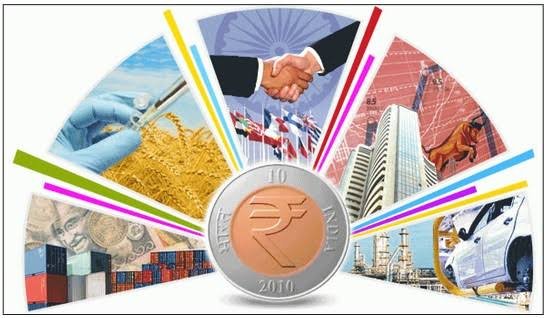
With nearly 50 per cent of the country’s population directly or indirectly engaged in agriculture, the agriculture sector has the largest representation of caste structures, which can be measured by the caste census. The best way to reach such a large section of the population is to revive agriculture and allied sectors. Which in turn will revive the rural economy which is the backbone of the country. In any case, policy makers need to know that where 70 percent of rural households are dependent on agriculture; the annual budget allocation for them is only 3 percent of the total budget. This is not only economically unjustified, but a gross violation of the fair distribution of financial resources. At some level, policymakers will have to think about redesigning the economy. Once the caste census is completed in the coming years, the economic thinking process should focus on developing all. While this may disturb the current development design, the policy thrust should in any case be to take the entire country along, and not leave development to the top 10 percent of the population. The nation certainly needs to progress, but equitably distributing and consolidating the economic benefits should be part of the plan to make India a developed country by 2047.