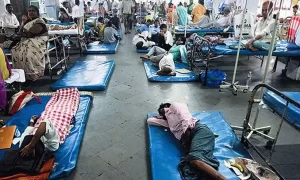

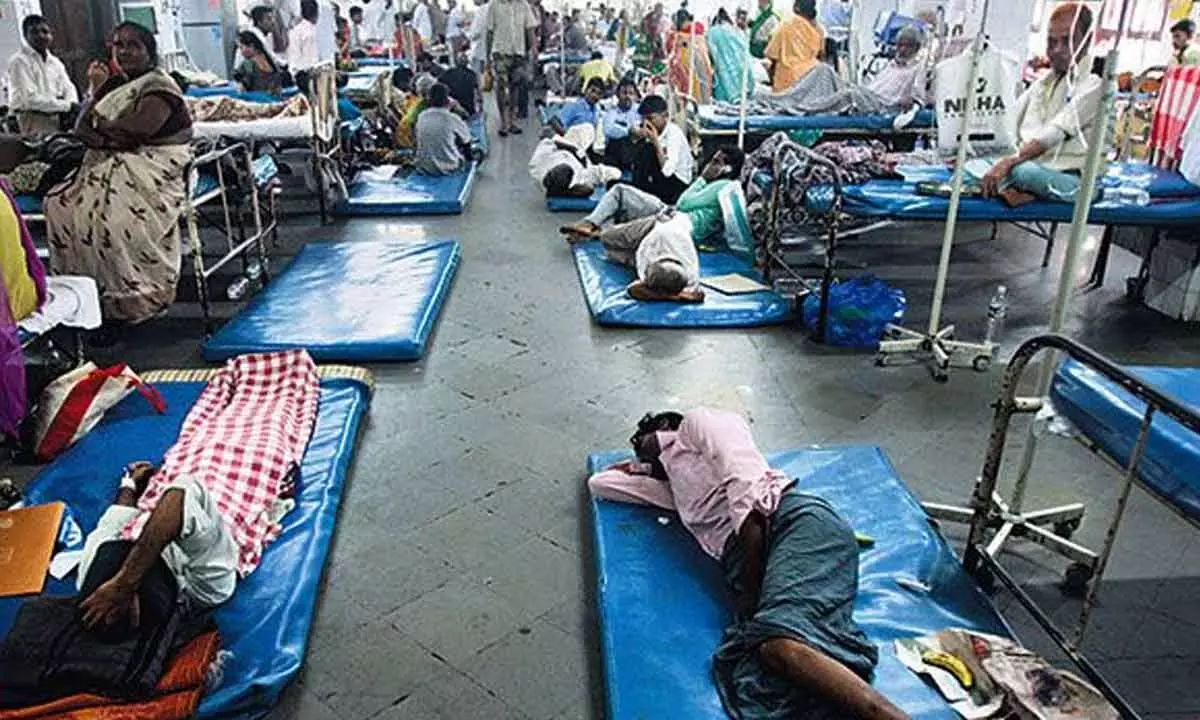
The condition of government hospitals in Punjab is alarming, about which the Punjab and Haryana High Court has also expressed serious concern. The lack of basic facilities in the government hospital in Malerkotla district, such as gynecology, ophthalmology, radiology, blood transfusion facilities and absence of dermatologists, has brought to the fore the poor state of health services. Such a situation is not limited to Malerkotla, but most of the government hospitals and dispensaries in the state lack basic facilities.
Lack of cleanliness, infrastructure, and modern medical equipment is a common problem in government hospitals. Basic medicines, such as paracetamol, antibiotics, and diabetes medicines, are often not available in government dispensaries, nor are they supplied on time. Due to this, patients have to go to private hospitals, where the cost of treatment is beyond the reach of the common people. There is a lack of modern machinery, such as CT scan, MRI, and ventilators, in government hospitals. While private hospitals spend on these facilities. In private hospitals, cleanliness and patient care are better, while in government hospitals, the lack of cleanliness and management is clearly visible.
Shortage of doctors and nurses
Shortage of doctors and nurses is a major problem in government hospitals in Punjab. According to the data of the Health Department, thousands of posts of medical officers, specialists, and nurses are lying vacant in the state. For example, there is a huge shortage of gynecologists, radiologists, and ophthalmologists in the government hospital in Malerkotla. According to government data, about 30-40% of the posts are vacant in government hospitals in Punjab. The biggest problem is the shortage of doctors, especially in health centers and dispensaries located in rural areas. Shortage of nursing staff is also a major challenge. Due to this, patients do not get nursing services at the right time.
The health department does not receive full financial support from the state government. Lack of budget is a major obstacle for creating new posts and recruitment process. Doctors and nurses are reluctant to provide services in rural areas as there is a lack of facilities and the standard of living is not the same as in urban areas. Due to higher salaries and better facilities in private hospitals, most doctors and nurses are leaving government jobs and moving to the private sector.
Shortage of doctors and nurses in PGI Chandigarh
The Postgraduate Institute of Medical Education and Research (PGI), Chandigarh, which is a premier government health institution, is also facing a shortage of staff. The posts of specialist doctors and nurses are lying vacant in various departments in PGI. According to statistics, about 15-20% of the medical posts and 25% of the nursing posts in PGI are vacant. Along with this, the workload on the staff is also increasing due to the increasing number of patients, which is affecting the quality of services.
Box
Government and Private Hospitals with Best Treatment in Punjab
*PGI, Chandigarh is the best government hospital in the state, where expert doctors and modern facilities are available in all major departments. However, there is pressure on services due to the rush of patients here.
*Civil Hospital, Amritsar is an important government hospital, where facilities like general surgery, orthopedics, and gynecology are available. This hospital provides medical education as well as good treatment facilities. Government Medical College, Faridkot also offers good health services, especially for patients from rural areas.
*AIIMS Bathinda started in 2019 and is spread over 177 acres. It has 750 beds, 10 specialties, 11 super-specialty departments, and 16 operation theaters. It provides super-specialty services like cardiology, neurosurgery, orthopedics, and oncology. Its facilities are comparable to PGI, especially in the government sector. It is a leading health institution in the Malwa region of Punjab, which provides high-quality treatment at affordable rates.
*Fortis Hospital, Mohali This is a leading private hospital in Punjab, where the best facilities are available in cardiology, neurosurgery, and orthopedics.
*Max Super Specialty Hospital, Mohali: This hospital is known for cancer treatment, cardiology, and modern surgeries.
*DMC Hospital, Ludhiana: It provides the best health services in Ludhiana and surrounding areas, especially in heart and kidney treatment.
*Apollo Hospital, Ludhiana: This is also a good private hospital, where modern facilities and expert doctors are available.
Why is the Punjab government not paying attention to medical facilities
The budget allocation of the Punjab government in the health sector is 4-5% of the total GDP, which is less than the national and international standards. The lack of administrative efficiency in the health department, such as misuse of funds and lack of accountability of officials, adds to the problem. Doctors and nurses move to the private sector due to low salaries and poor facilities in government jobs.
Court decisions against the Punjab government
Several public interest litigations have been filed in the courts regarding the poor condition of government hospitals in Punjab. The petition of Bhisham Kinger, related to the government hospital in Malerkotla, is an example of this. The Punjab and Haryana High Court has ordered the health department to file a detailed affidavit, clarifying which doctors have been newly recruited and which have been transferred. In addition, dozens of cases have been filed in the courts in the last few years regarding the poor condition of health services. In some of these cases, the court
The Supreme Court has ordered the government to improve health facilities, recruit doctors and nurses, and ensure supply of medicines. However, the government has not fully complied with the court orders.
The Punjab and Haryana High Court has delivered several important judgments related to health services in the last few years:
* In the Malerkotla case, the government gave only partial information in the affidavit, on which the court expressed displeasure. The Punjab government has often shown reluctance in complying with court orders. For example, in the Malerkotla case, the government stated that the recruitment process for 1000 medical officers has been started, but the court clarified that there is a lack of transparency in the government’s affidavit. The government announced to set up a radio diagnostic center, but its progress is not yet clear. The court has ordered the government to file a detailed response by July 17, 2025.
*Right to Health and Immediate Treatment (2025): The court dismissed a petition saying that the fundamental right to health and immediate medical services should be fulfilled. The case was related to the development of clinic sites in a colony.
*The Punjab Health Department immediately recalled Betadine ointment after it was found to be sub-standard. The court upheld this action of the Health Department and emphasized on ensuring quality. The Punjab and Haryana High Court has issued several orders to improve health services, but the government has not fully complied. Experts believe that there is a dire need for financial resources, transparency, and administrative reforms in the health sector.
Punjab Government’s Side
Health Minister Dr. Balbir Singh: The Health Minister admitted that efforts are being made to address the problem of drugs and the shortage of health services in the state. He talked about the ‘War on Drugs’ campaign and increasing the capacity of de-addiction centers.
The poor condition of Punjab’s government hospitals, shortage of doctors and nurses, and shortage of medicines have weakened the state’s health system. Institutions like PGI are also struggling with staff shortages. The government’s lack of political and administrative skills is delaying the improvement of health services. Court interventions and public interest litigations have increased the pressure on the government, but full compliance with court orders is still pending. The government needs to focus on more budget allocations, transparent recruitment processes, and infrastructure improvements in the health sector.