
In view of the escalating tensions between India and Pakistan after the Pahalgam terrorist attack, India has banned all types of imports and exports from Pakistan. According to the Ministry of Commerce on May 2, 2025, this ban has been imposed in the interest of national security and public policy. Any relaxation in this ban will require the prior approval of the Government of India. The notification added a provision in the Foreign Trade Policy (FTP) 2023, which banned the import and transit of all goods from Pakistan.
Background of the Pahalgam attack:
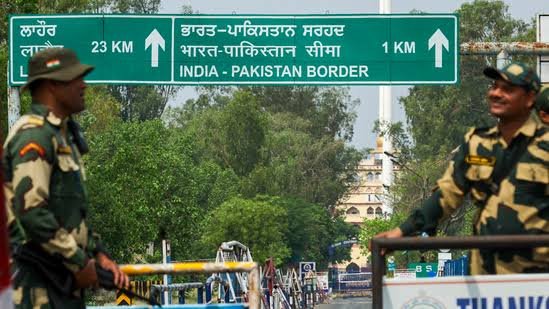
On April 22, 2025, terrorists opened fire on mostly tourists in the Basran Valley of Pahalgam, a popular tourist destination in Jammu and Kashmir, killing 26 people and injuring many others. The TRF, affiliated with the banned terrorist organization Lashkar-e-Taiba, claimed responsibility for the attack. This incident brought tensions between the two countries to a peak. After the Pahalgam attack, India took several drastic steps, including suspending the 1960 Indus Waters Treaty, closing the Attari-Wagah border post, cancelling visa services for Pakistani citizens, and closing the SAARC visa facility.
What goods does Pakistan send to India?
According to the latest official data, India did not import any goods from Pakistan during April 2024 to February 2025. But in the past, Pakistan used to export limited goods like cement, dates, minerals, leather, and some textile products to India. India had revoked Pakistan’s ‘Most Favoured Nation’ (MFN) status after the Pulwama attack in 2019 and imposed a 200% duty on imports, which almost brought trade to a standstill. On the contrary, India has been exporting commercial goods to Pakistan. India’s major exports to Pakistan in fiscal year 2025 included drug formulations, sugar, bulk medicines, residual chemicals, and auto parts. India’s exports to Pakistan fell by 56.91% to $491 million during April 2024 to February 2025.
Did Pakistan also impose sanctions?
Pakistan has also taken strong steps in response to India’s sanctions. Pakistan has cancelled all visas issued under SAARC for Indian citizens (except for Sikh pilgrims). Indian citizens present in Pakistan have been ordered to leave the country within 48 hours. In addition, Pakistan suspended all trade with India, closed the Attari-Wagah border, closed airspace for Indian airlines, and announced the cancellation of the 1972 Shimla Agreement.
It is worth noting here that India does not import directly from Pakistan, so the direct impact of this ban on India’s economy will be limited. However, a $491 million shortfall in exports to Pakistan has already been recorded, and these restrictions could further reduce exports.
Experts say the restrictions are a step to strengthen national security to prevent terrorist activities, but could increase border tensions and the risk of potential retaliation. Pakistan is already in deep economic crisis and is dependent on foreign debt. India’s restrictions, especially the suspension of the Indus Water Treaty, will have a serious impact on Pakistan’s agriculture and water supply, as the water of the Indus River is crucial for Pakistan’s economy. International pressure: If India questions the financial assistance Pakistan receives through institutions like the IMF, World Bank, and FATF, it could pose a major problem for Pakistan’s economy. This will increase socio-economic pressure on the Pakistani government and the general public.
World newspapers and experts’ opinions
Organizations such as Al Jazeera and The New York Times stressed that these sanctions could increase the conflict in South Asia. Experts from international institutions such as Stratfor and the Brookings Institution believe that the suspension of the Indus Water Treaty could exacerbate the humanitarian crisis and lead to disputes in international forums. They also emphasize that India and Pakistan should resolve the problems through dialogue.
Will the US intervene?
The US has condemned the Pahalgam attack, but has refrained from direct intervention. The US strategy focuses on strengthening India as an important trade and security ally, while Pakistan is considered essential for counter-terrorism operations and assistance in Afghanistan. According to experts, the US may adopt a policy of pressure through international institutions rather than direct mediation. For example, if India seeks sanctions on Pakistan in institutions like the IMF and FATF, the US may support India’s position. However, the US’s growing tensions with China and concerns over stability in Afghanistan may prevent it from completely severing ties with Pakistan.
India’s sanctions and Pakistan’s retaliatory actions have brought relations between the two countries to a historic low. While these sanctions are part of India’s security and diplomatic strategy, their far-reaching consequences could have serious implications for Pakistan’s economy and regional stability. The international community and experts are advocating dialogue and restraint, but in the current situation, the possibility of conflict seems increasingly likely. The US may seek to exert influence through diplomatic forums rather than direct intervention.