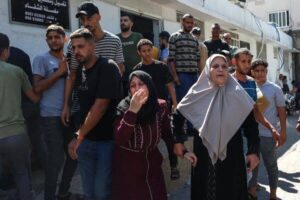

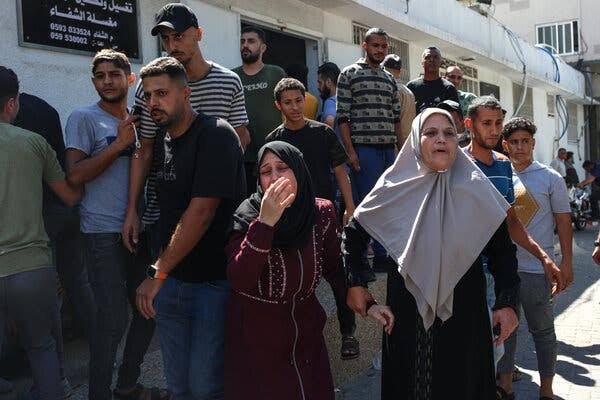
The latest ‘Global Trends’ report by the UN refugee agency shows that the number of forcibly displaced people worldwide has crossed 122.1 million. This figure is 2 million more than last year and double the number in the past decade. 1.4 million in Sudan, 1.35 million in Syria, 1 million in Afghanistan and 8.8 million in Ukraine have been forced to flee their homes. But these are not just numbers, behind every figure is a painful story – the loss of roofs, the longing for safe shelter, and the hardship of seeking refuge in unknown countries.
Sudan: Dreams burning in the flames of war
Sudan, a country in Africa, today remains the world’s largest humanitarian displacement crisis. The civil war that broke out in 2023 between the Sudanese army and paramilitary forces has displaced more than 1.4 million people. The streets of Khartoum, once bustling with life, are now filled with the stench of gunpowder and the sight of destruction. Women, children, and the elderly have been forced to seek refuge in neighboring countries—Chad, South Sudan, and Egypt. According to a report by the United Nations Refugee Agency, the number of displaced people in Sudan is approaching 10 million. This war is not just a power struggle, but a story of humanity burning in the fire of ethnic and tribal tensions.
Syria: Hope for a return home, but the struggle continues
Syria, where the Arab Spring movement in 2011 sparked an uprising against the government of Bashar al-Assad, is still in a state of devastation. 1.35 million people have been displaced, but 2 million Syrians returned home after the fall of the Assad government in late 2024. UN High Commissioner for Refugees Filippo Grandi described it as a ‘ray of hope’, but the land of Syria is still grappling with conflict, economic crisis, and political instability. The situation of Syrian refugees in neighboring countries like Turkey, Jordan, and Lebanon is getting worse by the day.
Afghanistan: Displacement of millions, including Sikhs
Afghanistan, where the return of the Taliban in 2021 shocked the world, is today witnessing the displacement of more than a million people. These include the Sikh community, who were forced to leave their ancestral land due to racist violence and religious persecution. The number of Afghan Sikhs was about 100,000 during the Soviet invasion in the 1980s, but today it has shrunk to just 100-150 families. A terrorist attack on a gurdwara in Kabul in 2020 killed 25 Sikhs, prompting hundreds of Sikh families to flee to India, Canada, and Europe. The UN refugee agency’s report does not specifically mention the number of Afghan Sikhs displaced, but international media—such as the BBC and Al Jazeera—have highlighted the tragic situation.
Ukraine: The devastation of the Russian invasion
The Russian invasion of 2022 displaced 8.8 million people in Ukraine. Stories of Ukrainians seeking asylum in countries like Poland, Germany, and the Czech Republic have been making headlines around the world. International newspapers like The Guardian and Reuters News Agency reported that women and children in Ukraine were the hardest hit, as they had to cross borders to escape the fighting.
The untold story of Kashmiri Sikhs
The story of the displacement of the Sikh community in Kashmir is no less tragic. Incidents like Chhattisgarh, where 35 Sikhs were massacred in 2000, forced thousands of Sikh families to migrate to Jammu or Punjab. According to sources like The Wire, the number of Sikhs in Kashmir has dwindled from 60,000 to around 15,000. Racist violence and political instability have disrupted the lives of Sikhs.
The main causes of forced displacement are wars, ethno-religious violence, and political persecution. Ethnic-tribal tensions in Sudan, fighting between government and opposition forces in Syria, religious persecution by the Taliban in Afghanistan, and the Russian invasion of Ukraine—all of these have combined to plunge the world into a refugee crisis. Racism is also a major factor. The violence against Afghan Sikhs and Kashmiri Sikhs reflects its roots. Organizations like Amnesty International and Human Rights Watch have repeatedly warned about these issues.
Surveys and statistics
The report by the United Nations Refugee Agency is based on data as of April 2025, collected with the support of UN field teams, government sources, and NGOs. It includes 73.5 million displaced people and 48.6 million refugees. According to the report, 66% of refugees live in neighboring countries, which breaks the assumption that all refugees want to go to Europe or the United States.
The solution to this crisis lies in international cooperation. The UN has appealed to rich countries to increase aid. Concrete steps are needed to stop the war in Sudan, political stability in Syria, and ethnic violence in Afghanistan-Kashmir. Minority groups like the Sikh community should be guaranteed security and rehabilitation.