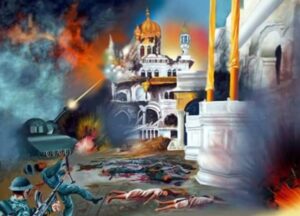

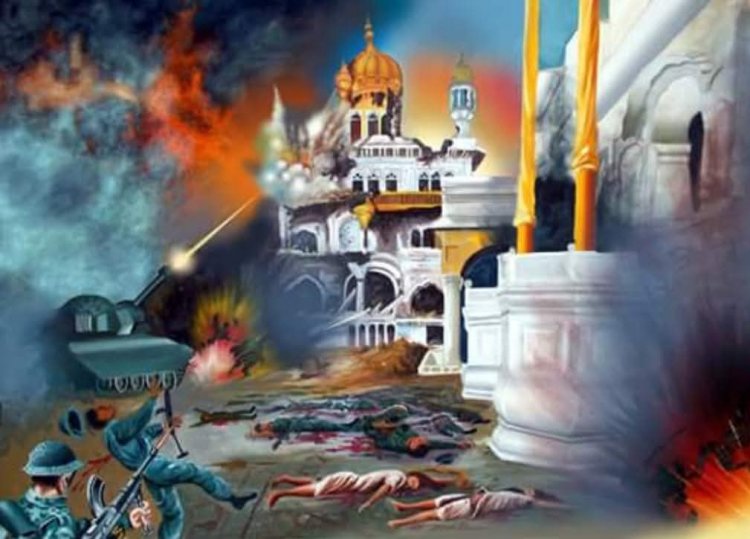
The great victories of Sikh history, such as the establishment of the Sikh state and the feats of challenging the Mughal Empire, are examples of the steadfastness of this community. But in independent India, the Sikh community has had to face many difficulties and conspiracies. The chauvinistic thinking and anti-Sikh policies of the ruling class have plagued this community for centuries. Military attacks on holy places like Sachkhand Sri Darbar Sahib and Sri Akal Takht Sahib, the destruction of generations of Sikh youth, and attacks on the valued traditions of Sikhism are clear examples of this.
The Bravery and History of the Sikh Community
The Sikh community adopted the principles of truth, justice and equality from its inception. The teachings of Sri Guru Nanak Dev Ji gave the society a message to go beyond the boundaries of caste, religion and class and serve humanity. Sri Guru Gobind Singh Ji molded Sikhism into the role of a saint-soldier, which not only strengthened the Sikh community spiritually but also socially and politically. In the 18th century, when the Mughal Empire and Afghan invaders were crushing the Indian subcontinent, the Sikh Misls, with their bravery, not only secured Punjab but also established an independent Khalsa state under the rule of Maharaja Ranjit Singh. This independence and strength of the Khalsa state has always been a challenge for the rulers. The reason for this was the unique thinking of Sikhism, which was not only religious but also socially and politically independent. This independent thinking of the Sikhs was never accepted by the rulers. Sikhs were targeted even during the rule of the Western Empire England, and this trend continued in independent India as well.
Atrocities on Sikhs in independent India
After independence, the Sikh community hoped that their sacrifices and contributions would be recognized. But instead, the central government always considered the Sikhs as outsiders. The 1984 military operation on the Sachkhand Sri Darbar Sahib, the highest shrine of Sikhism, like the Sikh Ghalghare, wounded the heart of the Sikh community. Thousands of innocent Sikhs were martyred in this attack, and Sri Akal Takht Sahib was demolished. This was not just a military operation, but an attack on the spiritual and political independence of the Sikh community. In addition, the 1984 anti-Sikh massacre further devastated the Sikh community. Thousands of Sikhs were brutally murdered in Delhi and other cities, their properties were set on fire, and the dignity of women was robbed. The most tragic thing was that this massacre was abetted by the rulers, and the culprits got honours instead of punishments.
.The authoritarian thinking of the rulers
.The authoritarian thinking of the Indian government always looked at the Sikh community with suspicion. Whenever Sikhs raised their voice for their rights, it was called rebellion or terrorism. For example, when Emergency was imposed in 1975, there was resistance all over India. But the resistance of Sikhs was specifically targeted. Sikh youth who stood up to protect their religion and culture were branded as terrorists and brutally crushed. Similarly, during the Farmers’ Movement (2020-21), the authorities tried their best to suppress the voice of Punjabi farmers. When lakhs of farmers took to the streets of Delhi, the authorities were most disturbed by the opposition from Punjab. The reason for this was the independent thinking and bravery of the Sikh community, which has always challenged the authorities.
.Atrocities on Sikh Youth
Sikh youth were specifically targeted in the 1980s and 1990s. The youth who were forced to take up arms against the desecration of Sri Akal Takht Sahib and the oppression being faced by the Sikh community were not only crushed but their generations were also put on the path of drugs. Even today, many Sikh youth who were arrested 30-35 years ago are locked up in dark cells of jails. The government has shown no desire to release them, while on the other hand, those who hijacked planes in support of Indira Gandhi received rewards and honors.
Attacks on Sikhism and Culture
Conspiracies to weaken Sikhism and culture are also continuing. Attempts to cast doubt on the words of Sri Guru Granth Sahib, creating differences on the birth anniversaries of the Gurus, and attempts to distort Sikh history are direct attacks on the independence and self-respect of the Sikh community. Attempts to challenge the supremacy of Sri Akal Takht Sahib and questioning Sikh institutions are part of this conspiracy. The services of greedy Sikh intellectuals are being taken to distort Sikh religious customs and tamper with Sikh principles. Immigrants are being settled in Punjab to turn the Sikh community into a minority, and they are being made owners of properties. All these attempts are part of the conspiracy to erase the cultural and religious identity of the Sikh community.
Anti-Sikh attitude of the ruling party
The anti-Sikh attitude of the ruling party was not only at the religious or social level, but was also evident at the political level. Punjab was always considered an alien state. When there is talk of war between India and Pakistan, Punjab has to bear the brunt of it. Punjabis opposed the war, not because they had any closeness to Pakistan, but because they were aware of the devastating consequences of war. But the authorities misunderstood this protest and branded the Sikhs as anti-national. Recently, Punjabi tourists and journalists were targeted by the ISI.
False accusations are being made against them by attaching a shield. All these attempts are part of a conspiracy to suppress the awareness of the Sikh community and isolate them socially and politically.
Neglect of Sikh leadership
A major reason for the troubles of the Sikh community is the neglect and internal divisions of the Sikh leadership. The Sikh leadership often ignores the rights of its own people by making compromises with the authorities. Leaders who talk about the freedom and self-respect of the Sikh community are isolated by the traditional leadership. The Shiromani Gurdwara Parbandhak Committee and other Sikh institutions, which were formed to protect the Sikh Panth, often bow down before the authorities. Recently, a controversy also arose regarding the duties performed by the Jathedar of Sri Akal Takht Sahib on the occasion of Galughara Diwas. A section of the Sikh leadership is trying to change the Jathedar, which could be detrimental to the future of the Sikh community
The future of the Sikh community
The good of the Sikh community is not possible unless the Sikh leadership is dedicated to the Panth, Punjab and Punjabiyat and follows the path of honesty and unity. The Sikh community needs to unite to protect its unique identity, religion and culture. Sikh youth will have to become aware to combat the conspiracies of the authorities and the fanatical thinking. The Sikh community will have to regain its lost glory by adopting the valued teachings of Sikhism, such as truth, justice and service.
Finally, the Sikh community needs to learn lessons from its history and struggles. The conspiracies of the rulers and internal divisions have weakened the Sikh community, but the spiritual and worldly strength of Sikhism is still alive. If the Sikh leadership and the entire nation unite and struggle, this nation can not only save its identity but is also capable of raising the flag of its independence and self-respect throughout the world.