
This incident is an alarm bell for the Sikhs who are fighting for national freedom. The Indian state and traditional forces are pursuing a policy of seizing or destroying every source of Sikh national consciousness. Gurdwara space is very important in this policy. It is from here that the national Sikh consciousness, associated with Gurmat and Sikhism, forms the Khalsai identity. The subtle policy of the Indian state and Sanatani forces is directed towards dissociating the Khalsa identity from Gurmatism and Sikhism and proving it to be a product of the British, sectarianism and mild nationalism. It is a phenomenon or an attempt to control the Sikh community through the use of political power. This subtle phenomenon can be understood through the theory of the use of political power by human communities to dominate each other. According to the concept of political power, power refers to a relationship that is associated with changes in the behavior of one community to another community. These behavioral changes include people’s beliefs, beliefs, thoughts, expectations, feelings, and thoughts of doing an activity.
It means that a strong community controls the policies of other weak community or communities and forces them to behave in a way that they do not want to do. A powerful community also changes the behavior of its subordinate community or communities by controlling their thoughts and desires. The method of controlling the thoughts, desires, beliefs and needs of the subordinate community by the powerful community in a certain direction and form is called the psychological method of power. The psychological method of power is the best and most subtle technique of using power. Through the use of this power, the dominant community controls the belief system of the subordinate community and the people of the subordinate community begin to follow the will of the dominant community.
A powerful community using methods of psychosocial repression rarely needs to use military force to keep a subordinate community under control. People under such pressure readily accept the ideology and belief system of the powerful community. Psychosocial pressure takes on a dangerous form when the people of the slave community begin to abandon their own personal and community belief system. In this case, the dominant community destroys every source of national identity of the subordinate community, such as religious institutions, heroes, holy places, rituals, traditions, religious texts, literature, and national symbols, under this mind-control mechanism. .
The mind-controlling, psycho-social method is continuously being used on the Sikhs by the traditional Hindu system and the Indian state. Even after 30 years after the end of the militant movement, the Indian state could not eliminate the nationalist Sikhs and nationalist consciousness even by using all its military, legal and parliamentary tools. The Indian state, by using all its structural means, could not weaken the morale of the nationalist Sikhs, the Khalsai identity, the nationalist unity and the national Sikh mentality of not accepting Indian domination. Even by using all the psychological tools, the Indian state could not get the nationalist Sikhs to readily recognize Indian or traditional domination or slavery.
Nationalist Sikhs have to understand that they are entering a new era of ideological war with the Indian state and traditional Hindu dispensation. The Sikhs’ ideological war against traditional forces, like other communities, is not limited to greater rights or improvements in federal relations. Its real distinctiveness lies in its ideological opposition to Indian Hindu civilization. In this struggle, we have to rise above the similarity of blood and genes, and join hands with the Harappan refugees of the ancient Punjab called Nange and Das. We have to break the roots of our Gurmukhi script from Sanskrit. Our struggle with traditional forces will have to be given international recognition as a central opposition to the identity of Indian civilization. Important here is the fact that in Asia, the West’s desire to find a real democracy is now waning. Now is the opportune time to reject Indianist interpretations of the Sikh struggle. Now is an important opportunity for us to prove that the Sikh struggle is not a simple nationalism. Rather, it is directly related to the existence of Jains, Buddhists and Muslims. Reaching this level of historiography and narrative creation is a major challenge for the Sikh community, at present.
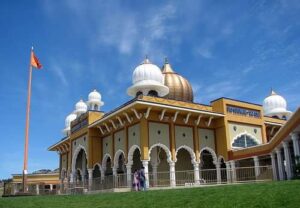
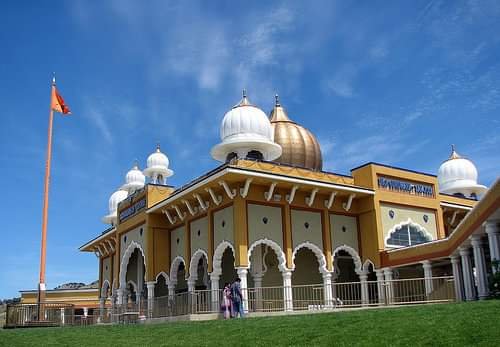
The verdict of the San Hoje Gurdwara Committee also hints at some of the future challenges ahead for the Sikh national consciousness. It also informs about future distortions found in Furmans, Sikh traditions, Sikh ideological interests and Sikh ideals. It is important to understand this puzzle hidden under the words. Some concepts related to nationalism make the complexity of this puzzle somewhat easier. Just as nationalistic consciousness is a powerful source of distinct identity of a community or nation. The political, social and mental manifestations of a community and nation are reflected in the national consciousness. National sentiments, the collective sense of attachment to the nation, are elements of national consciousness, which give shape to the collective identity of the national community in which a deep connection is established between the people of the community and its goals. In this situation, ideological differences from people’s unconscious mind-powers merge with national goals. National objectives are associated with national traditions, interests and ideals. Traditions bind the community together with a common language and values. Based on these, the people of the communities behave in a particular way.