

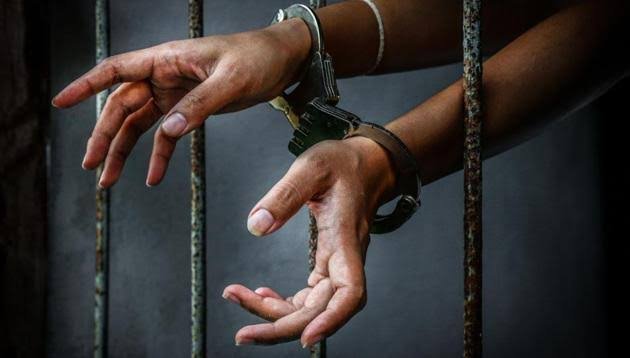
The National Human Rights Commission has taken note of the problems faced by prisoners in jails across the country and had recently issued notices to the Chief Secretaries of all states and union territories. The Commission has said that prisoners in jails are facing many problems, especially women prisoners. The main problems observed by the Commission in jails include overcrowding, lack of basic amenities and health facilities in jails.
The National Human Rights Commission said that these issues have been brought to the notice of the Commission through reports and complaints prepared after visiting various jails across the country.
After this, the Commission has issued notices to the Chief Secretaries of all the states and Union Territories and sought a report from them within four weeks. The Commission has also specified the points that should be mentioned in the report to be submitted.
Condition of Women Prisoners
In the information sought by the Commission from the states, it has been asked to tell the number of women prisoners lodged in the state jails. Along with this, the number of women prisoners living with children has also been sought. The Commission has also sought the number of convicted and undertrial women prisoners, that is, those who have not yet been sentenced and only their trial is going on. Apart from this, the Commission has also sought details of undertrial male and female prisoners who have been in jail for more than a year.
Most of the jails are overcrowded.
The Commission has Concerns have been expressed over the violation of the rights of prisoners to dignity and security, mental stress due to increasing violence against them, lack of adequate toilets, sanitary napkins and non-fulfillment of basic needs like clean drinking water facilities.
The Commission has also raised questions on the quality of food served in prisons, which leads to malnutrition, especially in the case of pregnant women and lactating mothers. Apart from this, concerns have also been expressed on issues like education of children living with women prisoners, legal aid provided to prisoners, vocational training and rehabilitation.
Condition of Prisons in India
About two years ago, the Standing Committee on Home Affairs in Parliament had submitted its report on ‘Prisons – Conditions, Infrastructure and Reforms’ in which it expressed concern over the overcrowding of prisons. In its report, the committee had said that the average occupancy rate of prisoners in prisons across the country is 130 per cent. This means that if the capacity of the jail is 100 prisoners, then 130 prisoners are staying there. According to the report, more than half of India’s prisoners are lodged in jails of six states, including Uttar Pradesh, Bihar, Maharashtra, West Bengal, Delhi and Madhya Pradesh.
The committee had recommended transferring prisoners from overcrowded jails to jails within the same state or in other states. The committee had also raised questions on issues that the Human Rights Commission had taken note of. Apart from this, the committee had also raised questions on the shortage of jail staff and the low number of women in jail jobs and recommended that the vacant posts should be filled within three months.
IPS officer Amitabh Thakur, who had held senior positions in UP, was forcibly retired a few years ago for exposing the lapses prevalent in the police department. Amitabh Thakur has taken over as IG Rules and Manuals. After retirement, he was also arrested due to which he spent several days in jail. Amitabh Thakur says that he has experience as both an officer and a prisoner.
The Supreme Court has also expressed concern several times over the increasing overcrowding in jails. According to the National Crime Records Bureau, as of December 31, 2021, there were a total of 5,54,034 prisoners in Indian jails, but only 22 percent of these prisoners were those who had been convicted by the courts and were serving their sentences. The remaining prisoners were under trial. Their number is constantly increasing.
According to data from the National Judicial Data Grid, more than four crore cases are pending in the lower courts across the country and most of these cases are more than a year old.
Supreme Court lawyer Harvinder Singh Phulkaa says that the presence of such a large number of undertrial prisoners in jails not only raises questions about the functioning of the criminal justice system but also creates inhumane conditions for the prisoners in jails. One of the reasons for the lack of basic facilities in jails is the presence of prisoners beyond their capacity. Phulkaa says that my experience is that whatever is said in the jail manual needs to be re-evaluated. The food is not bad but there is a huge lack of other basic facilities. According to Article 19, prisoners also have the right to live. But the jail authorities and employees do not think so. The jail thinks that we are providing food and that is enough. They do not need anything else. While it is the responsibility of the government to ensure a better life for the person inside the jail.”
Another senior Supreme Court lawyer Amitabh Thakur says that 60-70 percent of the facilities are being spent on corruption. Separate extortion is being done from the prisoners. If they do not pay, it is common to beat them. Overall, this