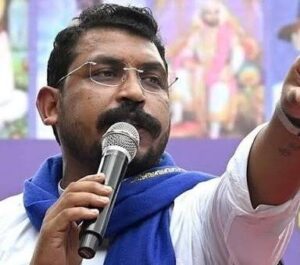


Chandra Shekhar’s rise has caused a lot of political damage to the BSP, especially in UP. The BSP, which was once the main contender for power in UP, is now losing its grip. In the 2019 Lok Sabha elections, the BSP had allied with the SP and won 10 seats, but in the 2022 assembly elections, the party was reduced to just 1 seat. The role of Chandra Shekhar’s Azad Samaj Party is also believed to be behind this, which has damaged the BSP’s vote bank in many seats. Chandra Shekhar’s party fielded candidates in more than 100 seats in 2022, and although it could not win any seat, it played a significant role in dividing the votes of the BSP and the SP. For example, in many seats in western UP, where Dalit voters are in large numbers, the Azad Samaj Party got 5-10% votes, which led to the defeat of the BSP. Apart from this, Chandra Shekhar’s politics also affected the internal organisational capacity of the BSP. Many young BSP workers, who were disappointed with Mayawati’s moderate politics, have been drawn towards Chandra Shekhar’s Bhim Army. This loss was not only in terms of votes but also in terms of the party’s ground hold.
Reasons for Chandra Shekhar’s rise in UP
There are several reasons behind Chandra Shekhar’s rise, which have made him an important player in UP politics.
Mayawati’s politics, which remained power-centric and moderate, could not fully engage the young Dalits. Chandra Shekhar has filled this void. His aggressive politics, street protests, and activism on social media have attracted the youth. Chandra Shekhar had directly raised the voice of Dalits in the case of caste violence in Shabirpur, Saharanpur in 2017 and the rape of a Dalit girl in Hathras in 2020. This has increased his reputation.
Chandra Shekhar has succeeded in reaching out to the youth through the use of social media. His videos, speeches and slogans go viral on social media, which increases his reach.
While Mayawati speaks on caste issues in a restrained manner, Chandra Shekhar targets upper castes and government policies in a direct and sharp style. This style appeals to the youth.
Chandra Shekhar has tried to carve out his political niche by talking to the SP and other parties. His victory from the Nagina seat in the 2024 Lok Sabha elections proved that he understands the importance of political alliances.
In which states is Chandra Shekhar’s rise?
Chandra Shekhar’s rise is mainly visible in the western part of UP, such as in areas like Saharanpur, Muzaffarnagar, Meerut, and Nagina. These areas have a large number of Dalit and Muslim voters. His victory in 2024 from Nagina Lok Sabha seat proved that his hold is strengthening in western UP. Apart from this, Bhim Army’s activity has also increased in some parts of Haryana and Rajasthan.
Chandra Shekhar’s recognition and rise in Punjab:
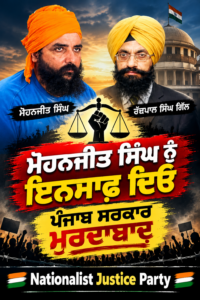
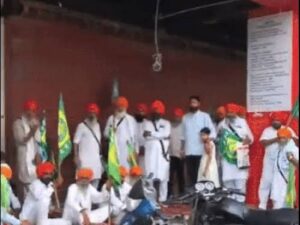
Chandra Shekhar’s recognition and rise in Punjab is still limited, but it has started. The Dalit population in Punjab is about 32%, which is the highest in the country. Due to this, the BSP had performed well in Punjab at times, especially in the Doaba region. In the 2019 Lok Sabha elections, the BSP had secured 4.79 lakh votes in Jalandhar, Hoshiarpur and Anandpur Sahib seats. Chandra Shekhar’s Bhim Army has increased its activity in the Doaba and Majha regions of Punjab. During the 2020 farmers’ agitation, the Bhim Army participated in protests on the Shambhu border in support of farmers, which increased its recognition among the Dalit workers and farmers of Punjab. However, his political party’s ground hold in Punjab is still weak, and it has to compete with major parties like the Shiromani Akali Dal, Congress and Aam Aadmi Party. The young Dalits of Punjab, especially in urban areas like Jalandhar and Hoshiarpur, like Chandra Shekhar’s politics. But his party has not yet achieved any major political success in Punjab. The presence of the Azad Samaj Party in the 2022 Punjab assembly elections was negligible, and the main reason for this was the lack of local organization.
Chandrashekhar’s support among political parties
Parties like SP and Congress see him as a potential ally, but BJP and BSP consider him a direct opponent. Chandrashekhar’s political reputation is based on his grassroots struggle and youth engagement. But his party’s organizational capacity and financial resources are limited, which are obstacles to expanding his political support.
Chandrashekhar Azad’s rise is the beginning of a new chapter in Indian politics, especially Dalit politics. He has the potential to challenge Mayawati, but this potential is not yet fully developed. The BSP’s calling him an agent of the BJP may be a political ploy, but it has definitely damaged the BSP’s vote bank. His rise in UP is a result of youth frustration, grassroots struggle and the power of social media. His recognition in Punjab is still limited, but the possibilities are huge. In the coming time, if Chandra Shekhar strengthens his organizational capacity, he can become a challenge not only to Mayawati, but also to other big parties.