
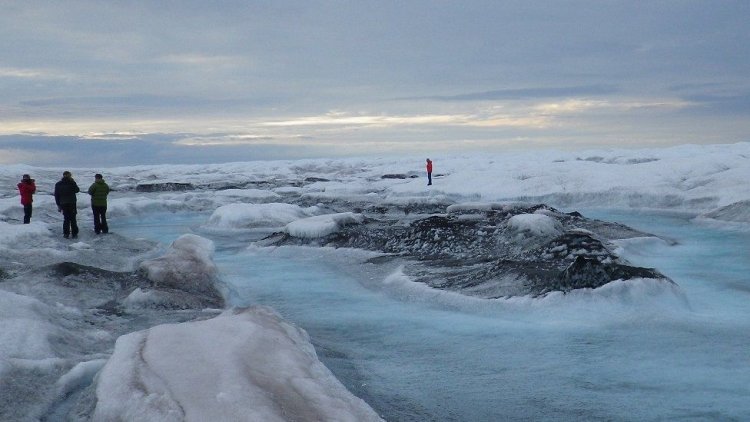
New Delhi: The United Nations has reported that all 19 glaciers in the world will face significant losses for the third consecutive year in 2024. The United Nations warned that saving glaciers is now a matter of “existence”.
The UN World Meteorological Organization’s weather, climate and water agency said on the occasion of World Glacier Day that the fastest melting of glaciers has been recorded in five of the last six years.
‘Preserving glaciers’
Protecting glaciers is not just an environmental, economic and social imperative; it is a matter of the future, said Celeste Saulo, head of the World Meteorological Organization. The World Meteorological Organization said that in addition to the ice sheets of the islands of Greenland and Antarctica, more than 275,000 glaciers around the world cover an area of about 700,000 square kilometers. But glaciers are shrinking rapidly due to climate change.
“2024 will be the third consecutive year that all 19 glacier regions will lose mass,” the World Meteorological Organization said, citing new data from the Swiss-based World Glacier Monitoring Service, which said a total of 450 billion tons of glaciers had been lost. “From 2022-2024, we saw the largest glacier loss on record in three years,” Saulo said. Last year, glaciers in areas such as the Canadian Arctic and Greenland glaciers saw declines. But glaciers in Scandinavia, Norway’s Svalbard archipelago and northern Asia experienced their worst year ever.
The World Meteorological Organization said that at the current rate of melting, many glaciers in western Canada and the United States, Scandinavia, central Europe, the Caucasus, New Zealand are at great risk. The World Meteorological Organization said that with ice sheets, glaciers provide about 70 percent of the world’s drinking water, the high mountain areas act as water towers. If they disappear, it could threaten the water supply for millions of people living downstream.
“According to the United Nations, we must combat global warming. “We can eventually compromise on many things but we cannot compromise on melting ice”.
On the occasion of the first World Glacier Day, the World Meteorological Organization declared an American glacier the first glacier of the year. Washington’s South Cascade Glacier has been continuously monitored since 1952.
How big will the crisis be
For the past several years, there has been a lot of change in the weather. Unseasonal rain is a result of this. This can also disrupt the crop cycle because every crop needs certain days of heat or certain periods of cold to ripen. According to scientists, a certain amount of moisture in the air should be present in the weather during different times of the year, which is essential for crops. This has changed, which is believed to have happened due to the melting of glaciers and the increase in the temperature of the earth. Due to the melting of glaciers, water remains in the main rivers and tributaries of the whole world throughout the year. Due to the increase in the temperature of the earth, the water level in the oceans will rise due to the melting of thousands of millions of years old ice of glaciers, which will drown small islands, and there will be major sea storms in coastal areas. In 2005, a tsunami occurred in India. Initially there will be floods, later when the glaciers disappear there will be no water in the rivers and there will be drought.
In the modern era where there has been progress everywhere. Man has built dams on rivers to stop the water of the rivers, the result of which is that the rivers become very small as they approach the sea, due to which the deltas are also disappearing. Mangrove forests, which have thousands of species of animals, fish and trees, are dying. Every living being in the world is suffering the consequences of human development. It is good if we take care of ourselves even now, various conferences related to the environment are being held on earth. In these, the suggestions made by researchers and scientists should be considered by the heads of all countries and industrialists.