

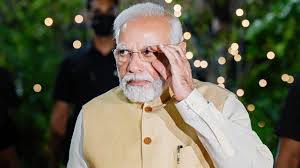
There are ongoing disputes on many issues among the communist parties of India. Usually, these disputes are ideological, but sometimes there are political disputes as well. Especially in those states where the communist parties have a small base and where they have a chance of winning if they contest elections, but still the country’s largest communist party CPM and the newest and comparatively more revolutionary CPI ML have a dispute over the Narendra Modi government at the center. The dispute is whether the Modi government should be called fascist or neo-fascist or not. An ideological struggle has broken out between the two parties on this. The leaders of ML are calling the CPM a compromiser. In fact, this year the CPM The party’s national congress is to be held, for which the party’s political proposal was prepared, in which the Modi government was called fascist, but later the party separately issued a note saying that it does not consider the Modi government to be fascist or neo-fascist. After this note, CPI ML General Secretary Dipankar Bhattacharya is furious. He has described the CPM as compromisers and said that the Modi government at the center is a fascist government and there should be no hesitation in saying so. However, even after the ML’s objections, it does not seem that there will be any change in the CPM’s political proposal.
Fear of recession and further economic turmoil in the months due to Trump trade war
* Impact from Wall Street to India
* Why did Trump’s comments create fear?
Indian exports were badly affected due to US tariff threats in February. Official sources in the Indian government gave this information on March 11. The government official said that India is now going to change the policy amid uncertainty in the global market and the threat of tariffs on goods sent to the US by the Donald Trump administration. The Indian stock market fell by 300 points in early trade on Tuesday. Although the situation recovered later, the markets of US Wall Street and other countries fell sharply on Monday.
Investors around the world fear that their aggressive tariff policies on India, Canada, Mexico and China could push the US into recession, which has created widespread uncertainty in global financial markets. Technology stocks suffered the most in the US market. The Nasdaq Composite saw its worst day since 2022, falling 4%. Tesla shares fell 15.4%, while shares of AI chip maker Nvidia fell more than 5%. Shares of other tech companies like Meta, Amazon and Alphabet also saw sharp declines. “We are seeing a strong disconnect between stock market activity and the real economic outlook,” a White House official said. But the reality on the ground is that global markets are currently sinking.
China announced that consumer prices fell in February for the first time in 13 months. This led to the Hong Kong market falling 1.8% and Shanghai down 0.2%. The decline in the US market shows that investors are still worried about volatility and a recession.
During an interview with Fox News, Trump defended his trade policies, saying that this is a time of transition. “We’re bringing money back to America.”
Economic analyst and investment manager Rachel Winter warns that rising tariffs could fuel inflation and slow growth. “The tariffs that Trump is imposing will cause inflation to rise,”
Speaking to Fox News, Trump refused to dismiss fears that his trade policies could lead to an economic recession. He said that this is a time of transition, because what we’re doing is beneficial to America’s economic interests. We’re bringing money back to America. This is a big deal.
White House spokesman Kush Desai said President Trump delivered record jobs, wages and investment growth during his first term, and he is ready to do so again. However, financial analysts have warned that the market reaction reflects growing uncertainty.
Trump’s comments resulted in a sell-off in the market. Wall Street fell sharply. Tesla shares fell 15.4%, while shares of major tech firms such as Nvidia fell more than 5%, Meta, Amazon and Alphabet also fell sharply. Asian markets reported that Japan’s Nikkei 225 fell 2.5% in early trade, South Korea’s KOSPI fell 2.3% and Australia’s S&P/ASX 200 fell 1.8%.
Economist Mohamed El-Erian said investors were initially very cautious about Trump’s plans for deregulation and tax cuts. There were expectations, but they underestimated the possibility of a trade war. With additional tariffs on Canadian steel and aluminum expected, investors fear further volatility. According to a BBC News report, market uncertainty is likely to persist, and analysts fear further economic turmoil in the coming months. Indian exporters under pressure Indian exporters are under increasing pressure due to aggressive policies being adopted by trading partners such as the US and the European Union. Reuters Agency says that the Indian government may take a decision on encouraging exporters within a month. Funds have already been allocated in the new fiscal year budget. However, the government has not yet
There has been no official comment on the matter. Union Finance Minister Nirmala Sitharaman had said last Thursday that the US tariffs will have an impact on India. Trump had earlier described India as the largest taxing country. That is why Trump said that we will impose taxes on India as well. After this, the situation worsened.
An Indian government source said that the US tariff threats have had an adverse impact on Indian exports during the month of February. India is considering giving incentives to exporters amid global uncertainty, a decision on which is expected to be taken within a month.
A government official said that India is considering giving fresh incentives to its exporters amid global trade uncertainty and the potential impact of tariffs on shipments sent to the US by the Donald Trump administration.
Indian exporters are under increasing pressure due to aggressive policies being adopted by trading partners like the US and the European Union.
Speaking separately at an event, the official said that the government is expected to take a decision on incentivizing exporters within a month and funds have already been allocated in the budget for the year starting April 1.
Union Finance Minister Nirmala Sitharaman had also said recently that the impact of the US tariffs will be felt in India.
The more a country imports from other countries, the more its citizens will have to bear the financial burden. The value of the Indian rupee against the US dollar has fallen to its record low several times. Now if Trump imposes these tariffs on India, the economy may also suffer a setback. According to a survey, India’s GDP rate is likely to grow by 6.3 percent in the third quarter, but if the tariffs increase, it may have to suffer a further decline. On the other hand, the government should also answer the public on what issues are right and wrong in the relations between the two countries so that people are prepared for any kind of global shock.