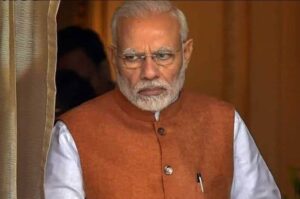

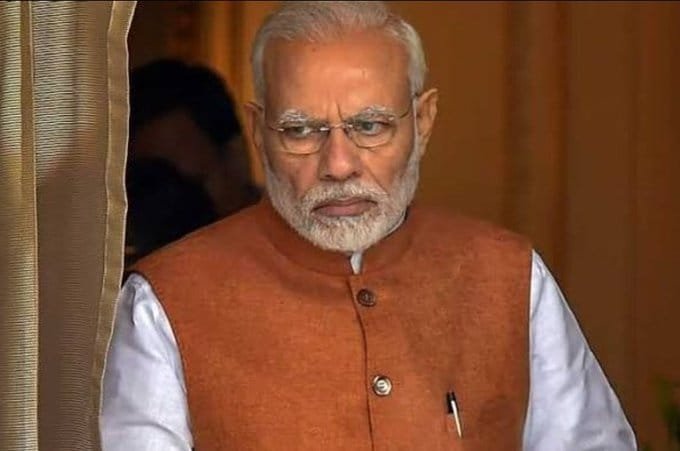
How can India’s Foreign Minister do such things? In one, he is seen saying – It was the start of the operation, we had sent a message to Pakistan (We had told Pakistan at the beginning of the operation). Anyone can understand its Hindi or Punjabi meaning. After this, Jaishankar is saying that Pakistan should understand that we are attacking the hideouts of terrorists, not their military installations.
In the second video, a foreign journalist asks him – Where was US in this process? (Where was America in this process?) Then Jaishankar gives a surprising answer – Well, US was in the United States (America, was in America). After this, he says in shaky words and broken sentence structure that (American) Secretary of State Rubio had spoken to me and Vice President Vance had spoken to the Prime Minister. They also spoke to Pakistan and other powers. Now what should be understood from these statements of the Foreign Minister?
‘Operation Sandhur’ lasted only 22 minutes. If he had told Pakistan after the operation was over, his sentence should have started with ‘It’s the end of’ instead of ‘It’s the start of’. From the second video, it becomes clear that America had a special role in the ceasefire. That is, the Kashmir issue has been internationalized.
Stories that are made up are told. But there are some stories that we not only see being made with our own eyes but also participate in making them. This is called ‘narrative’ in English. This reality is fabricated by cleverly using some real and some fake pieces. At present, we are being told about the military conflict between India and Pakistan by creating several parallel narratives inside and outside the country. Every day, some piece is added to them, which keeps them fresh. There are two things special in this – first, all these narratives are being played without being influenced by each other. Second, we all, i.e. the common people, are also choosing and combining various pieces and deriving our own meanings. The unfortunate result of this cycle is that after some time, it has become almost impossible to understand which narrative the government wants to create and play in the most common form. It should have been that there was a central narrative that people would believe in.
A continuously running narrative is the one that is being served to us by commercial news channels on TV, which is very ridiculous and unbelievable. These channels had even captured Lahore during the conflict, reported the destruction of the port of Karachi. Indian troops were said to be advancing towards Islamabad and General Asim Munir was even arrested. At that time, these channels were also running a spy story on their screens. They are not concerned that the Hisar police have officially refuted many of their claims. But this section of the media does not care about anything. In parallel, another narrative is being formed from the statements of government figures, which the common people themselves are preparing in their minds. This includes some statements by the Foreign Minister, his blunder is surprising. The spokesperson of the Ministry of External Affairs has interpreted these statements in such a way that citizens who know Hindi and English are forced to smile. There are also claims by army spokespersons, one of which has even been withdrawn.
A third narrative parallel to these two is being formed from the statements of responsible representatives of the BJP. For example, a leader who is a multiple MLA described Colonel Sophia Qureshi as the ‘sister of terrorists’. A deputy chief minister described the army as bowing at the feet of the prime minister. A Rajya Sabha MP even found the wives of the tourists killed in the Besaran (Pahalgam) valley lacking in qualities like bravery. These statements are being heard from politics to high courts, but the matter is not stopping anywhere. No one knows which of these three parallel narratives is the official narrative of the Indian government. In this flurry of narratives, the Congress-led opposition is bombarding the government with its questions. While demanding a special session of Parliament, opposition leaders are visiting the affected incident sites. In a way, the opposition narrative has also made its presence felt in this war of narratives. No one knows when the government will practically refute or support this narrative, which is becoming a warning bell for the ruling party.
Perhaps a major reason for this is that India has found itself in such a dilemma on the international stage, the final outcome of which cannot be predicted at present. The first reason for this uncertainty is Donald Trump’s behavior, which may seem ridiculous or unnecessary at first glance, but it has put Indian foreign policy in trouble. In fact, Trump has his own narrative, with which he wants to show that he does not only run America, but the entire world follows his instructions. He has appointed himself as the ‘punch’ on the Kashmir issue between India and Pakistan. He can also claim the Nobel Peace Prize on the basis of the false claim of preventing a nuclear war between the two countries. This is a difficult question for India in the Trump era.
It has become clear that it is not able to completely thwart the narrative of Pakistan internationalizing the Kashmir issue. China, however, is not running a separate narrative like the US, but it seems to be engaged in strengthening Pakistan’s anti-India narrative.
The presence of another strange narrative can be seen here. It has created competition between different lobbies of the international arms industry. Which aircraft was shot down during the military conflict, who shot it down, which deal will be cancelled now, who will buy which and whose aircraft – such things are going on in the Indian and international forums. Behind this are the handiwork of the European, Chinese, Turkish and American arms industries worth trillions of dollars. Overall, such a gamut of narratives has spread that this state of confusion cannot be removed without the multifaceted intervention of the government.