
The issue of gangster violence and threats has now become a serious problem in Punjab and Haryana. The Punjab and Haryana High Court has expressed concern over this issue and has issued strict orders to the state governments. The court rightly stated that the lack of legal framework to deal with gang violence is worrying. Therefore, the Punjab and Haryana governments have been directed to prepare a Standard Operating Procedure (SOP) within two months, which should have clear guidelines for investigating gang cases. Three years have passed since the murder of Punjabi singer Sidhu Moosewala, but the failure of the system is still clearly visible in such cases. This issue is not limited to Punjab or Haryana alone, but the poison of gang culture has now spread to foreign countries.
There are many reasons behind the growth of gang culture in Punjab. Unemployment, youth’s inclination towards drugs, social inequality and weak legal process are the biggest factors. Gangsters lure the youth with the lure of glamour and fast money. Along with this, political patronage and police leniency also embolden gangsters. Songs promoting ‘gangster culture’ in the society and social media have also fueled this menace.
Police encounters in Punjab have been a way to nab gangsters. In the last few years, hundreds of encounters have taken place, in which several prominent gangsters were killed. But the exact figures are not made public, as these cases are often mired in controversy. Between 2022-2024, according to media reports, more than 50 such encounters took place, in which more than 20 gangsters were killed. But the issue of fake encounters also arises. Human rights organizations and some political parties, such as the Sanyukta Samaj Morcha and the Shiromani Akali Dal (Amritsar), have questioned such encounters, claiming that many encounters were ‘fake’.
Fake encounters are not a permanent solution to the gang problem. This is a kind of immediate action, which often leads to human rights violations and discrediting the police. Such encounters may instill fear in the minds of gangsters, but they do not eradicate the root cause of gang culture. Strict legal action, speedy investigation and exemplary punishments can be more effective instead.
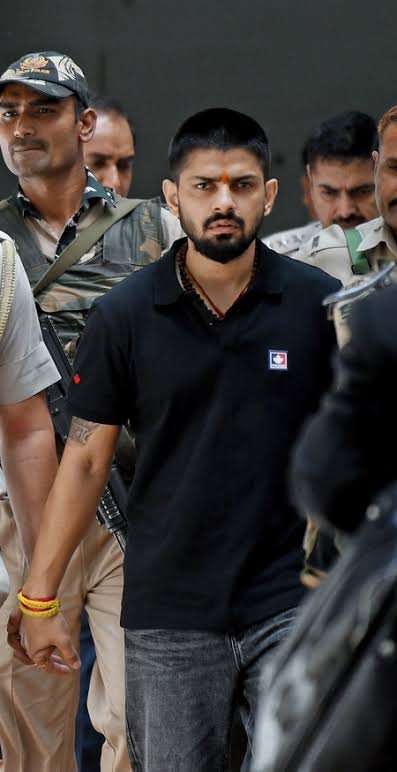
There is a lack of accurate data, but according to police and media reports, more than 50 small and big gangs are active in Punjab. Names like Lawrence Bishnoi gang, Jaggu Bhagwanpuria gang, and Davinder Bambiha gang are at the top of the list. These gangs are involved in activities like drug trafficking, extortion, murder and arms supply.
A multi-pronged strategy is needed to eradicate gang culture. First, strict laws like Uttar Pradesh’s Gangsters Act or Maharashtra’s MCOCA should be implemented in Punjab as well. The formation of anti-gangster task forces and special task forces at the provincial and district levels can speed up investigations and action. Strict measures and police reforms are also necessary to check political patronage. Most importantly, the safety of complainants must be ensured so that people come forward without fear. Youth can be protected from the lure of gangsters by providing employment and education opportunities.
It is often claimed that some political parties or government officials patronize gangsters. In the case of the Lawrence Bishnoi gang, many times political and police officials have been accused of links, but no solid evidence is available. Such allegations have also been made by Canada. The Indian government had categorically rejected this claim.
It is also true that the ability of gangsters to continue their activities from inside the jail reflects the failure of the police and the jail administration.
The issue is still unclear due to lack of evidence. The Punjab and Haryana High Court has now taken a tough stance on the gangster issue. In a recent judgment, the court made it clear that it is the duty of the government to ensure the safety of citizens. The court ordered Punjab and Haryana to formulate clear policies to prevent gang violence. The court also said that special measures should be taken for the safety of complainants, so that people can cooperate without fear. Earlier, the silence of the courts was sometimes seen as a leniency of the system, but now the proactive stance of the court raises hope.