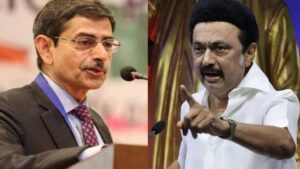

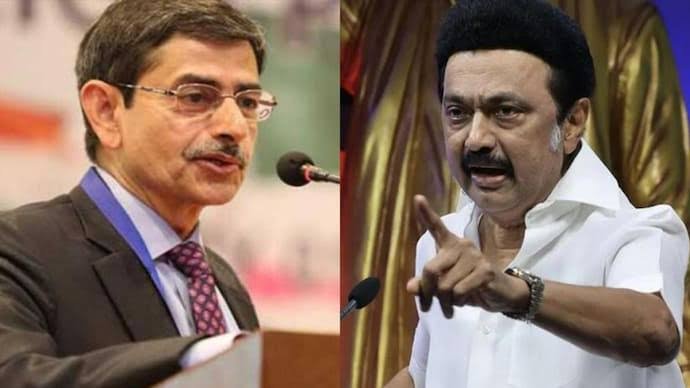
Despite facing defeat in the Supreme Court, Tamil Nadu Governor R.N. Ravi is not ready to back down. After a strong rebuke from the Supreme Court and the decision to enact 10 bills without his signature, he is still trying to create controversy. It is not known at whose instigation he is doing this, but it is being said that the state BJP leaders as well as the leaders of the allied parties are also angry with him. The state BJP leaders have advised him to keep quiet and it is being said that the AIADMK and PMK have also expressed their displeasure over the Governor’s work. He has created a new controversy by calling a meeting of the vice chancellors of the state’s universities. Recently, Chief Minister M.K. Stalin had held a meeting with the vice chancellors and registrars. After this, Governor Ravi called a two-day meeting in Ooty from April 25 to 27. Recently, when he came to Delhi, he invited Vice President Jagdeep Dhankhar to attend the program. All the NDA leaders of the state are angry with this, while RSS officials and workers are also said to be angry. They say that due to the activities of the Governor, the functioning of the state government is not being paid attention to, whereas in an election year, it is more important to put the state government in the dock.
The Governor clashed with the Tamil Nadu government by delaying the approval of 10 bills passed by the Rajya Sabha and criticizing the Dravidian ideology. This seems to be an interference in the rights of the state, as the Supreme Court has called the Governor’s actions illegal and unconstitutional. Tamil Nadu can now implement the bills that have been approved, and the Supreme Court has set a time limit for future governors. This is happening due to political differences and ideological differences between the central and state governments.
Governor R.N. Ravi delayed the assent of several bills of the Tamil Nadu government, which the state government considered unconstitutional. In addition, the Governor criticized the Dravidian ideology, which is important to the state government, which exacerbated the conflict. It may be recalled that the Supreme Court ruled on April 8, 2025, that the actions of the Governor were illegal and unconstitutional, which amounted to interference in the rights of the state. This decision makes it clear that the Governor should not obstruct the proceedings of the Rajya Sabha. After the Supreme Court’s decision, the Tamil Nadu government can now implement the bills that have been approved. The court has set a time limit for the Governors in future, which will help reduce such conflicts. This conflict is due to political differences and ideological differences between the central government (BJP) and the state government (DMK). The Governor, who is appointed by the Centre, often does not align with the policies of the state government, which increases the conflict. Following the Supreme Court’s decision, the Tamil Nadu government can now implement bills that have been approved.