
Jihadi attack in Pahalgam While tensions have risen between India and Pakistan after the attack, educational institutions in Punjab have increased their vigilance due to alleged untoward incidents against Kashmiri students. After the Pahalgam attack, only one or two cases were reported where some local saffron students attacked Kashmiri students. After the Pahalgam incident in Kharar, two female students were harassed by some saffron goons. During this, the student said that people associated with local saffron activists were threatening her even in the university where she studies. As soon as she reached her room, some people started banging on her door. When the student opened the door, they even st arted calling her a terrorist. She started feeling very restless.
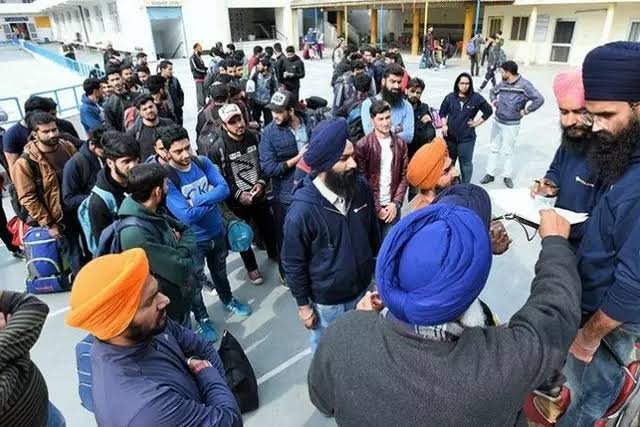
After the matter came to light, the police have swung into action. Senior police officers met the Kashmiri students and assured them that they would not be allowed to face any trouble.
According to the National Students Union of India (NSUI) president, two such alleged cases have been reported in Punjab—one in Kharar and the other in Dera Bassi. The Central University of Punjab, Bathinda, which has around 2,800 students, of whom 85 are from Kashmir, has beefed up security despite no untoward incident. Students of the Universal Group of Institutions Lalru said that a communal group of students from “other states” attacked more than a dozen Kashmiri students on the intervening night of Wednesday and Thursday. They alleged that the attackers were armed with sticks and knives, and they abused the Kashmiri students and tore their clothes. The police confirmed reports of a scuffle involving Kashmiri students at the institution. UGI Dean Vikas Sharma dismissed reports of an “attack” and claimed that it was a “common quarrel” between two groups of students.
In Kashmir, many worried parents have demanded that their children be called back home.
Following this, not only the police and administration became active to maintain peace, but Sikh organisations have also stepped up to protect Kashmiri students. There were reports of clashes between some local students and Kashmiri students. The National Students Union of India (NSUI) and Sikh organisations have condemned these acts and asked for maintaining communal harmony.
N. SUI Punjab President Isharpreet Singh Sidhu has met the students. He warned that nothing like this will be allowed to happen in Punjab. He also alleged that the local police have not yet taken appropriate action against the culprits.
The United Sikh Students Federation, led by its national president Jugraj Singh Majhail, has taken up the responsibility of providing assistance and protection to Kashmiri students facing harassment and threats in the wake of this tragedy. According to Majhail, currently over 5,000 students are associated with the United Sikh Students Federation. He stressed that whenever his organisation receives a distress call, the team immediately dispatches volunteers to the spot to provide assistance—be it legal, emotional or logistical. The efforts in Punjab are being made in collaboration with a Kashmir-based NGO, Rah-e-Umeed Foundation, which has been working tirelessly to monitor the safety of Kashmiri students studying in different states. Suhail Mir, a key member of Rah-e-Umeed, said that his team is in constant touch with students across the country. Whenever we get a call from a student in distress, we immediately inform Jugraj Singh Majhail. He immediately reaches the spot and ensures the safety of the student. In the last few days, both the organizations have received hundreds of distress calls. Many Kashmiri students thanked the Sikh community for the support and sympathy shown. Khushal Singh, spokesperson of Kendriya Singh Sabha Chandigarh, said that they are arranging accommodation, economy, food for Kashmiri students. Financial assistance was provided to those Kashmiri students who were facing financial difficulties or who were temporarily facing difficulty in continuing their studies after the attack. Social workers associated with Sikh organizations, especially the Akali Dal and the Shiromani Gurdwara Parbandhak Committee (SGPC), assured the Kashmiri students of their safety. Several Sikh youth and local gurdwaras helped the students reach their hostels or residential places safely, especially when rumours of discrimination or attacks spread in some places. Sikh gurdwaras opened their doors to Kashmiri students. In many gurdwaras, free langar (food) and temporary accommodation were provided to the students, especially those who were worried about their safety or who were facing financial problems. This was a symbol of the Sikh spirit of “service” and “goodness of all”.
Meanwhile, Jammu and Kashmir Education Minister Sakina Masood reached Chandigarh and met the Punjab Governor. DGP Chandigarh also met DGP Punjab and Chief Secretary. After this, Punjab Director General of Police Gaurav Yadav directed the local police to conduct a raid at an educational institution in Lalru.