
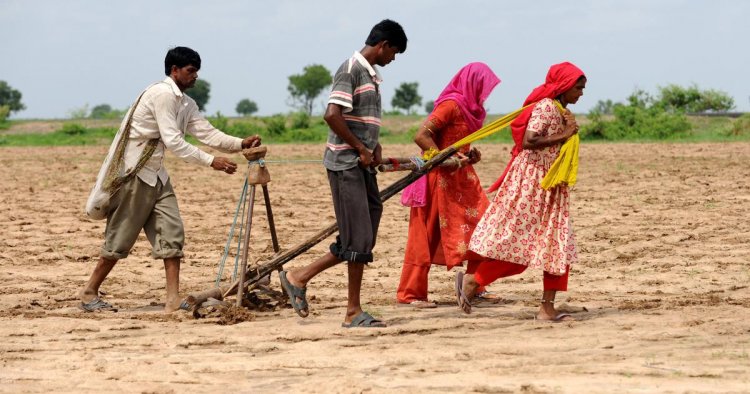
For the past decade, Dalit workers have been struggling for their identity and liberation in the country, but their movement has been viewed only from the perspective of voter politics; other aspects of the movement, which aim to liberate Dalits, have been neglected.
In Indian society, Dalits are the most oppressed, downtrodden and completely deprived of their fundamental rights. The governments of our country have not yet been able to fulfill their daily needs like food, clothes and housing. Many such issues arise in the country which are directly related to the Dalit movement, but after a few days of struggle, the struggle ends on its own.
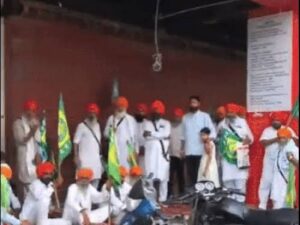
For almost a decade, Dalit workers in the villages of Sangrur district have been continuously struggling for their demands and are also in the discussion. With their struggle, they have secured their right to the third share of the government-owned panchayat land in the villages. During this struggle, an elderly Dalit woman, Gurdev Kaur, died and Dalit workers from dozens of villages like Balad Kalan, Jhaneri, Jalur and Mimsa have been subjected to torture during the struggle. Apart from this, two other struggles emerged in Sangrur district in a very sharp manner, one of which is the case of the beating of a Dalit laborer from village Changaliwala in Lehragaga area and the other is the beating of Dalit boys from village Gharachon in Sangrur district; now the case of village Bakshipura near Sunam has come to light. Whenever a Dalit struggle emerges, the struggle is ended or brought to an end after accepting some of the demands of the Dalits. Why are Dalit struggles emerging in different parts of the country and why are the governments of the country not providing a permanent solution to them? It is also important to discuss the background of the reasons for such discrimination against Dalits by the governments.
Dalits are among the groups that have been oppressed and trampled on for centuries in the Indian social system, whose backwardness in social, economic, political and religious fields is due to caste-based oppression and exploitation. The touch, participation and life of Dalits have been considered as unholy and anti-social. Behind all this anti-Dalit system, Hinduism or the centuries-old social system of Hindu society based on Hindu Vedas and scriptures works. Religion has played a special role in perpetuating the caste division in society and inculcating it in the psyche of the Indian man. By linking caste with religion, the future of individual life and the group was determined and defined within a framework by the religious scriptures, which has been continuously continuing for centuries.
Caste discrimination has a multi-layered form in different states of India. Among them, the pain of caste discrimination is economic hardship, economic exploitation, domestic poverty, wandering circles of adverse conditions, restrictions on public places, untouchability, social and mental torture, superstition, illiteracy, plight of women, deaths due to diseases in dirty living places, non-fulfillment of basic needs, etc. Except Punjab, in various states of India, the caste conflict of Dalits with the upper castes is directly visible; this conflict is indirect in Punjab. Caste division exists in Punjab, but in times of caste conflict or tension, some people, despite being in the upper caste, sympathize with Dalits and stand against their own caste.
The source of consciousness or inspiration of the Dalits of India is Buddhism, Charvak, Bhakti movement, including Bhakti, progressive literature or Marxist, social or political movements and ideas primarily influence or inspire, but the basis of the basic inspiration of the Dalits is the life struggle and ideas of Dr. Bhimrao Ambedkar, from which they have sharpened their consciousness. The caste system and poverty in Punjab are not in the cruel form that is in other parts of India. The reason for this is the fertile land of Punjab and the spread of revolutionary religions like Sikhism.
Even in the present times, in the name of votes, Dalit castes are deceived and made to fight among themselves in the politics of caste and subordinate political activities. In Punjab, the victims of caste politics, the wealthy class of the society took over the gurdwaras and forced the Dalit parties to build separate gurdwaras or they were forced to take shelter in deras.
Limiting the struggles for economic equality being waged by the wronged Dalits in any part of the country to compensation alone is tantamount to reducing it to a great extent. The liberation of Dalits lies only in the fact that the governments sincerely make serious efforts to give economic, political, religious and cultural equality to those Dalits. If the efforts of the governments are not in this direction, then somewhere or the other, caste-based discrimination against Dalits will continue.