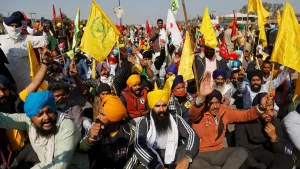

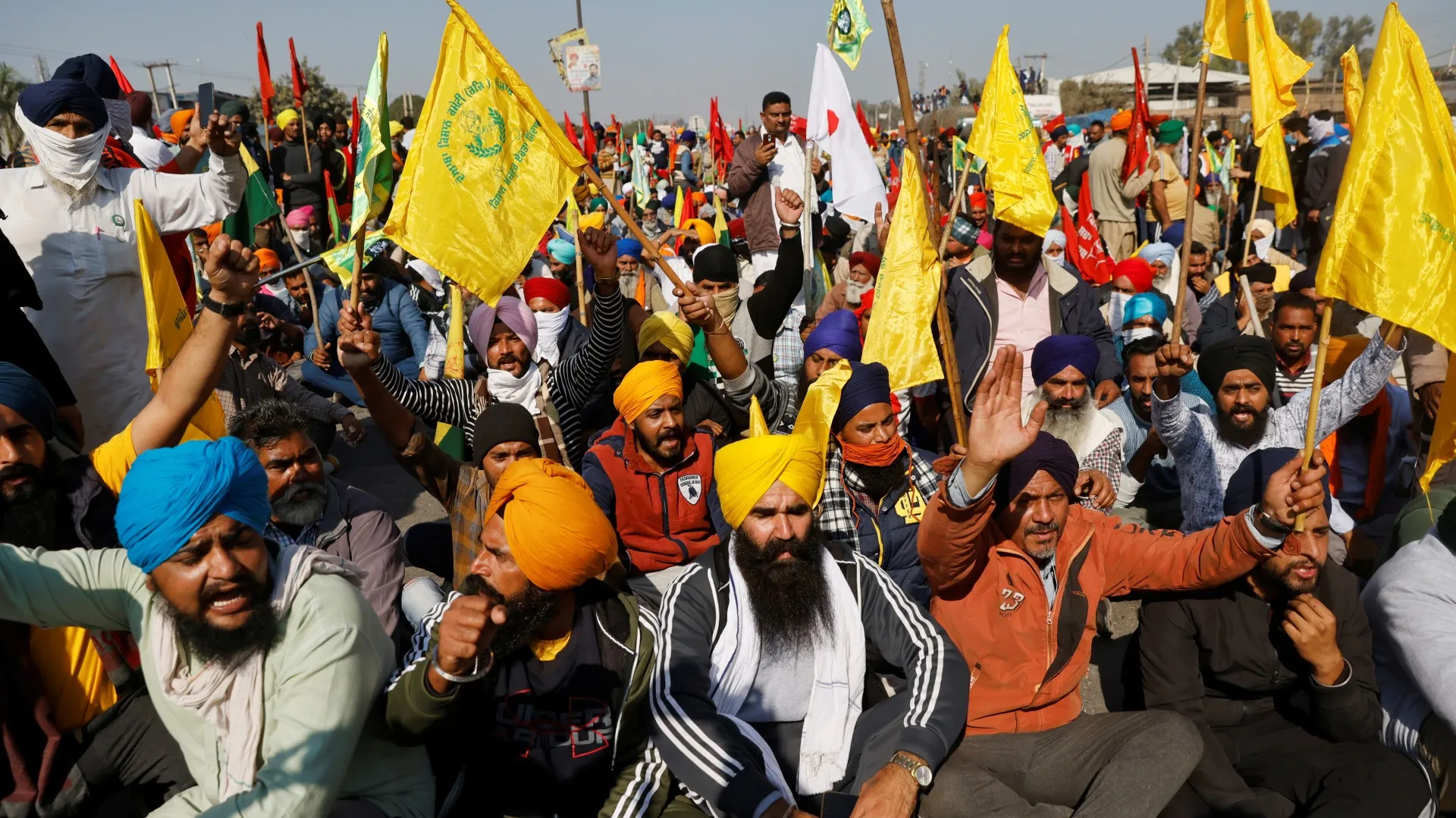
It has been 77 years since the country became independent, but even today, a feeling of slavery is being created. The government had passed the Essential Commodity Act (AIEE) in 1955. In Jawaharlal Nehru’s cabinet, Food Minister Rafi Ahmed Kidwani had started work on the new Essential Commodity Act in 1952, so that the people of the country could be protected from the exploitation of traders in the purchase of food grains. This Act was passed and implemented in 1955, which was made because in the first years after independence, the shortage of food grains in India was at its peak. India had to extend its hands to other countries for food grains. Traders used to hoard essential commodities and sell them at high prices, the government had no control. With the newly made law, the exploitation of people stopped. Punjab was the first to contribute to the Green Revolution in the country to increase food grain production and fed the entire country, but forgetting all this, the current government has embarked on the path of destroying the farmers. The BJP government at the center had made a desperate attempt to hand over the farmers to the traders by bringing 3 agricultural laws 5 years ago, but after the United Kisan Morcha (SKM) fought a struggle for almost a quarter of a year on the borders of Delhi, the center withdrew the controversial agricultural law.
Recently, Vice President Jagdeep Dhankhar, in front of Agriculture Minister Shivraj Singh Chouhan at an event of the Indian Council of Agricultural Research, appealed to the government to consider the farmers’ demand for Minimum Support Price (MSP) positively and said that our mentality should be positive. We should not create obstacles thinking that giving MSP to farmers will have bad results. He said that instead of chasing away the protesting farmers, there is a need to embrace them. The Vice President asked Chouhan why the central government is not talking to the farmers? After all, why are the farmers demanding the legal right of MSP?
The number of farmers cultivating less than five acres of land in the country is 86 percent, they definitely need MSP for the market. Due to the lack of storage facilities and limited time for cultivation of the next crop, they have to sell the crop in the market along with the harvest. Due to the lack of guarantee of MSP, the farmers get the price of the crop less than their cost price. With a safe system like MSP, the farmers will get a guaranteed price for their produce, this legal guarantee will also protect the farmers from the looting by the middlemen by providing a reasonable and stable price. MSP Since the Guarantee Act is limited to only a few areas and a few crops, farmers have to face financial losses on cultivating crops other than wheat, paddy, sugarcane. The government is completely ignoring the C2+50% formula recommended by its own National Farmers Commission report, called the Swaminathan Report, and is not implementing it. There are three formulas for determining MSP – the first is the A2 formula, which is based on the farmer’s cost (expenses incurred on ploughing, sowing, seeds, oil and rental of machines), the second is A2+F i.e. A2+Family Labor, in which in addition to cash expenses, family labor is also added, and the third is C2 – Cost Sub, which includes cash expenses + family labor + interest on land lease or land installment, wear and tear of tools and replacement of tools with new technologies, etc. The central government announces MSP only by counting A2 and in view of the opposition of the farmers, it counts maximum A2+ family labor, but is not at all ready to give C2, whereas the Swaminathan report has recommended giving C2+ 50 percent profit. Before the 2014 general elections, Modi had promised to do this first after winning the elections. Instead of fulfilling the promise, the center said in an affidavit in the Supreme Court in response to a public interest litigation filed by the farmers that it is not possible for the government to implement the Swaminathan report.
The document presented in the writ petition No. 18969/ 2014 filed in the Punjab and Haryana High Court, page numbers 55 to 66, shows what the cost of the crop is and the MSP. It is 300 to 400 rupees per quintal less than that. Both agriculture and agricultural marketing are state subjects, India has no right to interfere in it. Punjab’s marketing system is very good, the new marketing draft that the central government sent to the states, it is clear that the center still intends to bring corporate agriculture here. Adani has ‘entered’ the fruit market of Himachal, first he doubled the price of apples in the market to create a ‘monopoly’ under the formula of eliminating his ‘competitors’, then the farmers fled there. Farmers go there when the price of the crop is Rs 5 more, they increased the price for two years and when they started leaving their competitors, in the third year the crop came, due to the lack of local traders, the price of apples fell to 1/3. Now the farmers there complain that Adani buys apples cheaply and sells them at a rate 10 times higher. This is what is going to happen to the farmers. The government should quickly accept the demands of the agitating farmers.