
The Centre had in 2017 issued a directive to remove red beacons from the cars of VIPs, including ministers and bureaucrats. Prime Minister Narendra Modi had then referred to this directive in ‘Mann Ki Baat’ and said that the government wants to change the culture of ‘VIP Very Important Person’ to ‘Every Person is Important’, because every person has importance and significance. After what the Prime Minister said seven years ago, a survey conducted by ‘Local Circles’, an online social media platform that highlights the problems of citizens, shows that instead of reducing, the VIP culture on roads, hospitals and government offices has increased and has even infiltrated religious places. 46 percent of the people surveyed said that the VIP culture has not decreased, 14 percent believe that it has increased a lot and 4 percent said that it has increased slightly. During the survey, out of 8881 people who gave their opinion in 362 districts, only 9 percent said that there has been a significant decrease in the VIP culture, while 26 percent said that there has been a slight decrease.
No matter how many claims the government makes, the fact is that cars with red lights have increased, not decreased. According to the survey, 83 percent of people visiting government hospitals, 79 percent of people visiting government and private functions and 72 percent of people visiting religious places have experienced or seen VIPs. One in four people have also seen politicians, bureaucrats and other influential people getting priority in the country’s largest hospital, the All India Institute of Medical Sciences in Delhi.
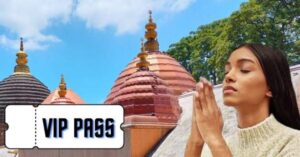
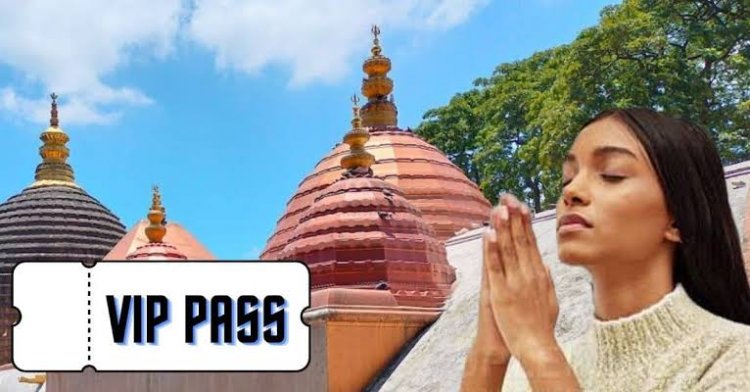
This survey comes when the Supreme Court is scheduled to hear a petition against ‘VIP entry charge’ in major religious places across the country in December. The petitioner said that this will make it difficult for the poor to visit the deities and this is a violation of Article 14 (Right to Equality) and Article 21 (Right to Dignity) of the Constitution. The petition states that religious places are charging four hundred to five hundred rupees for quick darshan. It will be interesting to see whether the Supreme Court limits its decision on this petition to religious places only or comments on other places as well.