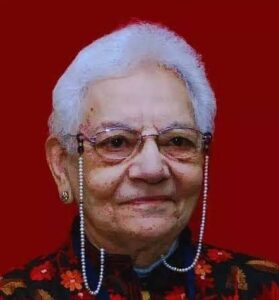

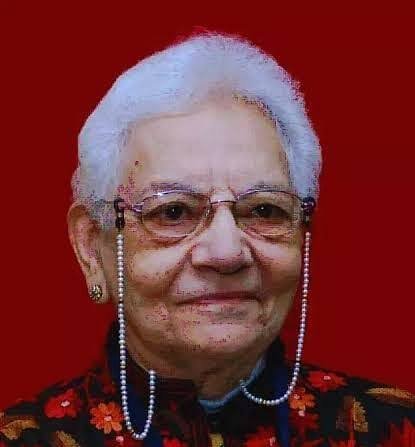
The assassination of former Prime Minister Indira Gandhi in October 1984 not only shook the political history of India, but also plunged the staff of the All India Institute of Medical Sciences (AIIMS), New Delhi, into a crisis whose memories are still vivid today. Sneh Bhargava, who was the first woman director of AIIMS at the time, has described the events of that day in detail in her book ‘The Women Who Ran AIIMS’. This book brings to light the events of that time that had not come to the public till now.
Bhargava states in her book ‘The Women Who Ran AIIMS’ that Indira Gandhi was shot at 9:25 am that day by her Sikh bodyguards, Satwant Singh and Beant Singh. She was brought to AIIMS in a seriously injured condition, where doctors tried their best to save her life. But according to Bhargava’s book, for the next four hours, the AIIMS staff had to pretend that Indira Gandhi was alive, when in fact she was dying. The most surprising revelation in Bhargava’s book is that the news of Indira Gandhi’s death was deliberately withheld for four hours. The reason behind this was Rajiv Gandhi’s return and his preparations for taking oath as Prime Minister. Rajiv Gandhi was on an election tour in West Bengal at that time, and President Giani Zail Singh was also out of Delhi.
According to the book, AIIMS was given clear instructions not to announce the death until Rajiv Gandhi reached Delhi and took oath. Along with this, the book also discusses the anti-Sikh conspiracy. In the backdrop of the 1984 anti-Sikh riots, the question arises whether the decision to withhold the news of Indira Gandhi’s death was to fuel incitement against the Sikh community. Bhargava’s book does not directly expose the conspiracy, but discusses the conditions and political pressures of the time, which played a role in escalating the violence against Sikhs.
The book also mentions that special arrangements were made to provide security to Sikh employees of AIIMS and their families from communal mobs, which helps to understand the impact of anti-Sikh violence.
Four-hour showdown at AIIMS
Bhargava’s book states that Indira Gandhi had 33 bullets in her body, which made her chances of survival almost impossible. Nevertheless, the AIIMS staff had to pretend for the next four hours that they were trying to save Indira Gandhi’s life. Senior surgeons P. Venugopal and M.M. Kapoor were called for this task. According to Bhargava, the surgeons were struggling to stop the bleeding while trying to remove the bullets from Indira Gandhi’s body. Immediate steps were also taken to arrange for ‘B negative’ and ‘O negative’ blood, which were very rare. Meanwhile, a Sikh operator in the operation theatre, who was running the heart and lung machine, left the theatre when he learnt that Indira Gandhi had been killed by Sikh bodyguards. This further complicated the situation, and other technicians had to be arranged. Sonia Gandhi, who was Indira’s daughter-in-law, also suffered an asthma attack at that time, and Dr. K.P. Mathur was called to take care of her. All these incidents reflect the tense situation at that time, when AIIMS was caught between political pressure and a medical crisis.
After the assassination of Indira Gandhi, anti-Sikh pogroms broke out in Delhi and other parts of the country. In this critical situation, Sneh Bhargava took special steps to ensure the safety of Sikh employees of AIIMS and their families. He contacted the Delhi Police Chief and got police personnel posted at AIIMS and kept the Sikh employees safe in the AIIMS guest house.
Bhargava’s book raises an important question: “Why are we fighting on the basis of religion? Can’t we live together?” This question is extremely important in the context of the events of 1984, when the Sikh community was targeted and thousands of innocent people were killed. The book does not directly expose the anti-Sikh conspiracy, but it does hint at it by discussing the conditions and political decisions of that time.