
The Lok Sabha elections are held every five years to elect the government of the country. The state assembly elections are also held every five years. Local government elections are also scheduled to be held after five years. But since the government has power over the local governments, and the government uses rules and regulations to delay the elections of these institutions for political gain.
According to the Panchayat Act, the elections of Gram Panchayats have to be held after 5 years. This time in Punjab, there was an attempt to take away the constitutional rights of the people of the villages by dissolving the Panchayats prematurely, then after the completion of 5 years, the administrators of the Panchayats were appointed and the work of the Panchayats came directly into the hands of the government machinery.
The elections of the Panchayats (which are the primary local government of the village) could be held only on the orders of the Punjab and Haryana High Court. The period for the elections of the Block Samiti and Zilla Parishads has long expired, but there is still no sign of their election.
Just as the people of Punjab’s villages held elections with legal force, similarly the urban people of Punjab opened the way for municipal elections by knocking on the door of the Punjab and Haryana High Court. The elections of five municipal corporations and 44 municipal councils and panchayats have been held only on court orders.
The elections of Phagwara Municipal Corporation were held after 10 years, and the elections of the other 4 corporations, Ludhiana, Patiala, Amritsar and Jalandhar, were held only after a long period of time on the orders of the country’s High Court. The current Aam Aadmi Party government was very reluctant to hold these elections, because the government was waiting for a suitable time to hold these elections for itself, while other political parties were in favor of holding these pending elections immediately.
Now that the bell has rung for these elections, all the political parties of Punjab are contesting the elections on party election symbols to strengthen their respective political bases. Local party workers are active in these elections. At the local level, mutual alliances are being seen between the parties, in some places BJP-Akali is seen together, in some places Congress-BSP is an alliance, but in general all the political parties are fielding their candidates and building their party cadre for the upcoming 2027 elections.
In this work, Aam Aadmi Party is taking more initiative, using the government machinery and also with its political influence, bringing together the workers of other parties. While the leaders of other parties are in the election fray under the leadership of their state president, BJP is contesting this election without a president, although in at least 5 municipal corporations and other urban areas, BJP workers are more and they are contesting the elections actively.
Similarly, the Shiromani Akali Dal, which was considered a ‘party’ with a large cadre especially in Amritsar, Patiala, Ludhiana, is losing its base in the cities due to lack of leadership from the president and internal strife, because in most places it could not field its own candidates. Yes, in some places it seems to have embraced its old ally BJP.
Whatever the results of the municipal elections, there is complete chaos in these elections, the competition between Congress and AAP is direct, although BJP is also showing influence in the cities and BSP, Shiromani Akali Dal will definitely show its presence at least in Jalandhar, Phagwara. Candidates have only a few days to campaign in these elections, the elections are to be held on 21 December 2024, but the activity, the hustle and bustle seem to be great.
In Punjab, the year 2024 has been a year of elections and a year of showing political power and misleading the people. The first Lok Sabha elections were held in the beginning of the year 2024. The BJP won the country. In Punjab, the Congress lost to “AAP”, under the leadership of the then Chief Minister Bhagwant Singh Mann, they had promised to win this election by staying separate from the “India Alliance”, but the reputation of the Aam Aadmi Party was tarnished and the Chief Minister’s reputation was also at stake.
Later, in the Vidhan Sabha Jalandhar by-elections, the AAP Chief Minister won the election by setting up a Jalandhar camp. The government had to conduct the Gram Panchayat elections in October 2024 on the orders of the Punjab High Court. Then the by-elections of four Vidhan Sabhas were held in November. Now, as per the orders of the Supreme Court, the elections of municipal bodies are being held. The Aam Aadmi Party is contesting the elections under the leadership of its President Aman Arora. The Chief Minister is almost silent.
Just like during the elections in the villages, there were riggings during the nominations, people went to the Supreme Court, High Court, re-elections were held or their petitions were filed by some panchayats. In many places, Sarpanchs were forcibly declared. This probably did not happen during the time of any previous government, although during the time of every government, people of their own faction are forcibly brought forward with government interference. Alcohol and money were used so much in these elections that the people of the villages were left shocked and disturbed. The phenomenon of buying and selling votes proved to be a stain on the mutual cooperation of the villages and the rural culture. Exactly such a phenomenon is being seen in the cities, where the era of alcohol continues. The fear of open use of money is also being expressed.
The question arises that with the way in which the elections of local governments are conducted, do the right representatives of the local people really get elected? Do the representatives elected in this way dedicate themselves to public service? Will they be able to carry out development work honestly, without being attached to factions?
In Punjab, the village panchayats have been paralyzed by government officials and politicians, who have taken over all the rights that were given to the panchayats as per the Panchayat Act. In the name of rules, every work is done by the secretary or the village head.
The village servants, panchayat officers and other officers do it. They do not have the right to independently get any development work done or withdraw money from the panchayat accounts. Far from getting any work done on their own accord, the officials even obstruct the work by passing a panchayat resolution. The holding of meetings and general sessions of gram panchayats has become limited only to the whims of the panchayat secretary and officers. Spending common funds is so complicated that an ordinary sarpanch, troubled by these complications, throws down his weapon before the employees and officials.
The same is the case with urban local governments, i.e. municipal councils. After the meetings of the municipalities and councils, resolutions for development works and then tenders, approvals from higher officials, in fact, leave nothing for the members. It is so difficult for the common people to get work done in the municipalities and councils that people have started considering it good to get the work done by bribing the employees.
Just as the “Government of India” is centralizing its powers and usurping the rights of the states, they are being paralysed. An attempt has been made to give approval to every work done in the state to the center, similarly the state governments have usurped all the rights of the local governments. The elected representatives of the local governments have not been allowed to remain people’s representatives, they have been made into just a “vanguard”. How surprising it is that the Gram Panchayats have been elected in October 2024, but the new Panchayat Sarpanches have not been given charge till now. Earlier, by handing over the work of the Panchayats to the government officials from January 2024 to October 2024, the development works of the villages, which were supposed to be more or less, were destroyed, now the work of giving charge to the new Panchayats is being delayed.
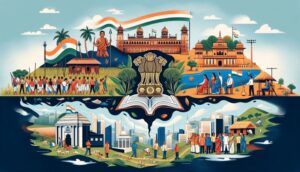
The real meaning of local governments is people’s justice at the local level, development according to needs, and good management. In villages and cities, if the institutions and works of the state and central government are maintained, implemented and managed with the participation and management of the local people, then meaningful results will be achieved, but if these local governments are nominal, then they will remain a tool for the political people to seize political power, as the local governments are seen in the current situation.
What is the cleanliness situation of the villages and cities of the state of Punjab today? The environment is polluted. Clean drains have become black. The roads in villages and cities are in a bad condition. Rural link roads are already broken, urban roads are in a bad condition. Government buildings are not being maintained. Government schemes do not reach the people due to the negligence of government employees. The work that should be done easily by the local leadership of the people has been made complicated by the government. What is more important is that local governments do not have any source of income of their own, they have been made dependent on grants from the center or the state. In such circumstances, the election of good representatives in local governments is more important and the need of the hour.
Just as the local rural and urban people have fought a legal battle to hold Panchayat and Municipal Council elections on time and have won, in the same way they will have to fight a battle to stop government interference in local governments.
The Indian Constitution gives full rights and importance to local governments. Maintaining this right is also the duty of the basic unit of Indian democracy, “Local Governments”.