
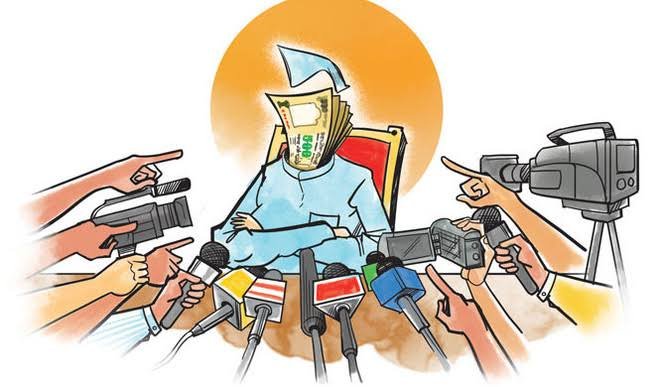
Today’s Indian media, especially electronic media, has deviated from this sensitive role. Instead of awakening the spirit of the society, it is fanning the flames of hatred, violence and communalism. Instead of serving the society and raising issues, it has become a tool of power and it hurts the spirit of the society. Indian media and the spread of fake news Indian media, especially Hindi electronic media, has come to be known as “Godi media”. The biggest reason for this is the spread of fake and sensational news. During the Indo-Pakistan tensions, such as during ‘Operation Sandhur’ (7 May 2025), the media broadcast such news that were not only factually incorrect, but also led to India’s humiliation at the international level.
For example, headlines like “Pakistan captured soon”, “Karachi disappears from the map”, or “India captures Islamabad” have sunk the standards of journalism. These headlines were not only sensational, but also served to inflame people’s emotions.
According to a study by Ipsos Group, Indians have the weakest ability to differentiate between real and fake news. The main reason for this is the sensational and emotional reporting of the media, which pushes people to react emotionally instead of checking the facts.
The lack of strict action by the Indian government on this irresponsible reporting by the media is also a big question. According to the Press Freedom Index 2025, India is ranked 151st out of 180 countries, which indicates a low level of media freedom and credibility.
But what is the main reason for the government’s silence? One reason could be that such media reporting strengthens the government’s nationalist agenda.
The government has issued advisories to the media on a few occasions, such as advising against live coverage during India-Pakistan tensions, but these were only superficial steps. There has been no strict legal or regulatory action that would hold the media accountable.
Indian media in the eyes of the international media
The international media has been the target of severe criticism for this irresponsibility of the Indian media. The New York Times wrote that the Indian media “fueled the fever of nationalism by broadcasting fabricated reports without checking the facts.”
The Economist called it “insulting and absurd,” with anchors raising demands such as “burning Karachi” or “blow up the entire city.”
This international criticism not only sinks the reputation of the Indian media, but also tarnishes India’s international image.
According to the Broadcast Audience Research Council (BARC) report, even during important events like ‘Operation Sindhur’, people preferred to watch IPL matches instead of news channels. This indicates that people’s trust in the credibility of the media is decreasing. One of the main reasons for this is the race for TRPs of the media. In this race, the media emphasizes sensational and emotional news, leaving aside the truth. The media needs to return to its professionalism and impartiality. The government will also have to take strict regulatory steps, so that the media becomes accountable. The society also needs to be alert. People should increase their ability to differentiate between fake news and truth. As the Ipsos report suggests, Indians need critical thinking. Today’s Indian media, especially electronic media, has deviated from this sensitive role. Instead of awakening the spirit of the society, it is fanning the flames of hatred, violence and communalism. Instead of serving the society and raising issues, it has become a tool of power and it hurts the soul of the society. Indian Media and Spread of Fake News Indian media, especially Hindi electronic media, has come to be known as “Godi Media”. The biggest reason for this is the spread of fake and sensational news. During the Indo-Pak tensions, such as during ‘Operation Sandhur’ (7 May 2025), the media spread such news that were not only factually incorrect, but also led to India’s humiliation at the international level.
For example, headlines like “Pakistan captured soon”, “Karachi disappears from the map”, or “India captures Islamabad” sank the standards of journalism. These headlines were not only sensational, but also served to inflame the emotions of the people.
According to a study by Ipsos Group, Indians have the weakest ability to differentiate between real and fake news. The main reason for this is the sensational and emotional reporting of the media, which pushes people to react emotionally instead of checking the facts.
The lack of strict action by the Indian government on this irresponsible reporting by the media is also a big question. According to the Press Freedom Index 2025, India is ranked 151st out of 180 countries, which shows a low status of media freedom and credibility.
But what is the main reason for the government’s silence? One reason could be that such media reporting strengthens the government’s nationalist agenda.
The government has issued advisories to the media on a few occasions, such as advising against live coverage during India-Pakistan tensions, but these were only superficial steps. There has been no strict legal or regulatory action that would hold the media accountable.
Indian Media in the Eyes of International Media
The international media has severely criticized this irresponsibility of the Indian media. The New York Times wrote that the Indian media “spread fabricated reports without verifying the facts.”
“It fueled the fever of nationalism.”
‘The Economist’ called it “insulting and absurd”, in which the anchors raised demands like “set Karachi on fire” or “blow up the entire city”.
This international criticism not only sinks the reputation of the Indian media, but also tarnishes India’s international image.
According to a report by the Broadcast Audience Research Council (BARC), even during important events like ‘Operation Sindhur’, people preferred to watch IPL matches instead of news channels. This indicates that people’s trust in the credibility of the media is decreasing. One of the main reasons for this is the media’s race for TRP. In this race, the media emphasizes sensational and emotional news instead of truth. The media needs to return to its professionalism and impartiality. The government also has to take strict regulatory steps so that the media becomes accountable. The society also needs to be alert. People should develop the ability to differentiate between fake news and truth. As the Ipsos report suggests, Indians need critical thinking.