
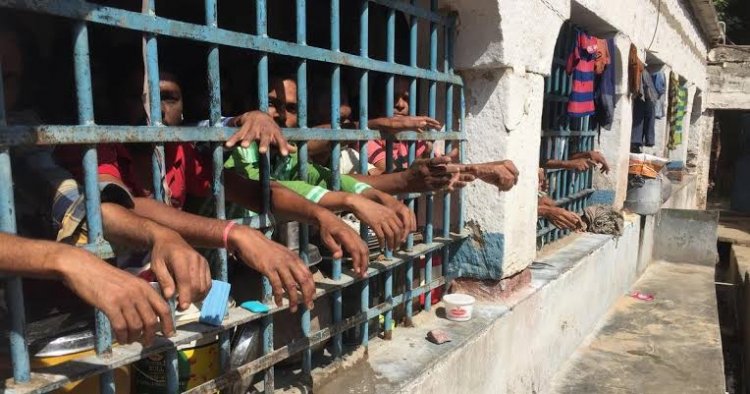
India’s prisons are in crisis. They give the impression of being overcrowded warehouses for forgotten people. In 2022, India’s prisons were crammed with 5.73 lakh prisoners, while these prisons have the space or capacity to house 4.36 lakh prisoners. In this regard, 31 percent more prisoners are kept in prisons than their capacity. By 2030, the number of prisoners in prisons is estimated to increase to 6.8 lakh, while the capacity of prisons will be able to house only 5.15 lakh prisoners. The crisis of prisons is not limited to space but is much deeper than that. In fact, it is a human rights emergency. There are only 25 psychiatrists for the entire prison population. The trend of mental illnesses among prisoners has doubled since 2012. Most of these victims are undertrial prisoners whose cases are yet to be decided. They have to suffer this suffering for many years due to delay in legal proceedings. Apart from this, the crisis of medical facilities is equally serious. 43 percent of the posts of medical officers in jails are vacant. In Delhi, there is only one doctor for every 206 prisoners. Thus, the prisoners have to silently suffer mental and physical suffering in the absence of medical facilities.
This neglect is not new. The Supreme Court has often asked for long-term planning of jails, but despite this, the state action has been very slow and ineffective. There is a huge shortage of jail staff. In some areas, the vacancy rate has gone up to 60 percent. For example, the number of prisoners in Delhi jails is 250 percent more than the capacity. The number of Dalits, tribals and Muslims in jails is many times higher than their ratio. This shows how many inequalities exist in the justice system.
Similarly, despite more than 300 dangerous criminals and 45 thousand prisoners being detained in Punjab jails, there is a huge shortage of security personnel. According to sources in the jail department, there is a shortage of 1826 officers/employees in the jail department, due to which, seeing the seriousness of the issue of security in the jails, a senior officer of the Punjab jail department has had to tell the high court that permanent recruitment is being done in the department soon and officers from other departments are being deployed for a short period. It is also said that the security of Bathinda, Kapurthala, Ludhiana and Amritsar jails is already being monitored by Central Reserve Force personnel. CCTV is installed in more than a dozen jails. And despite the V-Kavach jammer being installed, the recovery of mobile phones from prisoners is surprising and it also raises many questions about the performance of the security staff. The prison department has only 3 counselors for psychological support of thousands of prisoners and in such conditions, the reformation of drug addicts and criminals seems impossible. Although the jail department is claiming to provide vocational training to the prisoners along with education inside the jail. According to the information, central jails have been set up in the state at Bathinda, Amritsar, Ludhiana, Gurdaspur, Kapurthala, Hoshiarpur, Patiala, Ferozepur, Faridkot and Goindwal Sahib. Similarly, Ropar, Sangrur, Muktsar Sahib, Navi Jail Nabha, Mansa, Barnala, Women Jail and Borstal Jail Ludhiana are district jails, while apart from this, sub-jails have been set up at Pathankot, Malerkotla, Fazilka, Moga, Patti and Nabha. The capacity of these jails to hold prisoners has been stated to be 26566, whereas in reality the jails are full to the brim and the number of prisoners and detainees is said to be around 45 thousand. Out of these, more than 40 percent prisoners/convicts are lodged in jails under the NDPS Act. In the recent circumstances, thousands of people have been thrown in jails under about 4 thousand NDPS cases in the last 2 months. Whatever the claims of the government, but according to the information received from sources, CCTVs have been installed in only 8 jails at the moment and the target of installing CCTVs in 6 jails is fixed for 2 May 2025.
The jail department also claims that for the all-round development of the prisoners and to generate sources of income, 3 and 3 more prisoner-based petrol pumps have been installed on the main roads and 2 more pumps are to be installed in Fazilka and Nabha in the coming time. It has also been claimed that 100 crores have been allocated for the construction, repair and renovation of the infrastructure of the jails. High security jails have been built in Ludhiana and Nabha.
Human rights groups believe that fast track courts and alternative dispute resolution mechanisms can reduce the number of prisoners under trial. Investment is needed to improve infrastructure in proportion to the number of prisoners. In addition, there is an urgent need to recruit more doctors, psychiatrists and prison staff. Ensuring access to legal aid can provide relief to poor prisoners. Prisons should not be places of long sentences but should be centres of reform.