
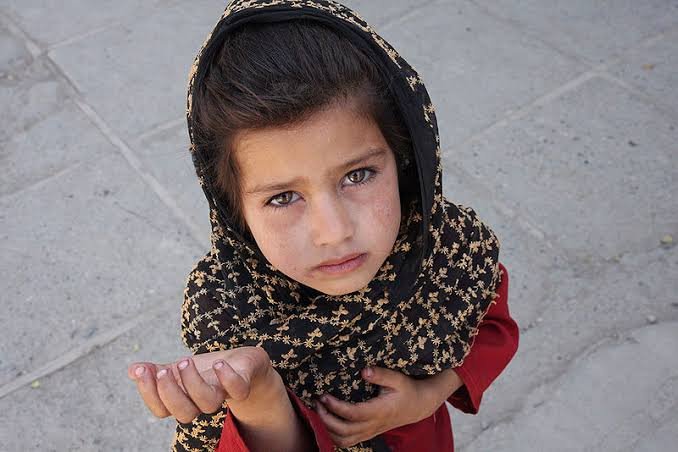
Child trafficking is a crime that is being exploited, abducted and abused. Despite all the laws, it is not stopping in India. It is not only having a serious impact on the lives of children but also on society. According to government data, in the year 2023, there were about twenty thousand children living on the streets in India. Out of these, only ten thousand children lived on the streets with their families and the rest were homeless. These homeless children are not only victims of child labor and trafficking, but they also face sexual abuse, physical abuse and harassment.
According to the National Crime Records Bureau (NCRB), a child goes missing every eight minutes in India, which shows the seriousness of child trafficking. Although the 2022 report does not explicitly mention child trafficking cases as a separate category, the statistics of crimes against children highlight the seriousness of the problem. The Supreme Court has also recently given an important direction in the matter of child trafficking. It has been said that the High Courts of all states should provide information about the status of pending cases related to child trafficking and dispose of such cases within six months.
Uttar Pradesh on top
The Central government recently told the Supreme Court that about 36 thousand children have gone missing since the year 2020, who have not been found yet. The situation in terms of child trafficking and crimes against children in Uttar Pradesh is very serious. According to the data of the National Crime Records Bureau (NCRB), the maximum number of kidnapping cases in the country are registered in Uttar Pradesh. In the year 2022, 16,262 kidnapping cases were registered in UP. Post-COVID, there has been a sudden increase in cases of child trafficking in UP. Before COVID, i.e. in the year 2019, while 267 cases of child trafficking were registered in UP, in 2022 this number has increased to 1,214.
A report prepared by Kailash Satyarthi Children’s Foundation, the organization of Nobel laureate and social activist Kailash Satyarthi who works on child labor, shows that post-COVID-19, cases of child trafficking have increased by 68 percent.
According to this report, from 2016 to 2022, 13,549 children were rescued from trafficking, of which 80 percent were between the ages of 13 and 18. The main reasons for child trafficking are illiteracy, poverty and unemployment. Apart from this, children from Dalit and tribal communities are more vulnerable to it due to social discrimination. Due to economic hardship, many families are forced to send their children to work and sometimes these children fall into the hands of traffickers. The state police plays an important role in stopping child trafficking but sometimes, the legal complications and political alliances of those involved in this crime make it helpless. According to a senior police officer of Uttar Pradesh, hospitals have become a major medium for child trafficking these days. In hospitals, not only small gangs but sometimes the hospital administration is also involved in these crimes. What is more serious is that sometimes parents also get involved in child trafficking for the lure of money.”
What does the law say?
India has several laws to deal with child trafficking, including the Indian Penal Code (IPC), the Unlawful Trafficking (Prevention) Act, 1956, the Protection of Children Act, 2012 and the Juvenile Justice Act, 2000. Apart from this, human trafficking is also banned in Article 23 of the Constitution.
Experts say that there are laws regarding child trafficking but the biggest deficiency is in their implementation and care of the children. Supreme Court lawyer Harvinder Singh Phulka says that due to poverty and economic inequality, children often fall victim to trafficking and become easy targets. The weakness of the laws also encourages this. If the laws are not strictly followed, the traffickers get away with it. Misuse of technology also helps children encourages child trafficking. Nowadays, traffickers use online platforms to communicate with children and then entrap them. The absence of a separate law for child trafficking in India is also a barrier to stopping this problem. There are laws like the Immoral Traffic (Prevention) Act but they focus only on prostitution. Apart from this, the Juvenile Justice Act and the Bonded Labour System (Abolition) Act are available but are inadequate. The Ministry of Home Affairs issues guidelines related to child trafficking but it is the job of the state government to implement them.