
Although in most cases large countries rarely take such drastic measures as ordering their diplomats to leave the country, as they do in the case of equal or smaller countries. For example, in the case of India and Pakistan, it has happened many times that each other’s diplomats had to return to their native countries, but the public of both countries never took much notice of such an action. In August 2019, when the Indian government withdrew Article 370, which gave special status to Kashmir, then Pakistan also ordered Indian Ambassador Ajay Basaria to leave the country.
Canada and India have a different pattern of sending back each other’s diplomats. When two countries order each other’s diplomats to leave the country, it is not simply a case of repatriation of the officials, but it signals a potential larger action, which is equally likely to be counter-acted. This is a very serious matter in itself, so in this article we will try to understand what kind of impact the tension between these two countries is going to have on the entire fabric of India, especially Punjab.
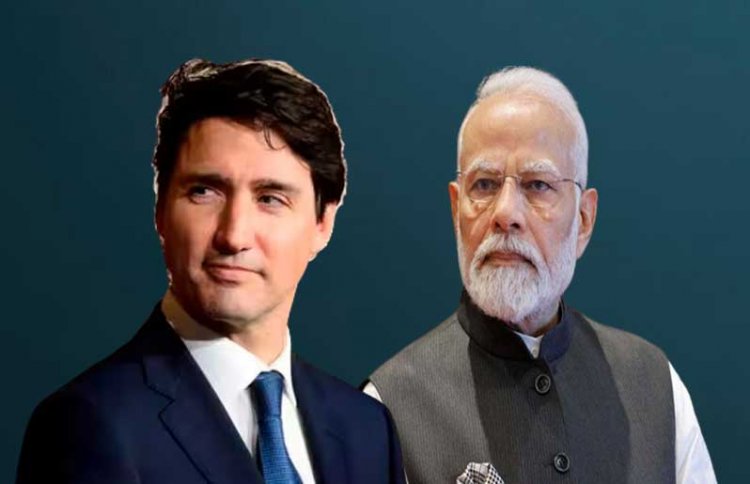
Last year, Canada’s Prime Minister Justin Trudeau surprised everyone by expressing doubts about India’s role in the murder of Khalistani leader Hardeep Singh Nijhar in the parliament of his country in June. Hardeep Singh Nijhar, who was declared a ‘wanted militant’ in India, was shot dead by unidentified persons in the parking lot of Surrey Gurdwara Sahib. Canada has reiterated its stand that Indian High Commission officials are persons ‘connected to the matter’. The seriousness of the matter increased even more when the organization called ‘Five Eyes Alliance’ also reported the involvement of Indian agencies in the ‘Nijhar murder case’. It is the world’s most powerful spy network, which includes five countries, the United States, Britain, Australia, New Zealand and Canada, which share intelligence with each other. Apart from this, the Canadian Royal Mounted Police held a regular press conference and said that Indian agents are involved in killings, violent acts and targeting Khalistani supporters in Canada. Police Commissioner David Toobil even claimed that we have arrested three activists of ‘Hit SukAid’ who have confessed during investigation that they are working for India. As a response to all this, India ordered Canada’s High Commissioner Ross Wheeler in Delhi to leave India by October 19. Remember, the same thing happened last year too, when India banned certain types of visa procedures along with cutting the staff of the Canadian High Commission. A diplomat or diplomat is a government employee who plays an important role in developing international relations. Apart from negotiating trade agreements, discussing the problems and new policies of the citizens of their native country living in foreign lands, dealing with other disputes are also included in his primary priorities.
First of all, we read the statement of India, in which he said that Justin Trudeau’s motive behind blaming India for the killing of the Sikh leader is to fulfill his political interests by influencing the sympathy of the Sikhs living in Canada and the Sikh vote. have to do But if we do a comparative study of the population of Canada, then the conclusion comes out easily that in a vast country like Canada, it is not possible that a politician can ensure his victory just by pleasing Khalistani supporters. The people sitting in India may also be under the illusion that a large number of people from the Sikh community living in Canada will play a decisive role in the election process of Canada. While this is not the case, the Sikh community, except for the four or five constituencies of Brapton, who do business there in large numbers, want smooth relations between the two countries, because their world actually resides here. Their joys and sorrows, births and deaths, marriages and all the Tith festivals take place on the land of Punjab. From village level panchayat elections to member parliament elections, NRI Punjabis influence on a large scale.