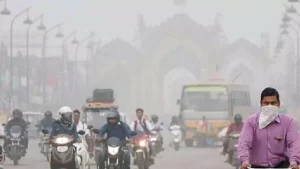

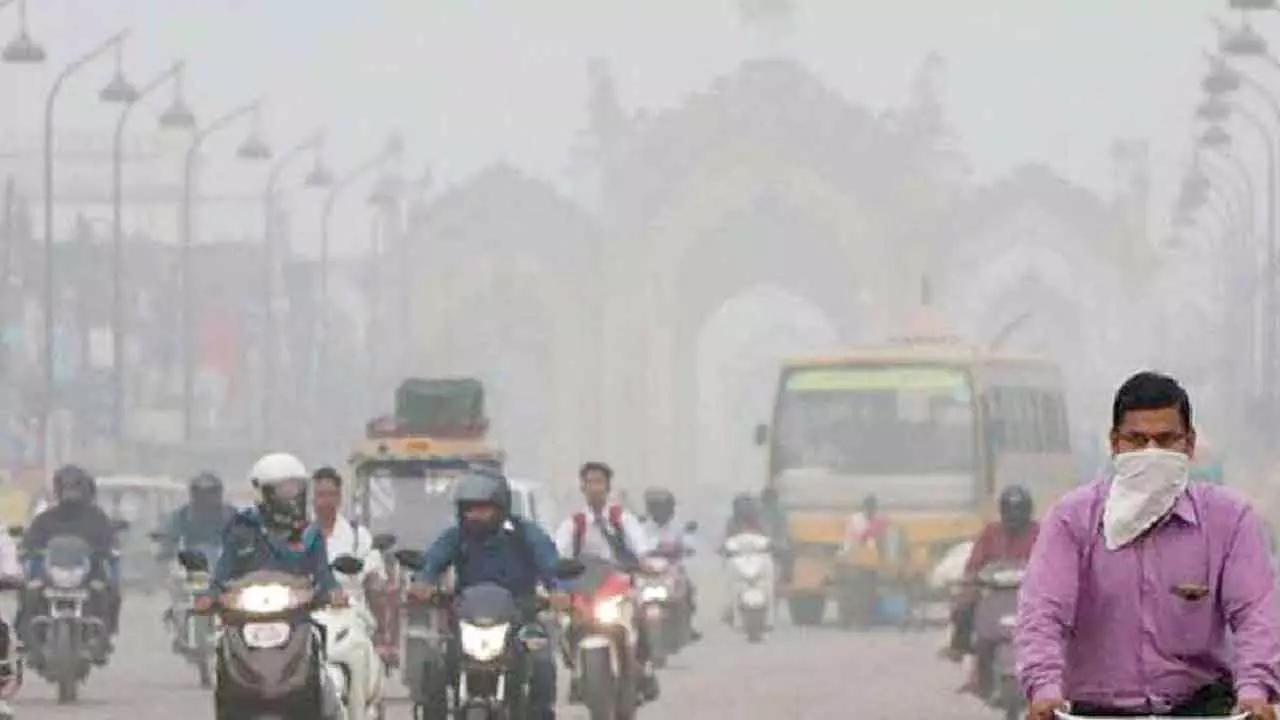
For the past several years, farmers from the northwestern region of the country – Punjab, Haryana, Rajasthan and parts of Uttar Pradesh – have been constantly blamed for polluting Delhi’s air. As if the real reason behind the capital’s toxic air in the months of October and November is burning of fields, because the months of stable air in Delhi and the harvesting of the paddy crop coincide, no stone is left unturned to blame, abuse and blame the farmers. Every year, when the paddy harvesting season starts moving forward, criticism starts in the media that farmers are responsible for Delhi’s toxic air. To hide its mistakes and absolve itself of any responsibility for many years, New Delhi (government) found it easy to blame the farmers and made them the real villains of this story.
But media reports on January 4 this year said that in a presentation before the Prime Minister’s Office (PMO), the Commission on Air Quality Management (CAQM) had a different story to tell. Citing a January 2023 report by the Energy and Resources Institute (TERI), the Prime Minister’s Advisor Tarun Kapoor was told that burning of agricultural waste contributes only 1 per cent to Delhi’s air pollution levels ranging from 2.5 to 10 PM. In an era where transparency and accountability are the hallmarks of governance, if what has been said is true, then I see no reason to distrust what has been written on record. In such a situation, it would be best for New Delhi to stand up and admit its mistake. The bureaucracy, a large number of expert committees and the national media (both print and electronic) should also accept responsibility for spreading misinformation. Ultimately, the farming community was collectively maligned by these organisations through no fault of their own, which is now abundantly clear.
Even when I say ‘no fault of theirs’, I am not trying to defend the harmful practice of stubble burning by farmers. We are all well aware of the harm that stubble burning causes to human health and the adverse effects it has on the environment. Apart from making affordable equipment available to farmers to stop stubble burning, all efforts should be made to create widespread awareness. But it is not acceptable to make unorganised farmers the scapegoat and subject them to criticism every time. New Delhi tries to hide its direct contribution to air pollution by blaming the alleged smoke from farmers. Therefore, shifting the needle of suspicion towards farmers has become an effective deflector, which has helped create an army of abusive trolls on social media. Who, while criticizing farmers, go to the extent of accusing them of polluting Delhi’s ‘clean air’ and causing pain to others and making them happy.
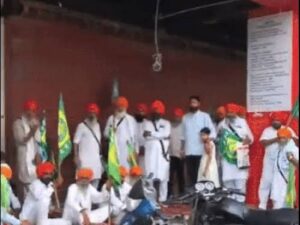
Due to the constant criticism of farmers, the courts have taken strict action against farmers who burn stubble, which has resulted in 874 FIRs, 471 Daily Diary Reports (DDRs) being registered in Punjab till October 21, 2024, besides red entries in the revenue records of 394 farmers and fines of Rs 10.55 lakhs being imposed on 371 farmers. By the same date, 400 farmers of Haryana were blacklisted, barred from selling their crops in the markets for two years, and 18 farmers were arrested in Kaithal district in two days. During this, apart from making entries in the revenue records of 418 farmers and imposing a fine of Rs 8.45 lakh, the police issued challans to 334 and registered cases against 192 farmers, while 32 more farmers were arrested in Yamunanagar in November, an action termed by the opposition parties as a ‘Tughlaq Furman’.
Interestingly, this is the same CAQM, on whose earlier reports the Supreme Court had directed the police in Punjab and Haryana to prosecute farmers who set fire to their fields, which is now accepting that farmers in the north-western region of the country contribute only 1 per cent to Delhi’s air pollution. According to media reports, Haryana’s famous bureaucrat Ashok Khemka wrote a letter to the Haryana Chief Minister stating that what was stated before the PMO by the CAQM Chairman recently has made it clear that the farmers of Punjab and Haryana are not responsible for Delhi’s air pollution.
The Centre for Science and Environment (CSE) had also shown that despite a significant decline of 71.2 percent in stubble burning during October-December 2024, the pollution level in Delhi has increased for the second consecutive year with an average of 2.5 PM during 2024. Given the fact that burning of crop residues in fields has no direct role in Delhi’s air pollution, New Delhi can no longer hide behind the alleged fires in Punjab. CSE According to a study by the National Institute of Agricultural Research (NIAR), arson incidents have reduced in Punjab and Haryana, while stubble burning incidents have increased manifold in Madhya Pradesh and are spreading to Chhattisgarh.
Amidst the widespread blame being placed on farmers, I had said in my last column (October 25) that SUVs, not farmers, are responsible for the alarming air pollution. My reasoning was that every fourth car on the road is an SUV and their number is increasing. These big cars emit up to 20 per cent more carbon than a medium-sized car.
It is time to crack down on SUVs, but the problem is that every member of the elite wants to flaunt their new SUV as a ‘status symbol’. Yes, it is also true that air pollution levels are different from carbon emissions (according to an AI study), but the two are closely linked. Being two sides of the same coin, air pollution includes ‘greenhouse gases’ like carbon dioxide as well as methane, nitrous oxide and other pollutants.
Talking about stubble burning, it is time that New Delhi should stop blaming farmers of Punjab and Haryana for Delhi’s toxic air levels and focus on managing its own air quality standards. While it cannot be denied that some measures have been taken in the last few years, there is certainly a lot more that needs to be done, including taking some tough decisions. This can only happen if the people of Delhi are first made to realize that they themselves are responsible for the degraded air quality they are living with.