
At that time, the Sikh rule had been established in Punjab almost twice. The first rule was when Baba Banda Bahadur Ji, after taking blessings from Guru Gobind Singh Ji in his last years, entered Punjab from the South along with some Sikhs and persuaded and gathered Sikh-like warriors, taught them how to wield weapons and gave them.
Baba Banda Singh Bahadur had requested the gathered Sikhs that whoever can support me in the fight for truth, I welcome them, but those fighters must also remember that I have nothing to give in the form of salary. Whoever can take part in teaching a lesson to the oppressors for the atrocities committed against the Gurus by the government of the time, I will remain indebted to them for life. Wake up! Get up, because we have to take revenge for the atrocities committed against the Gurus and work for the welfare of humanity. He also took revenge for the atrocities committed against the Gurus through the Khalsa army he prepared and also brought about many kinds of reforms among the people. Perhaps this was the first time in history that he gave ownership of lands to the plough-bearers. He took away ownership from those who were just owners. Thus, apart from minting the coins of Guru Nanak, Banda Bahadur did many important things during his reign, which are still remembered today. That reign is known to his and the people of this time as the first Sikh reign. This was the time when Banda Bahadur and Mata Sahib Kaur issued their respective Hukamnamas according to the time. The second period of the rule of the Sikhs comes when Maharaja Ranjit Singh ruled from 1800 AD to about 1849. This period is also known as the Sikh reign. During this reign, Akali Phula Singh, as the Jathedar of the Akal Takht, became known for his fearless courage and impartial decisions, who, while administering justice, sentenced Maharaja Ranjit Singh to be tied with a berry and whipped for his mistake as a Sikh.
Since then, dozens of Jathedars have been appointed from time to time, but till date, it seems that no one has been able to match Phula Singh. It is also worth noting that in the past, the appointment of Jathedars was done by calling a meeting of the Sarbat Khalsa and almost unanimously, but nowadays the appointment of Jathedars is done by the Shiromani Committee. It is clear from both the appointments that the Jathedars who were chosen by the Sarbat Khalsa i.e. the much larger Sangat proved to be more courageous, while those who were made through the appointment of the committees did not prove to be equal to the Jathedars chosen by the Sarbat Khalsa. History shows that although the powers of all the Jathedars are the same, there is a lot of difference in their decisions, which is why Nanak Namleva was often saddened by the decisions and rarely happy.
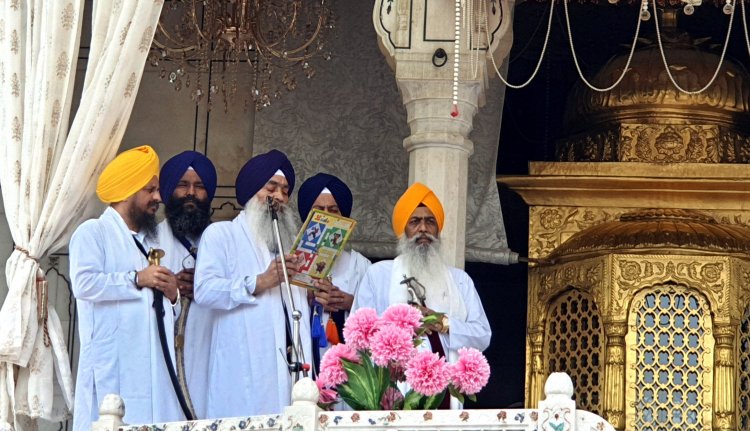
In present-day Punjab, the Akali Party, representing the Sikhs, ruled for about 25 years in a divided manner, due to which the political as well as the religious powers were concentrated and kept under the rule. In such a situation, the role of many Jathedars in the past was also called ‘Mom da Nak’ by the public, especially the Sikh public. Whatever the case, nowadays there is a lot of discussion on the decision given by Jathedar Giani Raghbir Singh. One part is calling it a fitting punishment and another part is ending the matter by calling it a drama. According to us, there should be no doubt about the punishment given, because after a long time, such a punishment has been given to a big political scoundrel, who had enjoyed the Akali rule at different times. But one thing is definitely disturbing that the concessions given to various so-called Babas for various mistakes committed in the state in the last 10 years, leniency towards them and attending their feet has disturbed and will continue to disturb a valuable Sikh section.
Some Sikhs are saying that the punishment is less because the accused party accepted their mistake, yet why was the punishment given less? Most Sikhs do not know that in religious matters only religious punishments are given or those punishments through which they express sorrow for the mistake, such as reciting prayers, washing dishes, cleaning couples, cleaning toilets, sweeping etc. This punishment can be given at different places apart from a religious place. After completing the punishment, the concerned party can become active again along with their political activities, which cannot be stopped, nor is there any history of such a thing. The punishment of the present gang is neither the first nor the last in history, most of the punishments are according to the fault and most of the punishments depend on the style of work of the Jathedar. Most of the time, clarification or detailed information is given about the lesser or greater punishment. Sometimes a scholar like Dr. Pyar Singh is tied to pillars without being satisfied, due to which the concerned party has to complete the punishment. There is no further appeal or argument for this in Sikhism. Akal means eternal, meaning never ending, which is why in the Sikh world, the Akal Takht is eternal, meaning it is eternal and the one who sits on it remains engrossed or remains in the highest position until he retires from his position or cannot be removed. Therefore, a person who is associated with the Sikh religion has to accept the Hukamnama, due to which the supremacy of the Hukamnama is maintained in Sikhism. The Akal Takht, established by the sixth Guru, Sri Guru Hargobind Ji, is and will remain an eternal beacon of light for the Sikhs.