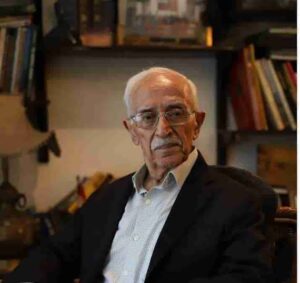

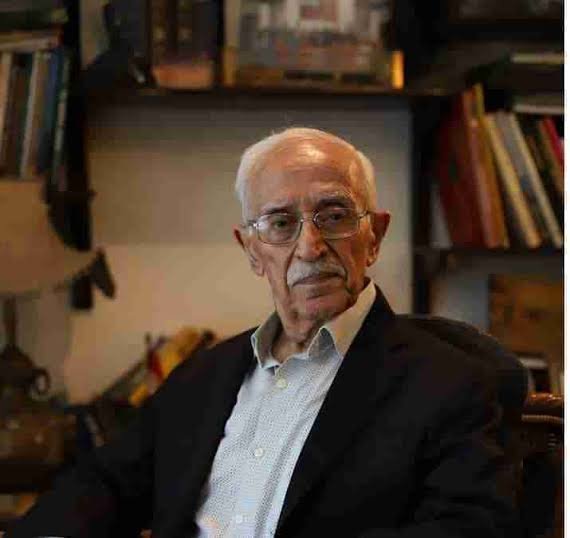
Former Army Chief General V.N. Sharma (Retd) has made a shocking revelation that during the Blue Star operation in 1984, the Director General Military Operations (DGMO) had clearly advised the then Army Chief General A.S. Vaidya that the Indian Army should not take any action against Sant Jarnail Singh Bhindranwale and his associates at Sri Darbar Sahib. He had called it a political ploy.
General Sharma said this in an interview with former Judge Advocate General Major General Nilendra Kumar on the YouTube channel ‘Lex Consilium Foundation’. This interview was uploaded on 5 June 2025, a day before the 41st anniversary of the Blue Star operation.
Indira Gandhi’s pressure and General Sundarji’s insistence
General Sharma, who was then Additional DGMO Sun, said that the then Prime Minister Indira Gandhi wanted the army to go to Darbar Sahib and remove Sant Bhindranwale, because the Punjab Police had given up on this task. General Vaidya was called to the P.M. Office and told that it was necessary to stop Bhindranwale’s growing popularity. Vaidya accepted this responsibility, but the Military Operations Directorate warned him that it could be a violation of the Constitution. The MO Directorate suggested that the matter be taken to the Supreme Court, but when Vaidya told Indira Gandhi about this, she directly contacted Lieutenant General K. Sundarji, the commander of the Western Army. Sundarji ignored the advice of the MO Directorate and said, “I have received the order, I will do it.”
Sikh officer deliberately chosen, responsibility for the massacre placed on the Sikhs
General Sharma revealed that General Sundarji had appointed Major General K.S. The 9th Division, led by Brar, was deliberately selected for this operation, so that a Sikh officer would be at the forefront of the ground operation of the massacre. This helped the government to show that the Sikhs carried out this operation. General Sharma said that the then DGMO Lt. Gen. C.N. Somanna and the second ADGMO Major General V.K. Nair (both now deceased) had also opposed this operation, but due to Sundarji’s insistence and political pressure, the massacre became a blue star, which deeply wounded the Sikh community. Many people, including hundreds of Sikh devotees, were killed in this operation, and the Sri Darbar Sahib and Sri Akal Takht Sahib were also damaged. It created deep resentment in the Sikh community and had far-reaching consequences, including the assassination of Prime Minister Indira Gandhi and the 1984 anti-Sikh riots. General Sharma’s revelation shows that this action was taken due to political compulsions and the stubbornness of some officers, while senior army officers opposed it.