
 This global arms race, in which powerful countries are investing billions of dollars in deadly deals, raises questions about the future of humanity. The 2024 report of the Stockholm International Peace Research Institute (SIPRI) and the news of the escalating military tension between India and Pakistan speak of the global balance of power and its impact on South Asia. The report describes the global arms race as a waste, in which $2.72 trillion has been wasted, which is 9.4% more than in 2023. The United States, spending $997 billion, accounts for 37% of global military spending. China ($314 billion), Russia ($149 billion), Germany ($88.5 billion) and India ($86.1 billion) spend on weapons.
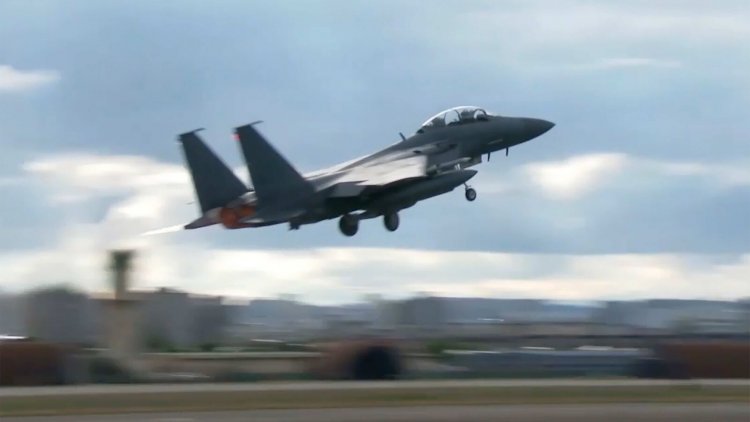
The US has 2.1 million troops, 12,000 aircraft, 13,000 tanks, 5,277 nuclear weapons, making it the world’s largest military power. China is rapidly advancing in cyber warfare and the Navy, trying to compete with the US. Russia has been weakened by the war in Ukraine, but Russia is still a powerful country with 5,449 nuclear weapons. The Ukraine-Russia war, the China-Taiwan issue and the instability in the Middle East have sent military spending skyrocketing. Military spending in Europe has increased significantly since the Cold War. Ukraine spent $64.7 billion (34% of its revenue) on weapons. Japan ($55.3 billion) and Taiwan ($16.5 billion) are engaged in war preparations to contain China’s influence. This situation is taking the world to the next level of a new Cold War. The increase in military spending is not only a race for military power, but also has a huge impact on social and economic sectors. Governments prioritize weapons, ignoring areas like education, health and poverty alleviation, which is a fatal blow to the basic needs of society. India and Pakistan, which are at odds with each other due to historical enmity and border disputes, are both in a race to outdo each other in military capacity. According to SIPRI, India’s military spending is $86.1 billion (5th in the world) and Pakistan’s is $10.2 billion (29th). According to the Power Index 2025, India is the fourth most powerful military power in the world, equipped with 1.4 million soldiers, 2,200 aircraft, 4,600 tanks and 180 nuclear weapons. Indigenous technology—Brahmos missile, Agni series, DRDO—and foreign supplies (Russia 36%, France, US, Israel) have made India unbeatable in border security. The S-400 missile defense system, Hammer, Scalp and Meteor missiles have enhanced India’s precision strike capabilities.
Pakistan, with 6.5 lakh soldiers, 1,400 aircraft, 3,700 tanks and 170 nuclear weapons, lags behind India many times. According to SIPRI, 81% of its weapons come from China, such as the J-10CE aircraft, VT-4 tanks, Hangar 2 submarines. Dependence on China, lack of indigenous technology and economic crisis limit Pakistan’s capabilities. India’s military spending and capabilities are 9 times higher than Pakistan’s.
It should be remembered that the Indian Army’s action in Pakistan on the night of 6-7 May 2025 and the border clash on 8-9 May had brought the tension to a peak. India’s precision strikes (Hammer, Scalp, S-400) and Pakistan’s Chinese assistance had further inflamed this war atmosphere. The cause of this tension is the Kashmir issue. The military supply of India and Pakistan—India’s Western and Russian dependence, Pakistan’s dependence on China—gives rise to the possibility of proxy war by the world’s major powers (USA, Russia, China). The diversification of India’s arms supply (Russia 36%, France, USA, Israel) reflects its independent strategy. Till 2010, Russia was the main supplier, but now the share of Western countries has increased. 81% of Pakistan’s arms come from China, which is its economic and military compulsion. Chinese military assistance has increased the possibility of using Pakistan as a proxy power for China. However, internal instability and economic crisis are eroding Pakistan’s capacity. The US, Russia and China earn billions by selling arms, which is the biggest obstacle to peace. The UN does not have the capacity to impose direct sanctions on powerful countries. Compliance with treaties (NPT, CTBT) is voluntary, which is ignored by the major powers. Stopping the arms race requires consensus and trust among all countries, which is impossible in the current tensions (Ukraine-Russia, China-Taiwan, India-Pakistan). Overall, India, with its diverse military capabilities and indigenous technology, is many times ahead of Pakistan, but there is still a gap with a power like China. The shadow of a proxy war is true to some extent, as the major powers fuel regional tensions to sell arms. However, the real hostility between India and Pakistan rests on border and historical roots. The failure of the United Nations dashes hopes for peace. Consensus and agreements are needed to move the world towards peace, which is still a distant dream.