
The Modi government had banned the website of independent media outlet ‘The Wire’ on the night of May 8, 2025. This action was taken on the orders of the Ministry of Information and Broadcasting and the Ministry of Electronics and Information Technology under the Information Technology Act, 2000. The reason for the ban was a news story, which was based on a CNN report. This news story mentioned Pakistan’s claim of shooting down an Indian Rafale aircraft, which was published at 3:47 am on May 8, 2025. The government said that due to technical constraints, only that news story could not be blocked, hence the entire website was banned. ‘The Wire’ received an email from the ministry at 9:41 pm on May 9, 2025, demanding the removal of the news story and unblocking the website. Siddharth Varadarajan, the founding editor of The Wire, immediately removed the news and informed the ministry, but even after 12 hours, the website was not fully restored in many parts of the country. The Wire called the action a “violation of the constitutional guarantee of freedom of the press” and “arbitrary censorship”. Varadarajan said that according to the IT Act, the government should have given notice first. He also said that the original CNN report and similar news from other international media are available in India, but only The Wire was targeted.
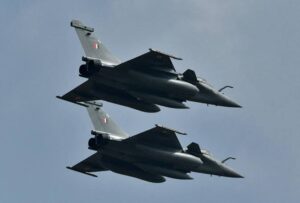
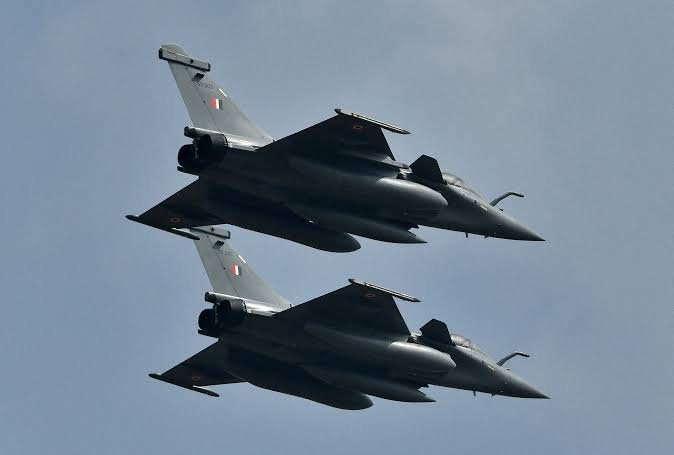
It is worth mentioning here that according to CNN American media, Pakistan had claimed to have shot down five Indian warplanes, including three Rafales, one MiG-29 and one Sukhoi Su-30, on May 7, 2025. This action was in response to India’s ‘Operation Sindoor’, in which India had attacked terrorist hideouts in Pakistan and PoK. The strikes were in response to the April 22, 2025, terrorist attack in Pahalgam, which killed 26 civilians. CNN quoted a French intelligence official as saying that Pakistan had shot down at least one Rafale jet, the first combat loss for the aircraft. Pakistan’s Defense Minister Khawaja Asif and a military spokesman claimed that it was “self-defense.” However, CNN said it could not independently verify these claims. Images of the wreckage of the aircraft had emerged in Jammu and Kashmir and Bathinda, Punjab, showing parts labeled with the French manufacturer. However, experts said that these could only be parts of the wreckage (such as the external fuel tank), and not the entire aircraft. Several pictures and videos were also shared on social media, but the PIB termed them as false. Surprisingly, several TV channels ran misleading news (like the attack on Karachi), but no action was taken against them. The government may have argued that the news was sensitive for national security, but the lack of transparency and selective action made the move controversial. The Wire has announced a legal challenge to it. Senior Congress leader Jairam Ramesh called the ban an “attack on the Constitution”, while Supriya Shrinet termed it “dictatorial”. CPI(M) leader Sitaram Yechury had said that it was part of the government’s “anti-constitutional” policies.
Intellectual Prashant Bhushan called it “censorship” and Arundhati Roy called it a symbol of “fascist thinking”. Rajdeep Sardesai questioned that if CNN is not banned, then why ‘The Wire’?
Editors Guild of India: The guild condemned the ban and demanded the restoration of the website. The ban on ‘The Wire’ has raised serious questions on the freedom of the press in India. If the claims of Pakistan in the CNN report were controversial, the selective and non-transparent action of the government has made the issue more serious. The legal battle of ‘The Wire’ and the political-social reactions have intensified the discussion on media freedom.