
The Jihadi attack in Pahalgam killed 28 people. The incident is reminiscent of the deadly attacks during high-profile American visits in 2000 and 2002. Security challenges in Kashmir have never diminished.
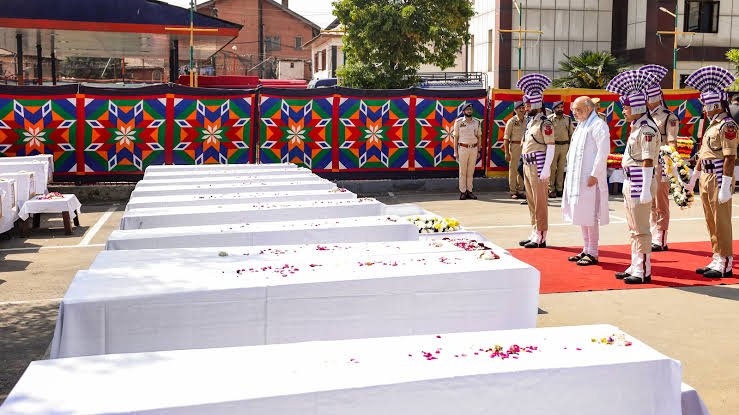
The Jihadi attack in Pahalgam in Jammu and Kashmir on April 22 has not only shocked the country but also revived the horrific memories of the Jihadi incidents in 2000 and 2002. The attack took place when US Vice President J.D. Vance was visiting India and Prime Minister Narendra Modi was on a visit to Saudi Arabia. At least 28 people were killed in the attack, including two foreign tourists, locals and an Indian Navy officer. Following the incident, Prime Minister Modi has returned to India after cutting short his Saudi Arabia visit. High-level meetings are now underway in Delhi.
At around 1:30 pm on Tuesday, four jihadists opened fire indiscriminately in the Besran grasslands of Pahalgam, known as “mini Switzerland” for its natural beauty. It can only be reached by foot or horse, and 1,000 to 1,500 tourists were there at the time. However, TV channels are reporting 2,000 tourists. The attack left 28 people dead and several others injured, some of them seriously. There were no adequate security arrangements during this time. It is a fact that the security forces are deployed there many times more than the number of tourists. Yet the incident happened.
According to the police, the jihadists were in army uniform and targeted tourists of a particular religion. An eyewitness from Pune, Asawari Jagdale, said that the jihadists asked her father and uncle to recite the kalma, which they could not do. Then he was shot dead.
-A businessman from Karnataka’s Shivamogga district was among those killed in the attack on tourists by jihadists in Jammu and Kashmir’s Pahalgam. The businessman’s family said that Manjunath Rao (47), a resident of Vijaynagar, had gone to Pahalgam with his wife Pallavi and son Abhijaya. Pallavi told local news channels in Karnataka over the phone that my husband was shot dead by jihadists in front of our eyes. Pallavi said that she told the jihadists to shoot me too, to which they replied that you should be alive to deliver the message to Prime Minister Narendra Modi.
The Resistance Front, affiliated with the Pakistan-based Lashkar-e-Taiba, has claimed responsibility for the attack. It is the deadliest attack on civilians in the valley since the abrogation of Jammu and Kashmir’s special status in 2019.
Similarities with the 2000 and 2002 incidents
This attack is reminiscent of the jihadist incidents of 2000 and 2002 that occurred during high-level American visits. On March 20, 2000, just before US President Bill Clinton’s visit to India, 36 members of the Sikh community were killed in the village of Chitisingpura in Anantnag district. The jihadists came in army uniforms and opened indiscriminate fire on the villagers.
Similarly, on May 14, 2002, when US Assistant Secretary of State Christina B. Rocca was on a visit to India, a jihadist attack in Kaluchak near Jammu killed 30 people, including 10 children and eight women. The attacks were aimed at attracting international attention and tarnishing India’s image.
Pakistan’s role questioned:
The attack comes a week after Pakistan Army Chief General Asim Munir described Kashmir as Pakistan’s “lifeline”. The Indian Ministry of External Affairs strongly condemned the statement. Jammu BJP leader Ravinder Raina blamed Pakistani jihadists for the attack.
Attack condemned
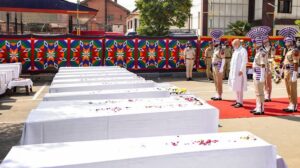
Prime Minister Narendra Modi strongly condemned the attack and called an emergency meeting in Delhi after returning from Saudi Arabia. “Those who carried out this heinous act will not be spared,” he said. “My heartfelt condolences to those who have lost their loved ones,” he said. “I pray for the speedy recovery of the injured. All possible assistance is being provided to the affected people.”
Home Minister Amit Shah reached Srinagar and took stock of the security situation. Jammu and Kashmir Lieutenant Governor Manoj Sinha and Chief Minister Omar Abdullah also condemned the attack, with Abdullah calling it “the biggest attack on civilians in recent years.”
Congress President Mallikarjun Kharge condemned the terrorist attack on innocent tourists in Pahalgam, saying it was a blot on humanity. He also said that the country’s national security is paramount and he appealed to the central government to take corrective steps. US President Donald Trump, Russian President Vladimir Putin, Israeli Prime Minister Benjamin Netanyahu, France, Ukraine, Japan and other countries condemned the attack and expressed sympathy with India. US Vice President J.D. Vance said, “We are saddened by this terrible attack. We stand with the people of India.”
Deadly attack and terror among the people
Tourism in Jammu and Kashmir has increased significantly since 2019, which was considered a symbol of normalcy and economic prosperity. But this attack has raised questions about the security system. Fear has spread among tourists, and many people have canceled their trips.
Security forces in Jammu and Kashmir have