
With this action, America has declared its tyranny. America has decided to impose 10% basic customs duty against each country. But later it has decided to impose 36% duty against China, 34% against Japan, 70% against Vietnam and 26% duty on Indian goods. In this matter, America has not spared its very close countries Mexico, Canada and the European Union. But later, except China, it postponed the tariffs imposed against most other countries for 90 days. China and America have come face to face on this issue. So far, America has imposed 145% tariff on Chinese goods and China has imposed 125% tariff on American goods. China has also said that if America imposes more tariffs on Chinese goods after this, it will not ignore it. This has created an uproar all over the world. Many countries of the world have raised their voices against this oppression and have also announced countermeasures, but India is hesitant to speak out against it.
It seems appropriate to mention a little about the international economic system before the US government’s announcement of April 02, 2025. This system came into existence after the 1944 conference at Bretton Woods with the joint efforts of the US and Britain. In this conference, it was decided to create three institutions. The International Monetary Fund was created to run the international economy smoothly. In this system, the US dollar was given the status of global currency. Other countries have to earn dollars after selling goods abroad for trade, but the US can also order goods from the rest of the world by printing dollars and the dollar helps in establishing America’s prestige in the world. This system continues even today. The World Bank was established for the reconstruction of European countries and the development of less developed countries. It is still in existence today. The US uses this organization to influence the economic development policies of the less developed countries. It was decided to create a third organization, the International Trade Organization, to set and enforce trade rules among different countries. But the US did not agree on the basic outline and structure of this organization, so the GATT (General Agreement on Tariffs and Trade) was created. After eight rounds of negotiations, the World Trade Organization (WTO) was established on January 1, 1995, replacing the GATT. Before its establishment, the WTO was established by consensus after eight years of negotiations between the countries of the world from 1986 to 1994. The United States and Britain played a leading role in its establishment. The jurisdiction of this organization was significantly increased. The GATT’s jurisdiction focused on trade in goods and decisions were taken. However, trade in agricultural goods was not included in it. After the formation of the WTO, agricultural trade and agricultural development were included in its jurisdiction. The WTO was given the right to take decisions on trade in services, intellectual property rights, open entry of foreign capital into countries and tariffs/customs were reduced and other restrictions on trade were eliminated. Periodic meetings of trade ministers were arranged to promote globalization of countries. Countries’ trade, capital, intellectual rights and other A dispute settlement mechanism was arranged to resolve the issues. Under the rules of the World Trade Organization, the era of globalization has progressed very rapidly during the last 30 years. It is worth noting that during the era of GATT and the World Trade Organization, it has been accepted that there is inequality in the economic development of the countries of the world. The backward and poor countries have the right to impose higher customs duties on goods coming from abroad compared to the developed countries and can adopt a policy of higher subsidies for the development of domestic industry and agriculture. Apart from this, they can also use strict economic policies/bans during the crisis caused by cheap goods coming from abroad in the country. After the formation of the World Trade Organization, the era of globalization benefited the economic development of China, India, South Africa, Brazil and other emerging countries. Due to this, China has become the second largest economy in the world and India the fifth largest. Due to this, the tide of world economic development has started to tilt towards Asia. Along with this, with the establishment of the BRICS (2R93S) organization of countries, these countries started raising their voices against the unjustified hegemony of the dollar. This is not acceptable to the US. This is the reason why the US, while imposing customs duties against other countries, has also announced that 100% duty will be imposed on those countries which will conduct foreign trade in any currency other than the dollar. After imposing customs duties against other countries, they are also being advised not to impose any retaliatory customs duties against the US.
All these decisions are being made unilaterally, without talking to any country. In this way, the US has announced its intention to abandon the World Trade Organization, which was created on its own initiative. Apart from this, the right of poor and backward countries to impose higher customs duties and provide more subsidies for domestic small industries and agricultural development has also been denied. On the other hand, the attitude of America is clearly visible towards occupying the territories of other countries. Statements have been made by the President of this country about occupying Canada, Greenland, the Panama Canal and the Gaza Strip. These statements are reminiscent of the colonial era of the 18th-20th centuries. The end of this era was completely after the Second World War.
It has happened, but the US action is reminiscent of that era. The vocabulary and language being used in taking this action is oppressive. It can create threats to the sovereignty of the countries of the world, especially the less developed and small countries. If the ideological atmosphere against immigrants is included in this conversation, it is seen as hurting the popularity of the current multiculturalism in the developed countries. It can lead to promoting the ideology of racism and has the potential to build a narrative against the phenomenon of democracy and minorities.
Several countries have expressed strong opposition to the policy of oppression adopted by the Donald Trump administration. China, Canada and Mexico have announced the imposition of equal customs duties on US exports. Opposition to the occupation of the territories of other countries has been expressed by the countries of the Middle East, Canada, Greenland and Panama. European countries are also opposing the imposition of unilateral customs duties.
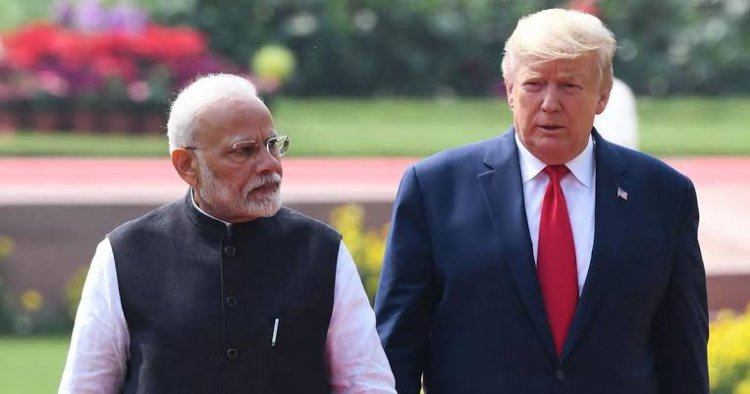
India’s reaction is that of a frightened country. India has not made any statement against the imposition of 26% customs duty by the US. About a month ago, the country’s honor was hurt by sending illegal Indian immigrants in the US in handcuffs to the Amritsar airport by a military plane. Even then, no protest was raised by the Indian government. In comparison, Mexico and Colombia in Latin America did not allow such treatment of their citizens. They had arranged to bring their citizens back to their countries by civil aircraft. Now, in the face of US bullying, India has shown its weakness by cutting taxes on automobiles and motorcycles in the current budget by a large margin. News of purchasing military equipment and old warplanes from the US is coming in the media. Apart from this, ministerial-level delegations are being sent to sign a free trade agreement with the US and delegations are being invited from the US. Although the open trade agreement has publicly talked about protecting the agricultural sector, the pressure from the US and the European Union on India to open up agricultural imports has been continuous for the last 20 years. The way to avoid this can be not through fear but by firmly defending one’s rights. This does not match India’s post-independence history. At that time, the country’s economy was very weak. The country was counted among the lowest-income countries and there was a fear of starvation due to food shortage. Even during those times, the country adopted a non-aligned policy during the Cold War. During the 1971 war with Pakistan, American opposition was firmly resisted and Bangladesh played a significant role in the formation of the country. Now the country is self-sufficient in food and has joined the category of lower middle-income countries. The size of the country’s economy has reached the fifth place in the world. At present, the country’s capacity to protect its rights and economy is much greater than before. At this juncture, showing fear can prove fatal. A weak stand in the face of the tyrannical American mindset will encourage it to take strong steps against India. Therefore, it is necessary to take a strong position against this tyranny and protect the country’s independence and sovereignty and to adapt the country’s economic policy according to the country’s resources and needs. For this, all discussions should be held openly with the countrymen so that their support can also be gained.