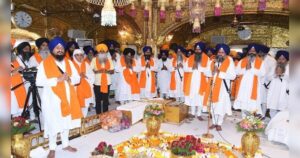

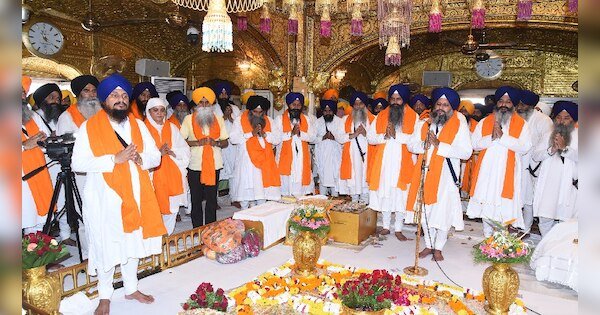
Due to their interdependence, sometimes there is a conflict in their rights and functioning. Of these three institutions, Sri Akal Takht Sahib is considered the highest, and it is often said that its jurisdiction applies to the Sikhs living all over the world and the entire humanity in terms of human concerns. Although the other two institutions are also associated with the territorial administration, they are often seen saying that whenever the Sikhs all over the world face any problem, it looks at them. Resolutions related to the issues of Sikhs in the country and abroad have also been passed by the Shiromani Gurdwara Parbandhak Committee, which represent the feelings of Sikhs living abroad.
Of these three institutions of Sikhism, there is a procedure for selecting the first two institutions. The Shiromani Akali Dal claims to recruit its members impartially at the right time and similarly the members of the Shiromani Gurdwara Parbandhak Committee are elected under the Gurdwara Act of 1925, who manage the Gurdwaras and propagate religion as per the prescribed rules. But despite the rules, regulations and scope of work being prescribed, conflicts are seen in these institutions, which creates sadness and unrest among the sincere Sikhs living in the country and abroad.
One thing was very clear in the Hukamnamas that came out from Sri Akal Takht Sahib on December 2, 2024 that the Shiromani Akali Dal, the party that leads the political leadership of the Sikhs, has lost its moral base. This base of this party has not only eroded in one or two years, but during the past period of being in government, they have done some such things that were not in accordance with Sikh principles and sentiments. The most prominent of these included the sacrilege of Sri Guru Granth Sahib Ji during their rule and the granting of an unsolicited pardon to Dera Sacha Sauda in Sirsa. Although the Akali leaders appeared to admit that there had been incidents of sacrilege of Sri Guru Granth Sahib Ji during their rule, they were unable to stop them and punish the culprits. But the message went out among the Sikhs that due to the Shiromani Akali Dal’s links with Dera Sauda, the perpetrators of the sacrilege incidents were not caught, but the Sikh community opposing this incident had to suffer their wrath.
The incidents that had taken place in the past have reduced the base of the Shiromani Akali Dal. Many sincere Sikhs started distancing themselves from them, due to which they started facing continuous political defeats. It was due to the loss of political base that first the Delhi Gurdwara Management Committee was lost and then a separate Gurdwara Management Committee was formed in Haryana. Although such incidents have also had a huge impact on the common Sikhs. Where they used to consider themselves strong, now they are starting to feel unclaimed. At such a time, many people and Sikhs of Punjab were starting to understand that it is very important for the political party of Sikhs to be strong in Punjab.
The Shiromani Akali Dal had also decided to go to Sri Akal Takht Sahib with the aim of strengthening its base and connecting the common Sikhs with it and apologize to the Guru-Panth. Although this decision was appreciated from all sides and the leaders associated with the political party had also accepted it. Everyone was paid a salary according to the prescribed standard, which everyone fulfilled. When prayers were made for the fullness of that salary, everyone felt very relieved that the Akali leaders had forgiven their mistakes and joined the Panth again, which could open the way for their revival.
But this pleasant atmosphere could not last long and the action initiated against Giani Harpreet Singh regarding an old family issue started to rekindle the fresh wounds. The attention of the Sikh community was again focused on the issue of December 2 and the decision taken by the Singh Sahibs. Discussions started on the orders issued from the Akal Takht Sahib that were yet to be implemented, which turned into apathetic and bitter rhetoric. The Jathedar of Sri Akal Takht Sahib, Giani Raghbir Singh, who was considered to be very easy-going and calm, was also forced to come to the media and answer sharp questions and clarify the situation that had arisen. The points that his statements had raised regarding the working style of the Akali leaders, once again brought the Akali leaders to the dock. Some top leaders of the Akali Dal may not have found it right that the Jathedar of Sri Akal Takht Sahib could so boldly question their working style. This discussion had started among journalists and Sikh thinkers that now the departure of the Jathedar of Sri Akal Takht Sahib is almost certain.
The manner in which the Jathedars of Sri Akal Takht Sahib and Sri Keshgarh Sahib were removed on March 7, 2025, has created unrest among the Sikhs. They are starting to wonder whether the personalities sitting on the highest institutions of the Sikhs can be removed in the same way? Can the personalities sitting on the smallest and the biggest positions be appointed and changed? Shouldn’t special care be taken of their dignity? Shouldn’t there be any rules regarding the appointment, rights and retirement of the Singh Sahibs who are appointed to the highest institution of the Sikhs and lead the nation?
This is not the first time that ideas are being raised regarding the appointment or retirement of Jathedars. This issue has been raised before as well.The thinking has been going on in the Sha. In the Interim Committee of June 25, 1948, while laying down the rules regarding the management of Sri Akal Takht Sahib, it was said that ‘the General Committee will have the right to appoint and remove the Jathedar Sahib, but the Interim Committee will have the right to accept the resignation.’ In 1986, in the All-Hind Gurdwara Act prepared by a three-member committee under the chairmanship of Dr. Jasbir Singh Ahluwalia, it was proposed that only honest, respected personalities of the Sikh Panth, knowledgeable in Sikh religion and Sikh history, should be appointed to these high positions. The Jathedars of the Takht Sahibs and the Chief Granthi of the Golden Temple should not be considered employees of the Central Board. Even after retirement, these Jathedars will continue to be members of the Central Board by virtue of their position. After this, there was an attempt in 2015 to make rules regarding the appointment of Jathedars Sahibs, which could not be completed. The benefit of making rules regarding the appointment and retirement of Jathedars will be that on the one hand, it will help in maintaining the respect and dignity of the position, Jathedars will be independent and responsible for carrying out Panthic work within the prescribed time and the party in control of the Shiromani Committee will not be able to appoint or remove Jathedars arbitrarily. This is very much needed in the current circumstances.