

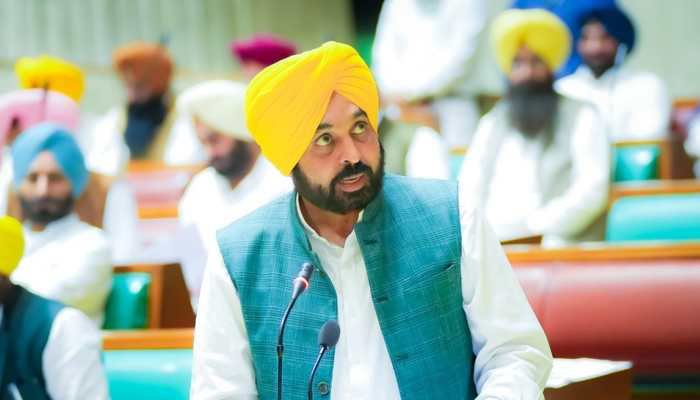
The new land pooling policy brought by the Punjab government in 2025 has created a stir in the political and social environment of the state. This policy is being presented by the government in the name of urbanization and planned development, but farmer organizations and opposition parties have called it a conspiracy to grab farmers’ land. Under this policy, the government is planning to use 40,000 acres of agricultural land near 27 cities and towns of Punjab for urban development, out of which the maximum 24,000 acres of land is to be acquired from Ludhiana district alone. The government claims that this policy will give a new shape to urban development and get rid of the problem of illegal colonies. But farmers and the opposition are considering it as a step that will break the backbone of agriculture and farmers. In opposition to this policy, farmer organizations have started preparations for a struggle. Opposition parties such as Congress, Shiromani Akali Dal and BJP have also made a strategy to surround the government. They argue that this policy is designed to hand over farmers’ land to private developers and big corporate companies.
Government’s perspective on land pooling policy
The main objective of the Punjab government’s land pooling policy 2025 is to promote urban development in a planned manner. According to government officials, the number of illegal and unauthorized colonies is increasing in the cities of the state, which are deprived of sewerage, water, electricity and other basic amenities. To solve this problem, the government has brought a land pooling policy, under which instead of handing over farmers’ land to the government, plots of developed urban land will be given in return. According to the government, in return for one acre of land, the farmer will get 1000 square yards of residential land and 200 square yards of commercial land. Farmers can keep or sell these plots. The government says that this policy will increase the value of their land for farmers, because the price of developed urban land is many times higher than that of agricultural land. According to Finance Minister Harpal Singh Cheema, this policy can provide a farmer with a benefit of about Rs 4.2 crore for one acre of land, which includes 1000 square yards of residential land (Rs 3 crore at Rs 30,000 per square yard) and 200 square yards of commercial land (Rs 1.2 crore at Rs 60,000 per square yard). The government also claims that this policy will regularize urban development and end the problem of illegal colonies. Under this policy, landowners have also been given the option to choose the size of residential plots (500, 400, 100, 300 or 200 square yards) as per their wish. However, there is no option to choose the size of commercial land, and it will be allotted through lottery.
Reasons for farmers’ opposition
This policy is being strongly opposed by farmers and opposition parties. The main reasons for this are as follows:
Punjab’s economy is based on agriculture. Punjab is known as the “breadbasket” of the country, contributing 78.5% of wheat to the central pool in 1968-69 and even today contributes 40% of wheat and 20-25% of paddy. The use of 40,000 acres of fertile land for urban development will have a negative impact on agricultural production, which could pose a threat to the country’s food security. Farmers believe that this will harm their livelihood and the agro-economy of Punjab.
The opposition parties and farmers’ organizations allege that the government did not consult the farmers or their organizations before formulating this policy. This policy is being imposed on the farmers, which has led to resentment among them.
The opposition parties say that development work on lands acquired by PUDA and GMADA in Punjab has also been incomplete. Half of the plots in colonies built on thousands of acres of land are vacant and there is a lack of basic amenities. In such a situation, questions arise about the success of the new policy.
Farmers and the opposition parties allege that this policy has been made to benefit big real estate companies and corporates. Farmers believe that their land will be sold to big developers at a cheap price, which will exploit the farmers.
Most farmers in Punjab have small plots of land. This policy may put their livelihood at risk. If their land is taken for urban development, their livelihood and the future of their families will become insecure.
Impact on Punjab’s economy
A large part of Punjab’s economy depends on agriculture. 80% of the state’s population lives in villages and is associated with agriculture. Using 40,000 acres of fertile land for urban development could have a profound impact on the state’s agricultural economy. The fertility potential of Punjab’s agricultural land is important for the country’s food security. This policy could not only reduce agricultural production, but also threaten the livelihood of about 10,000 farming families. At the same time, the contribution of urban development to Punjab’s economy is also important, but the failure of the government’s previous schemes has reduced people’s confidence. With the development work on the lands acquired by PUDA and GMADA remaining incomplete, people doubt that the results of this policy will be the same. The opposition parties say that the government does not have enough resources to complete this plan, and in such a case, private developers will be involved, which can harm the interests of farmers. Another important impact of this policy is also on the social stru cture of Punjab.
It can. Agriculture in the villages of Punjab is not only an economic activity but also a part of the cultural and social identity. If large-scale land is taken for urban development, the social structure of the villages of Punjab will also be affected, which may further increase the tendency of Punjabis to leave the state.
Legal aspects and why not the court route?
The issue of land pooling comes under the Concurrent List of the Indian Constitution, under which the Central and State Governments have the power to make laws. The Land Pooling Act of 1894 and the Land Pooling, Rehabilitation and Resettlement Act of 2013 have regulated the process of land pooling. According to these laws, the government is required to provide adequate compensation and rehabilitation facilities to the landowners. But the land pooling policy is different from the 2013 Act, as it is based on voluntary land acquisition, in which farmers will be given plots of developed land instead of compensation. Farmer organizations and opposition parties have not yet challenged this policy in court, but there may be several reasons for this. First, the policy has not yet been fully implemented, and farmer organizations are trying to force the government to back down through struggle and public pressure. Second, the court process can be long and costly, and farmer organizations may prefer public agitation first. Third, the land pooling policy is voluntary, which may make it difficult to challenge it in court, as the government claims that it is being implemented with the consent of the farmers. But if the government implements this policy forcefully or farmers do not get adequate compensation, farmer organizations can move the court. A case can be filed in court on the basis of violation of the terms of the 2013 Act or violation of constitutional rights.
Punjab’s destruction or new path of development?
Punjab’s Land Pooling Policy 2025 has sparked a major political and social debate in the state. The government believes that this policy will give a new direction to urban development and increase the value of their land to farmers. But farmers and opposition parties consider it a threat to agriculture and farmers’ livelihood. Using 40,000 acres of fertile land for urban development can have a profound impact on Punjab’s agricultural economy and social structure. A case can be filed on the basis of violation of environmental and constitutional rights regarding the impact on agriculture and food security. Considering the importance of Punjab’s fertile land and the country’s food security, the court may order the government to review the land use. Opposition to this policy could become a major political issue till the 2027 assembly elections. If the government fails to allay the doubts of the farmers and take them into confidence, this policy could become a major political challenge for the Aam Aadmi Party government in Punjab. The government needs to interact openly with the farmers, address their concerns and implement it in a transparent manner to successfully implement this policy. Otherwise, this policy could become a major challenge for the economy and social structure of Punjab.