

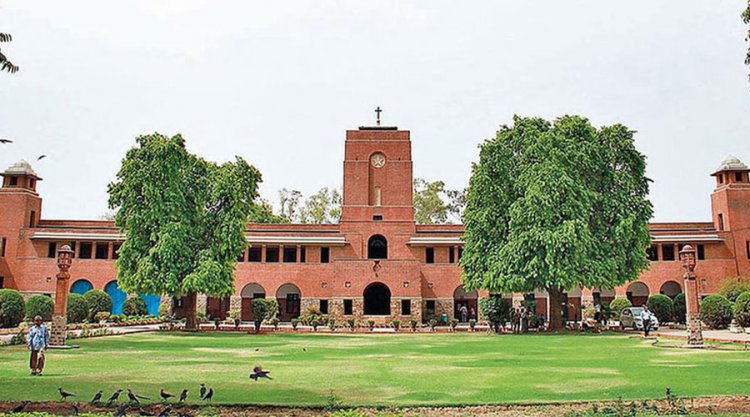
Delhi University has decided to start a course titled “Sikh Martyrdom in Indian History (1500-1765)”, which will be a 4-credit elective course for undergraduate students. The aim of this course is to explain the development of Sikhism, martyrdoms, and the Sikh movement’s fight against oppression. It will teach the importance of places like Guru Arjan Dev, Guru Tegh Bahadur, the Four Sahibzades, Baba Banda Singh Bahadur, Bhai Mati Das, Bhai Sati Das, Mai Bhago, and Sri Darbar Sahib. But the question is, is it enough to teach history focused only on martyrdoms, or is there a need to explain the entire ideology of Sikhism?
Sikh Movement: Anti-Mughal or Pro-Justice?
According to historians Sukhdayal Singh and Gurtej Singh IAS, the Sikh movement was not against the Mughals or Islam, but against oppression and injustice. Sikhism was founded on the ideology of justice, equality, and the welfare of all. The atrocities of Mughal Emperor Jahangir and Aurangzeb, such as the martyrdom of Guru Arjan Dev (1606) and Guru Tegh Bahadur (1675), forced the Sikhs to stand up against the authorities. Guru Gobind Singh’s ‘Zafarnama’ was also a response to Aurangzeb’s atrocities, not an opposition to Islam. The Sikh movement always spoke of humanity and justice, and did not wage war against any religion.
Sikh Movement: Home Guard of the Hindu Community?
Historian Gurdarshan Dhillon points out that it is wrong to describe the Sikh movement as the “home guard” of the Hindu community. The ideology of Sikhism was the same for people of all religions. During the time of Guru Amar Das, Akbar used to come to eat langar, which shows the consensus of Sikh-Mughal relations. The Sikh movement opposed communalism, be it Hindu or Muslim. Guru Gobind Singh’s Sikhs also gave water to the wounded enemies in war, which shows the humanitarian thinking of Sikhism.
How should Sikh history be presented?
Teaching the history of Sikh martyrs is important, but focusing only on martyrs would leave the entire ideology of the Gurus incomplete. The foundation of Sikhism rests on justice, equality, and the common good. Historians believe that Sikh history should be presented not as an anti-Mughal or religious conflict, but as a fight for justice and humanity. The Sikh movement should not be limited to battles and martyrdoms alone, but should also include the social reformist thought of Guru Nanak Dev Ji, the peaceful ideology of Guru Arjan Dev, and the purpose of establishing the Khalsa Panth of Guru Gobind Singh.
The need for a correct presentation of Sikh history
To teach Sikh history in the right context, it is necessary to look at the relations of the Sikhs with the Mughals with a balanced perspective. Just as Sikh-Mughal relations were harmonious during the time of Akbar, but the atrocities of Aurangzeb gave rise to conflict. The Sikh movement should not be presented as a fight against any one religion or nation, but as a fight against oppression and injustice. The humanistic thinking of Sikhism, social reform, and the ideology of the welfare of all should also be included in this course, so that students can understand the complete picture of Sikh history. Focusing only on martyrdoms will leave the broader thinking and philosophy of Sikhism incomplete.
Delhi University’s decision to teach a course on Sikh martyrdoms is welcome, but it should not be limited to martyrdoms alone. Sikh history needs to be presented as a fight for justice, equality, and humanity, and not as an anti-Mughal or anti-Islam movement. Explaining the ideology of Sikhism and the philosophy of the Gurus will help students understand the true meaning of Sikhism, which is not limited to battles or martyrdoms, but is based on the idea of the welfare of all.