
In India, where there is talk of reaching the moon, where the doors of new possibilities are opening with the help of the Masnui intellect, centuries-old superstition still has its roots strong. Women are burned, killed, tortured by being labeled as ‘witches’. This story is not just about superstition, but also about gender and caste hatred rooted in society. In the three years from 2022 to 2025, hundreds of women were killed in India in the name of ‘witches’. This story is of those who were marginalized by society, whose cries went unheard. Small incidents of this strange fiery ordeal have come to light in Punjab too. Examples of such incidents are found in foreign countries too. The government has certainly made some laws, but they have not proved to be very effective.
India 2022-2025: Bloody game in the name of ‘witch’
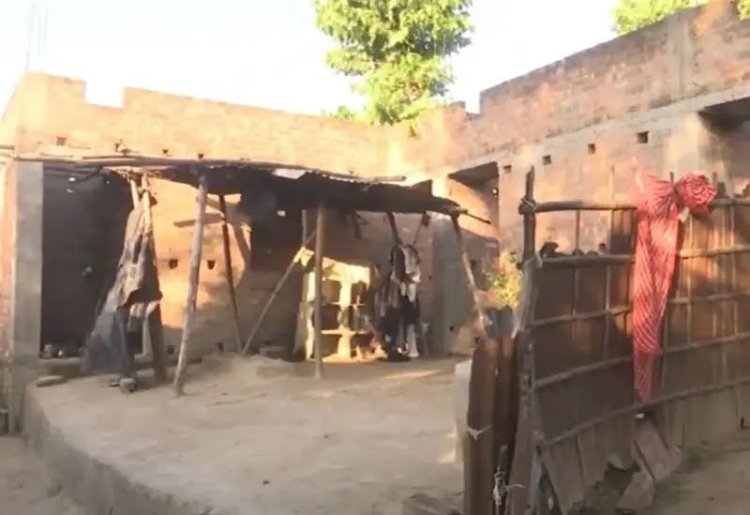
According to the National Crime Records Bureau (NCRB) data, more than 2500 women have been killed in India since 2000 on charges of ‘witchcraft’. Talking about 2022 to 2025, recent news and reports show that hundreds of incidents took place in this period, with the highest impact seen in Bihar, Jharkhand, Odisha, Assam, West Bengal, Madhya Pradesh and Rajasthan. The most tragic incident is from 2025, when five members of a family—parents, grandmother, brother and sister-in-law—were burnt alive on the night of July 6 in Tetagama village of Purnia district of Bihar on suspicion of being ‘witches’ and practicing witchcraft.
According to the 2023-24 report of the Nairati Trust in Bihar, 75,000 women live in fear that they too may one day be labelled as a ‘witch’. The survey interviewed 145 women in 114 villages across 10 districts who had been accused of ‘witchcraft’ or witchcraft. 74% of these women were above the age of 45, most of whom were illiterate and daily wage labourers.
‘Witch’ incidents in Punjab: What is the truth?
The number of ‘witch’ killings in Punjab is not as high as in states like Bihar or Jharkhand, but it would be wrong to think that Punjab is free from it. Reports of such incidents continue to be received in rural areas of Punjab, especially in border districts like Amritsar, Gurdaspur and Ferozepur. In the period 2022-2025, the number of direct killings on charges of ‘witchcraft’ in Punjab is negligible, but incidents of social boycott, ostracism and harassment of women in the name of witchcraft have certainly come to light. Despite the high level of education in Punjab, such superstitions are still rooted in rural areas. Villagers still go to the shelter of tantrics to exorcise ghosts.
‘Witch’ incidents abroad: A historical overview
In Europe and America, women were burned alive on charges of ‘witchcraft’ from the 13th to the 17th century. In 1734, Anna Goldie was beheaded in Switzerland as the ‘last witch’. After this, strict laws in Europe banned this practice. But such incidents are rare abroad today. In some African countries, such as Nigeria, Ghana and South Africa, women are still targeted on charges of being ‘witches’. . Such incidents often occur in poor and uneducated areas, where social and economic inequality is a major reason. In some parts of Latin America, such as Peru and Bolivia, such cases also come to light, but not on a scale as large as in India.
Why has there been no change despite government action and legislation?
In India, several states have enacted laws against the practice of ‘witchcraft’. Bihar, Assam, Rajasthan, Chhattisgarh, Odisha and Jharkhand have ‘Witch Prohibition Acts’, under which there is a provision for punishment and fines for those who make such allegations. But the question is – are these laws really effective? Santosh Sharma of the Neerat Trust says, “In conversations with 81 panchayats, most said that they were not even aware of Bihar’s Witchcraft Prohibition Act.” When the panchayats themselves are not aware of the law, how can we expect justice?
In 2022-2025, there were some arrests in Bihar, Jharkhand and Odisha, but in most cases the culprits did not get punished.
According to the Neerat Trust report, 82% of the accused women were from backward castes, 51% from scheduled castes and 7% were Muslims. These women were often poor, illiterate and socially vulnerable. “No one dares to call an upper caste woman a ‘witch’,” says Santosh Sharma of the Neerat Trust. This is the reality of society, where only weak and Dalit women have to undergo the ordeal of fire.
The killings in the name of ‘witches’ are a stain on the society. Unless education, awareness and social equality are increased, this fiery ordeal will continue. The government needs to strictly enforce the laws. Panchayats will have to be made aware, and society will have to be made to understand that ‘witchcraft’ is not a truth, but a product of centuries-old hatred. This fire will continue to burn society until every woman gets equality and protection.