

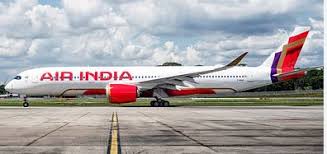
The Air India Boeing 787-8 Dreamliner crash in Ahmedabad on June 12, 2025, not only shook the Indian airspace, but also had profound repercussions globally. The death of 260 people in this accident has raised questions about safety and created fear in the minds of people. Along with this, the Indian government’s rejection of the United Nations’ offer of investigative assistance has also sparked international discussion.
Shadow of fear on air travel: 20% drop in bookings
Even two weeks after the Ahmedabad accident, its impact on Indian air travel is clearly visible. According to a report by the Indian Association of Tour Operators, after the accident, bookings for Air India flights have decreased by 15-20%, while 30-40% of pre-booked tickets have also been canceled. Fear has increased among people about the Boeing 787 series aircraft. Indian Association President Ravi Gosain said that passengers are now asking strange questions about the type of aircraft. Earlier, there was no concern about this, but now people are afraid to travel in Dreamliner aircraft.”
According to Mumbai-based travel agency Jaya Tours, people are avoiding Air India flights and preferring other airlines. Nidhi Bhatia, 25, who lives in London and had travelled to Mumbai in an Air India Boeing 777 the day before the accident, said, “I am now looking for alternatives to booking Boeing aircraft. I am very scared and do not want to fly again.” To overcome this fear, organizations like Bangalore-based Cockpit Vista are starting therapy sessions to reduce the fear of flying. Its owner Dinesh K. said that the demand for his courses has increased 10 times after the accident. He helps passengers understand the sounds and vibrations of the plane through a simulator course worth Rs 42,000, so that their fear can be reduced.
Big loss for Air India: Cut in flights, crisis on reputation
Air India has suffered a big setback due to this accident. The Director General of Civil Aviation (DGCA) had ordered a safety inspection of all Air India’s Boeing 787, 788 and 789 aircraft. The inspection of 26 out of the company’s 33 aircraft has been completed and all of them have been found ready for service, but the inspection of the remaining aircraft is still ongoing. Due to this, Air India had to cut its major flights by 15%, which will continue until at least July 15, 2025. At the same time, 83 international flights of Air India were canceled in 6 days due to the ongoing conflict in the Middle East and other reasons. In addition, there were reports of technical glitches in several domestic flights, due to which passengers had to be deplaned or the plane had to be turned back. All this had a negative impact on Air India’s reputation and shaken the confidence of passengers. The reputation of the Boeing company is also in crisis, as the accident occurred with a Boeing 787-8 Dreamliner. Questions are being raised about the safety of Boeing’s aircraft globally, which caused financial and reputational losses to both Air India and Boeing.
UN offer rejected: India’s tough stance
The United Nations aviation agency (ICAO) had offered to involve its investigator in the investigation of the accident, but India rejected it. According to Reuters sources, Indian authorities refused to grant observer status to the ICAO investigator. The decision was criticized by some safety experts, who said it could delay the analysis of the black box data. India’s Civil Aviation Ministry clarified that the investigation is being led by the Indian Aircraft Accident Investigation Bureau (AAIB) and all international protocols are being followed. The ministry said that the black box data was successfully downloaded on June 24-25 and its analysis is underway. India believes that it has full capacity for the investigation and does not need external assistance. The decision has been linked by some experts to national security and self-reliance, while others have considered it a question of transparency. But India has made it clear that the investigation will be carried out with full seriousness and in an independent manner.
Black box investigation and international media Perspective
The black box, which includes the flight data recorder (FDR) and the cockpit voice recorder (CVR), plays a key role in determining the cause of the accident. The memory module of the black box, found on June 13 and 16, was successfully accessed on June 24-25 and the data was downloaded. According to the Ministry of Civil Aviation, this data is being analysed to understand the causes of the accident and prevent such incidents in the future. The initial report is expected by July 12, 2025, as such investigations usually take 30 days. The international media covered the accident extensively. Reuters saw India’s rejection of the UN offer as a question on transparency, while Times Now was the first to report the news. International media houses like BBC and CNN have been critical of Boeing’s safety and Air India’s highlighted the impact on the reputation of the country. Some media reports also saw this as a question mark on the Indian aviation safety system. The Ministry of Civil Aviation said that all international standards are being followed and the results of the investigation will be out soon. At the same time, India has also strengthened its safety system.
Expressed full confidence in the system and ruled out external interference.
Analysis of the black box data will reveal the causes of the accident, the initial report of which is expected to come in July 2025. This accident is a major challenge for the Indian aviation sector, which needs to be resolved in a manner that is consistent with safety and confidence.