

Iran, which is the leading country of the Islamic world, has the fragrance of Sikhism and the echo of Gurbani in it no less than a wonder. But the question arises, when did the Sikhs arrive in this Islamic country? What are their lives, businesses, language, dress and relations with the Iranian people like? And today, when the heat of the war between Iran and Israel has reached Tehran, what are the conditions of the Sikhs?
When did the Sikhs arrive in Iran?
The interaction of the Sikhs with the land of Iran is not new. Our first Guru, Sri Guru Nanak Sahib Ji, whose Udasis had given the message of truth to the world, had arrived in Iran during his fourth Udasis. He had visited cities like Bushehr, Basra, Tabriz, Tehran, Isfahan, Kerman and Mashhad, where he lit the light of truth. His journey with Bhai Mardana Ji forever imprinted the memory of Guru Ji in the hearts of Iranians. But the beginning of settlement as Sikhs began in the early 20th century. Between 1900 and 1920, when Punjab was still undivided, Sikhs from Rawalpindi and other areas had reached Persia (Iran) in search of work. Some Sikhs, who were part of the British Indian Army, settled in Zahedan.
It is said that Professor Harpal Singh Pannu says, “Once the Emperor of Iran, Reza Shah Pahlavi, was passing through the village of Dushteyab when he met farmers with long beards. Their beards were open and turbans were tied.” The Emperor got down from his horse and began to salute them. When the king’s companions asked why he saluted them, they said that these are fakirs who are performing Bandgi, but he told them that they are not fakirs, but farmers from India who have come to do farming.” Pannu further explains, ”After holding a court in the village, the king called the farmers again. The farmers thanked him for calling them fakirs and said that what was the use of us being fakirs if we do not have a place to perform Bandgi.”
‘When the king asked, they said that we need an acre of land for this. The king said that they would donate an acre of land, but the farmers said that our religion does not advocate donation, but rather talks about building places of worship by working.” He says that they asked the king for permission to buy land, which the king immediately granted and also gave a donation after the farmers’ consent. The king said that where there were such fakirs, the name of the village should not be Doshteyab because it meant water thieves. After this, the village was renamed Zahedan, which means ‘those who worship God’.
After the First World War, many Sikhs received trucks as compensation, with which they started a transport business in Zahedan. Initially, Sikhs were associated with the transport business, but over time they also became active in trade, agriculture, and jobs. Sikh farmers in Zahedan had bought lands and populated the village of Doshteyab with their hard work.
There are about 1000 Sikhs living in the whole of Iran. Today, 100 Sikh families live in Tehran, most of whom are traders. Iranian Sikhs maintain their five kakars—kes, kangha, kara, kachheera, kirpan—but they have become integrated into Iranian culture. Punjabi is spoken at home, but Persian is used outside. Senior journalist Syed Naqvi, who went to Iran with Atal Bihari Vajpayee in 2001, says that Sikhs and Iranians visit each other’s homes. Sikhs adopt Iranian culture, but also maintain their identity. Sikh men usually wear turbans, while women wear Punjabi salwar-kurtas or dresses that are similar to Iranian culture.
Sikhs in Iran enjoy religious freedom. Just as the Armenian Church and Jewish community in Tehran are respected, Sikhs also worship freely in their gurdwaras.
Existence of gurdwaras
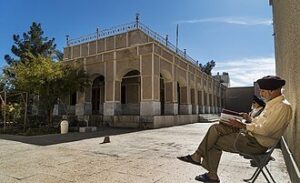
Earlier, there were three gurdwaras in Iran—Tehran, Zahedan and Abadan. The gurdwara of Abadan has now become a museum, but the Bhai Ganga Singh Sabha gurdwara of Tehran and the gurdwara of Zahedan are still adorned. The Gurdwara of Tehran was built in 1941, which was made permanent in 1967. This Gurdwara is the historical foundation stone of Sikhism, where Guru Nanak Dev Ji and Bhai Mardana Ji spent the night. The name of the road leading to the Gurdwara is “Sadkhi Kabiri Alley”, which is an example of Sikhism’s respect. In 2016, Prime Minister Narendra Modi and in 2001, Atal Bihari Vajpayee had come to pay their respects at this Gurdwara.
Current situation and the heat of war
Today, when the flames of the Iran-Israel war have reached Tehran, the concerns of the Sikh community have increased. According to media reports, the Bhai Ganga Singh Sabha of Tehran has been closed. Shiromani Gurdwara Parbandhak Committee President Harjinder Singh Dhami has appealed to the Indian government to take the sacred forms of Sri Guru Granth Sahib, which are adorned in the gurdwaras, to safe places. The situation in Iran is such that people are fleeing to seek refuge. In such a situation, the number of Sikhs is decreasing. The generosity of the Iranian government and the hard work of the Sikhs have kept them safe so far.