
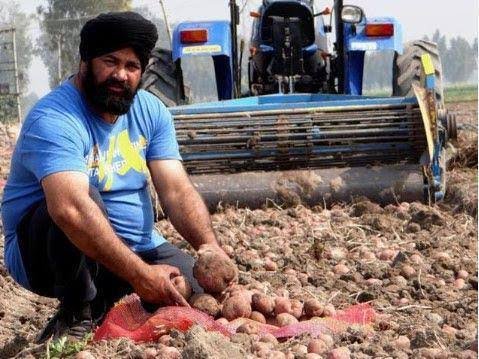
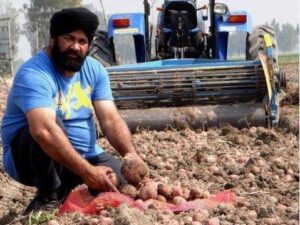
Gujarat has transformed potato farming into a global industry. High-tech processing plants, cold storage facilities and contract farming in districts like Mehsana and Banaskantha have given potatoes a new identity. This success is not just a story of agriculture, but a combination of science, industry and policies. Gujarat’s cold winters, sandy soil and low humidity have created a conducive environment for processing-grade potatoes. Also, institutions like the Central Potato Research Institute have given a boost to this revolution by developing varieties like Chipsona and Frisona. Companies like Hyphen Foods and ISKCON Balaji have taken it to the international level with investment, latest technology and partnership with farmers. But the question is, why is Punjab, which is a leading state in agriculture, lagging behind Gujarat in the competition?
Punjab’s agriculture is considered the breadwinner of the country, but the state lags far behind Gujarat in terms of potato processing and agribusiness. The first major obstacle is the lack of infrastructure. Gujarat has over 1,500 cold storage facilities, while Punjab has a very limited number and quality of such facilities. Second, the contract farming model has not yet been fully adopted in Punjab. In Gujarat, farmers get guaranteed seeds, advice and procurement from companies, while in Punjab, farmers are still dependent on markets, where prices are volatile. Third, the lack of processing technology and investment. Companies like Hyphen in Gujarat have invested heavily in European machinery and global markets, but such ventures are still limited in Punjab. Fourth, there is a lack of seasonal and soil suitability. Gujarat’s soil and climate are more suitable for processing-grade potatoes, while Punjab’s land is better known for crops like sugarcane and paddy.
Punjab’s political parties have not taken up the issue of agribusiness seriously. While Gujarat has linked agriculture with industry by adopting policies like the Model Contract Farming Act and the PM-Kisan Sampada Yojana, Punjab has lacked such initiatives. The focus of Punjab governments and political parties has been mostly on the paddy-wheat cycle and subsidies, which has not given a boost to diversified crops like potatoes and the processing industry. Despite farmer agitations, there has been a lack of consensus between the government and farmer organisations on contract farming and processing. As a result, farmers in Punjab are still dependent on old methods, while farmers in Gujarat are benefiting from new technology and guaranteed profits.
Gujarat’s potato industry has not only met domestic demand but has also started exporting to countries like Japan, Australia, UAE and Mauritius. In 2023, India imported only 55 tonnes of frozen potato products, a marginal drop from 7,800 tonnes in 2010-11. Gujarati companies like Hyphen and ISKCON Balaji have established Indian frozen fries in global markets.
On the other hand, the potential for trade in Punjab depends on cross-border trade (especially with Pakistan), but trade through the Attari-Wagah border is limited due to political and security issues and tensions between India and Pakistan. Political parties in Punjab have not raised their voices for opening the Wagah and Hussainiwala borders for trade. Without this, agricultural development and agro-industry are not possible. Despite Punjab’s land and agricultural potential, the lack of processing plants and export-oriented policies has held it back. This disparity is not only a result of government policies’ negligence or lack of investment in the processing industry, but also a lack of foresight to link agriculture with modern industry.
As per 2024 data, there are 8,600 cold storage facilities in India, but Punjab’s share is much less than that of Gujarat (1,500 facilities). Government policies have maintained reliance on old facilities rather than promoting modern, multi-crop cold storage.
Gujarat’s potato revolution is a lesson for Punjab. Punjab should promote contract farming, increase investment in cold storage and processing units, and align government policies with the demands of global markets. Punjab’s farmers need to be trained in new varieties and techniques. The government and political parties should move beyond the rice-wheat cycle and focus on diversified crops and industrial potential.
Till now, the focus of Punjab governments has been more on political issues, subsidies and election-centric policies. There has been little effort to modernize the agri-industry, set up processing plants or formulate export-centric policies. Gujarat has benefited from schemes like the Model Contract Farming Act and the PM-Kisan Sampada Yojana, but such initiatives are still lagging behind in Punjab.
Farmers in Punjab lack awareness and training on new varieties of processing-grade potatoes (like Frisona) and modern farming techniques.