
Punjab is severely lacking in the infrastructure and human resources required to make the drug de-addiction drive a success. The government-run drug de-addiction centres have a capacity of only 660 beds, while the 36 centres cannot meet the state’s demands. There are only 51 psychiatrists in the state, most of whom are in big cities like Jalandhar, Amritsar and Ludhiana. In small districts like Tarn Taran, Gurdaspur and Faridkot, only one psychiatrist handles all the patients. 80-100% of the posts of medical officers, nurses and counsellors in OOAT clinics are vacant.
Lack of data in the drug de-addiction system a major problem
The government portal often goes down, making it difficult to maintain patient records. There is no robust system to track this record. Doctors are also worried about the possibility of relapse to drugs like buprenorphine. According to former Chief Secretary Karan Avtar Singh, the lack of data is an obstacle to making effective policies.
Punjab Government’s Efforts and Results
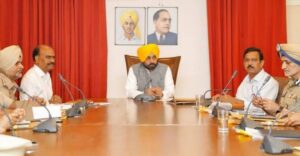
The Bhagwant Mann government has taken strict action under the ‘War on Drugs’ campaign. In March 2025, the Punjab Police arrested 4,650 smugglers, registered 2,765 cases and seized a large quantity of narcotics including 185 kg heroin, 89 kg opium. But government officials and experts believe that curbing supply alone will not solve the problem. There is a need to focus on reducing demand and social reforms. The number of patients at drug de-addiction centers also more than doubled from February 23 to May 2, 2025, which is putting additional pressure on the system.
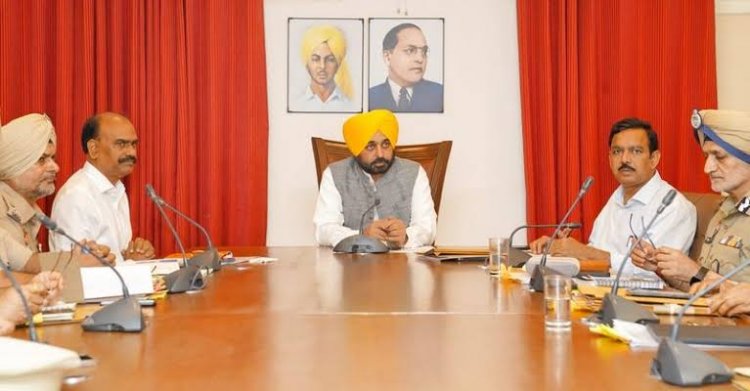
According to the Punjab Chief Minister, ‘A drug de-addiction tour has started across Punjab from May 7, which will visit 3 villages in each block every day to mobilise people for drug prevention’. He said that the Punjab government has been able to break the supply line of drugs by taking action against drug smugglers with full determination. He said that ‘the palaces built by drug smugglers with black money will be demolished’. Food and Civil Supplies Minister Lal Chand Kataruchak said that ‘the Punjab government has taken exemplary action against drug smugglers and has also given government jobs to 55000 youth on merit basis.’ He said that the capacity of 5000 beds has been increased in the drug de-addiction centers across Punjab.
Big smugglers still beyond the reach of the police
The Punjab Police has shown strictness by arresting 4,650 smugglers and seizing a large quantity of drugs in March 2025, but the big smugglers and the main leaders of the drug network are still beyond the reach of the police. The Anti-Narcotics Task Force has released a list of 1,849 major smugglers and 755 drug hotspots, but senior police officials admit that the police have been able to seize only 10% of the drugs. The government has failed to crack down on large networks of heroin and synthetic drugs coming from Pakistan. The state seizes 1,200 kg of heroin every year, which is equivalent to just 40 days’ consumption.
Challenges and Opportunities
Both the demand and supply of drugs in the state are a major problem. The government’s efforts are mostly focused on curbing supply, but efforts to reduce demand and create social awareness are inadequate. There are 529 OOAT clinics and 36 de-addiction centres in Punjab, but these cannot meet the needs of the state’s 1.2 million drug-dependent population. Most of the clinics are operating in one room of primary health centres, where facilities and security are lacking. Government officials say there are neither enough beds nor staff to handle the increasing number of patients. The success of the drug de-addiction campaign depends on psychiatrists, medical officers and counsellors, but their numbers are very low in the state. According to records from two districts, only two are working against the requirement of 30 psychiatrists. Two-thirds of the posts of medical officers are vacant. The government is yet to fill these posts.
Former Chief Secretary Karan Avtar Singh suggested that the government should adopt a public-private partnership model, in which private drug de-addiction centres are given performance-based payment. Expert Dr. Atul Ambekar says the success of OOAT clinics is key to the drug de-addiction campaign. He suggested that these clinics should be scientifically evaluated so that improvements can be made. Also, natural drugs like opium and marijuana should be legalized, so that the use of synthetic drugs can be reduced.
To win the war on drugs in Punjab, the government will have to adopt a balanced strategy on both supply and demand. This problem can be eradicated only by strengthening the infrastructure, increasing human resources, and emphasizing on social reforms.
box
Manpreet emerges from the swamp of drugs and becomes the motivator of Punjab’s anti-drug campaign
* Lost 18 years in drugs, now making the youth aware
Manpreet Singh from Dhanaula, Punjab, who lost 18 years in the swamp of drugs, is today the poster boy of the Punjab government’s ‘War on Drugs’ campaign. Manpreet, who spent Rs 70-80 lakh on drugs, has now given a new direction to his life and motivates the youth in schools and colleges to stay away from drugs. Manpreet’s addiction to drugs started with cigarettes in 8th grade, which turned into smack, heroin, opium and medical drugs by college. Manpreet, the owner of 12 acres of land, squandered the money he earned by renting out the land and selling eucalyptus trees on drugs. When he couldn’t get money for drugs, he vandalized his house and tried to end his life twice.. Two years ago, Manpreet took Amrit and gave up drugs. With the support of his mother Harpal Kaur and wife Rajwinder Kaur, he turned his life around. Today, he does farming, improves his health through exercise and is active in anti-drug campaigns. Harpal Kaur says, “My son’s drug habit had destroyed the house, but now we feel proud.” ANTF AIG Bhupinder Singh and Deputy Commissioner T. Benith praised Manpreet’s courage.