
S. Atma Singh, former minister of Punjab, who was a legendary leader of the Akali Dal, has come before us in a book written by Dr. Harvinder Singh Khalsa, ‘Anokha Akali Yodha S. Atma Singh’. In it, Dr. BR Ambedkar’s conversation regarding Sikhism has been described in detail. It is written that Khalsa College Mumbai was built in 1937 on the orders of Dr. Ambedkar. It is in the Matunga area. S. Atma Singh was then working in the staff of Nankana Sahib Gurdwara and S. Narayan Singh was the manager of the Gurdwara.
Dr. Ambedkar had made up his mind in 1935 that he would abandon Hinduism and convert to another religion so that he could also take eight crore Dalits out of the caste system. Under this idea, he had talked to the heads of all religions. Several meetings were held with the Sikh religion regarding this. In January 1936, a delegation from the Shiromani Gurdwara Parbandhak Committee led by S. Narayan Singh went to Mumbai and interacted with the Dalits of Muhar, Mang and other castes and distributed tracts about Sikhism in Marathi.
A big gathering of Harijan Samaj was held in Pune on January 11, 1936 and there the Gurdwara Committee arranged langar, in which all the people sat in rows and ate langar. The Sikh servants were from the more backward classes. This had a great impact. On April 13, 1936, the Sarbhind Sikh Mission was established and a big conference was also held in Amritsar. Dr. Ambedkar attended it. Bawa Harkrishan Singh Ji gave a speech in English. Dr. Ambedkar had retired from the post of Principal of Law College, Mumbai at that time. He ran his own newspaper, for which the printing press was arranged by the Sikh Mission. Dr. Ambedkar sent many of his associates to Amritsar and they were greatly influenced by the Rehat Maryada. On Ambedkar’s demand, it was decided to open the Mumbai Khalsa College, for which all the expenses were borne by the Nankana Sahib Gurdwara Committee. Head Master Kehar Singh was made in-charge for this work and sent to Mumbai. Dr. Ambedkar found a place in Matunga, where a plot of 2742 square yards was purchased at our six rupees per yard. S. Gurdit Singh Sethi, President of Gurdwara Singh Sabha Mumbai, also helped in this. It is written in this book that Dr. Ambedkar had taken 5000 rupees from Head Master Kehar Singh to go on a foreign trip. Dr. Ambedkar had also brought a map of the college similar to the building of an educational institution in Germany. Dr. Ambedkar used to come every third day to see the work of the college and give necessary suggestions. Laboratory furniture, library etc. were purchased according to his wishes. A printing press was also installed, in which Ambedkar’s newspaper ‘Janata’ was published.
The college was started on 20 June 1937 and its first principal was S. Kashmira Singh. At that time, there was a stir all over India that crores of Hindu Dalits would adopt Sikhism, which would have a big impact on the Hindu population. To stop this program, many Hindu organizations and wealthy Hindus came forward and tried their best to stop it.
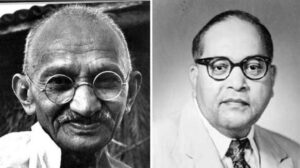
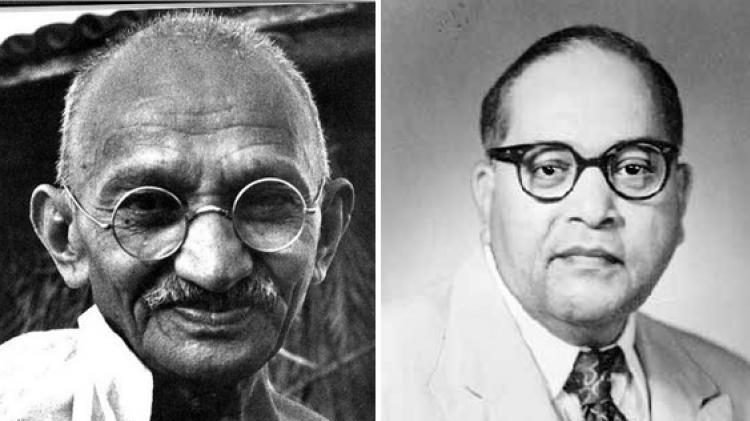
With the full effort of Mahatma Gandhi, two factions were formed among the Dalits and a separate Harijan organization was formed, which started making statements in favor of the Hindu society. At that time, a delegation of Sikhs, which included Bawa Harkrishan Singh, Principal Kashmira Singh, Master Sujan Singh Sarhali, Jathedar Teja Singh Akbarpuri and Ishar Singh Majhail, etc., met Dr. Ambedkar on 23 May 1937. He explained the entire situation to the Sikh leaders and they clearly said that even if they became Sikhs now, except for a few people, most of the Harijans would not go with them. The Sikh delegation, after hearing all this, understood Dr. Ambedkar’s compulsion. It was decided that the Khalsa College would continue to function and there would be no disruption to it. Till date, this college is running very successfully. A few days ago, news was published all over Mumbai about how the college committee had opened an MRI centre at a cheap rate.
With the publication of this book, the doubts that were being raised among the Sikhs about Sikh-Dalit reconciliation have been dispelled. The Sikh leadership had no fault in this. Dr. Ambedkar had temporarily stopped short of apostasy, but in the end, he had announced his conversion to Buddhism along with lakhs of his associates at the Nagpur Conference and he remained a Buddhist till his death.