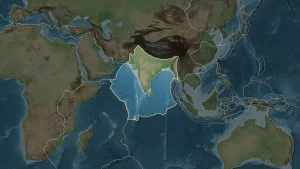

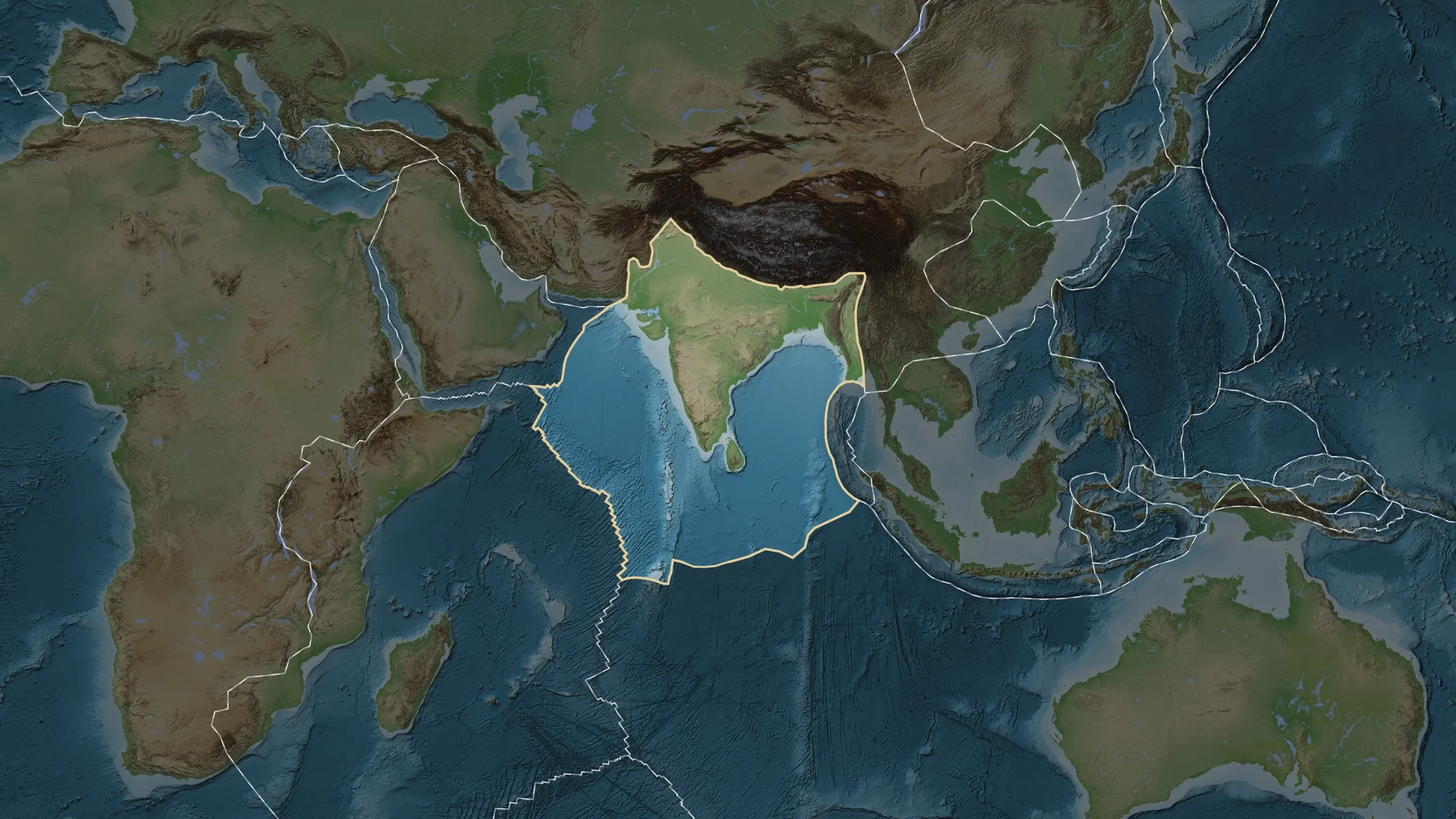
Home to the world’s highest mountain peaks, the Himalayas have always fascinated geologists. But far below its sky-high peaks, a commotion is taking place underground, where the Indian and Eurasian tectonic plates are slowly colliding. In fact, this geological collision, which began 60 million years ago, created these towering peaks. In recent research, scientists have discovered that the Indian plate is breaking apart. This means that the landmass of India is likely to be split into two. This has happened before with Africa, when it separated from Asia. During this same period, a part of the Indian subcontinent was connected to Asia.
Scientists have long debated the behavior of the Eurasian and Indian plates during their collision. Unlike dense oceanic plates, continental plates like the Indian plate resist sinking into the Earth’s mantle. Recent studies suggest that parts of the Indian plate may be breaking apart. This theory has been supported by data from seismic waves and gas samples from Tibetan springs.
Helium isotopes have indicated that mantle rocks are being uplifted as the plates separate. Researchers believe that hot mantle material could fill the voids created by this separation. “We didn’t know that continents could behave this way,” said geodynamicist Dov Van from Utrecht University. “These results could provide new information about tectonic activity and earthquake risks in the research area.” Geologists believe that the Indian plate has ruptured several times due to its varying thickness and structure. Evidence of rupture has been found in a large area near Bhutan, where mantle rocks are probably flowing into the void. By mapping seismic waves, scientists identified different locations beneath the surface that showed that parts of the plate had broken off. Researchers are now trying to understand how the plate ruptures can cause earthquakes in this area.