
Being the cradle of Guru Chintan, there was no need to deny anything from Punjab. This happened by following the Gurmat method which took what was worth taking from what was received; what was worth leaving, was left. Seeing the difficulties arising from the feet of a person, the eternal change of Deh-Guru was changed to Shabad-Guru in the form of ‘Guru Manio Granth’. The Sikh community born on this basis, despite being a minority in Punjab, had become socially and politically prominent because this community had been facing the campaigns faced by Punjab. From this, the roots of Sikh politics were tied to Baba Banda Singh Bahadur. Through this, Maharaja Ranjit Singh had reached the Akalis. The Akali politics of translating what was into what is to be is in front of everyone like the current Akali crisis.
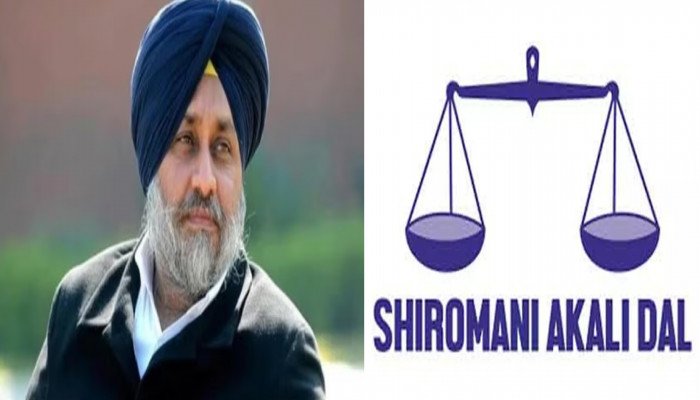
Scholars have considered the Akali Dal as a challenger and a witness to changes, and have considered the Akalis as its heirs. As the Akali leaders tried to break away from the legacy context and run Punjab politics in a feudal style with a proprietary tone, they gradually moved away from the Sikh tone. With this, the federal politics with a sangatti tone has reached its peak, slipping into the so-called general individualism. No attention was considered necessary to the truth that the Jhundan Committee formed from within had brought out about this. During its ten-year tenure, those in power did whatever they wanted. The Akalis themselves have taken this issue to the Akal Takht Sahib against the Akalis. A meeting of the wise men has been held regarding this and the sovereignty of the Jathedar of the Akal Takht Sahib has been supported. What everyone can see, the Akalis do not see at all? In this situation, instead of making a decision, I had written to the Jathedar and sent my opinion, keeping the Sangat method of finding a way out at the center:
“The issue at hand is whether to save the Akalis or save the Akali Dal? Can the Akalis be saved in a political tone and can the Akali Dal, as a Panthic organization, be saved in a Sikh tone? A decision has to be made in a political tone and a way has to be found in a Sikh tone. It seems that the crisis is of the Akalis, not the Akali Dal and the current Akali crisis has these three parties: 1) Akali politicians of any color; 2) Sikh Sangat; 3) Sikh Panth.
The issue is whether it is Akali politicians or Akali politics, it should not be confused with the Akali Dal because the Akali Dal has been failed by the Akali politicians. The Akali Dal is currently a victim of political hijacking just like the Sikh organizations. As a result, any Akali politician of any colour seems to have lost his reputation in the Sikh Sangat and the Sikh Panth and the political strategy of restoring the lost reputation has reached the Akal Takht Sahib in the form of tainted and rebels.
The difficulties created by politicians cannot be resolved through politicians because how can one expect to resolve something that is uprooted and entangled? So instead of deciding about tainted, rebels and politically motivated Sikh politicians, an attempt should be made to pave the way for the issue faced through the Sikh Sangat and the Sikh Panth. Even if this does not seem possible according to the principles and traditions at present, an attempt can be made to understand it in such a way that instead of making political decisions, the Panthic path with Gurmat spirit of exploring the possibilities of being able to go along with the current politics can be understood/explained.
The current political crisis should not be allowed to become a matter of decision in favor of or against anyone due to the lack of any theoretical and traditional continuity. The decision should be taken directly by the Sangat and the Panth. The Sangat path of the Sikhs can be called the Panthic heritage of the democratic path in the Sikh context.
In the above light, if we follow the path of rebuilding the Akali Dal from scratch instead of the political decision of saving the Akalis, then we will also be giving the Akalis who have lost their reputation in the Sangat and the Panth an opportunity to restore their reputation through the Sangat and the Panth. Those who have been victims of political defeat for any reason can be guided on the traditional path of recruiting a new Akali Dal under the leadership of the Jathedar and electing other potential office bearers of the Akali Dal along with the new Akali Dal president.”
Who can tell anyone that the Sikhs have been creating history even in difficult times, but how and why did the political facilities they received stop this path of the Akalis? Why did the Akalis hang it instead of reading the writing on the wall? How and why did the ghost of feudalism emerge from the federal politics of democracy? Who made politics not service but politics of getting rich easily and having fun without doing any work? In response to these questions, the Akalis can be asked when and how did Akaliism disappear from the Akalis? If the Sikhs became Akali in the spirit of ‘Rakha Aap Akal Akaliyan Da’, then why do the current Akalis not feel the need to become Sikhs to become Akali? If all political diseases have arisen due to separation from the Bani, then why are the Akali not moving towards returning to the Bani? All these questions are related to the Akali phenomenon of the Akali, Akali mentality and Akali politics. The politics of Akali possibilities is nurturing the illusion of running away in neutral gear even in the present. In the context of the politics of saving the Akali, the opportunity to play a historical role stands before the Jathedari institution like a panthic challenge.